⚡ The answer in 30 seconds
- Seaweed farming takes up CO2 as it grows, but the carbon in harvested and eaten seaweed returns to the atmosphere within a short time.
- Only a limited amount counts as storage, such as fragments that drop off and remain in the water or on the seabed.
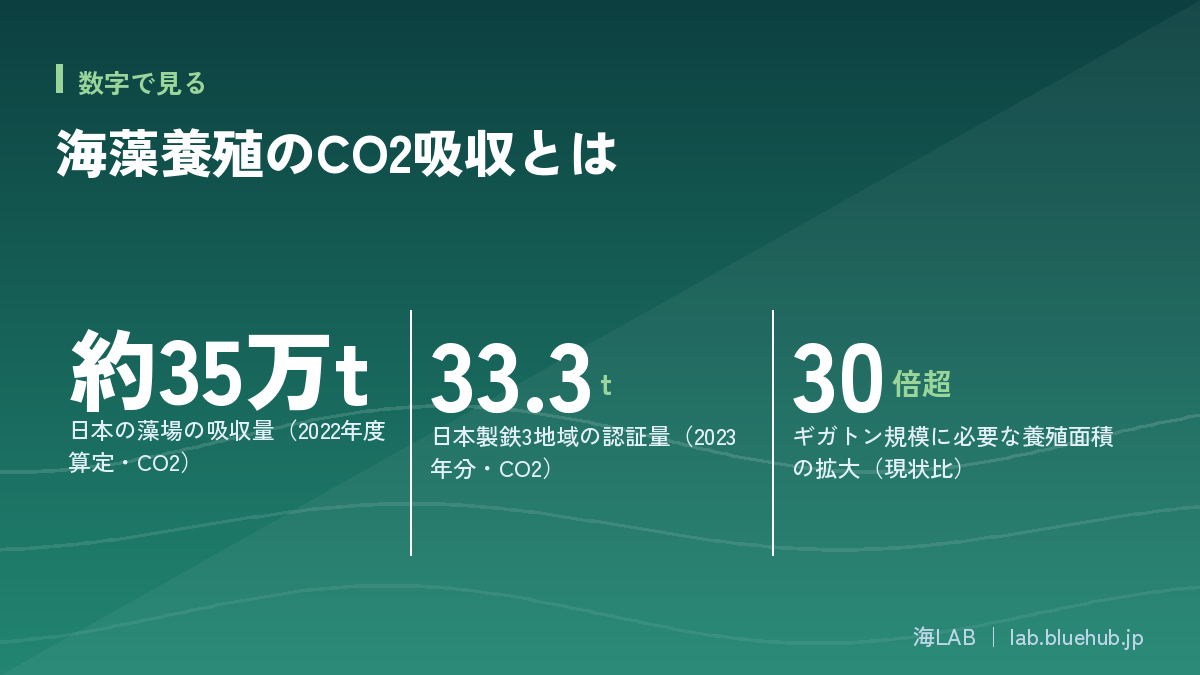
- Japan estimated its seaweed bed uptake for FY2022 at about 350,000 t, and farming-related uptake is certified individually under J-Blue Credits.
- Global estimates say large effects would need more than 30 times today's farmed area, and sinking seaweed to sequester it is also costly.
Can seaweed farming reduce CO2? Farming of wakame and kelp is now discussed in the context of decarbonization, but the carbon in seaweed harvested for food returns to the atmosphere, so the answer is not simple.
This article organizes Japan's accounting system, J-Blue Credit certification cases, and the limits shown by global research, based on primary sources.
By understanding not only the size of the numbers but also their assumptions and uncertainty, you can see the real value of seaweed farming.
What you will learn in this article
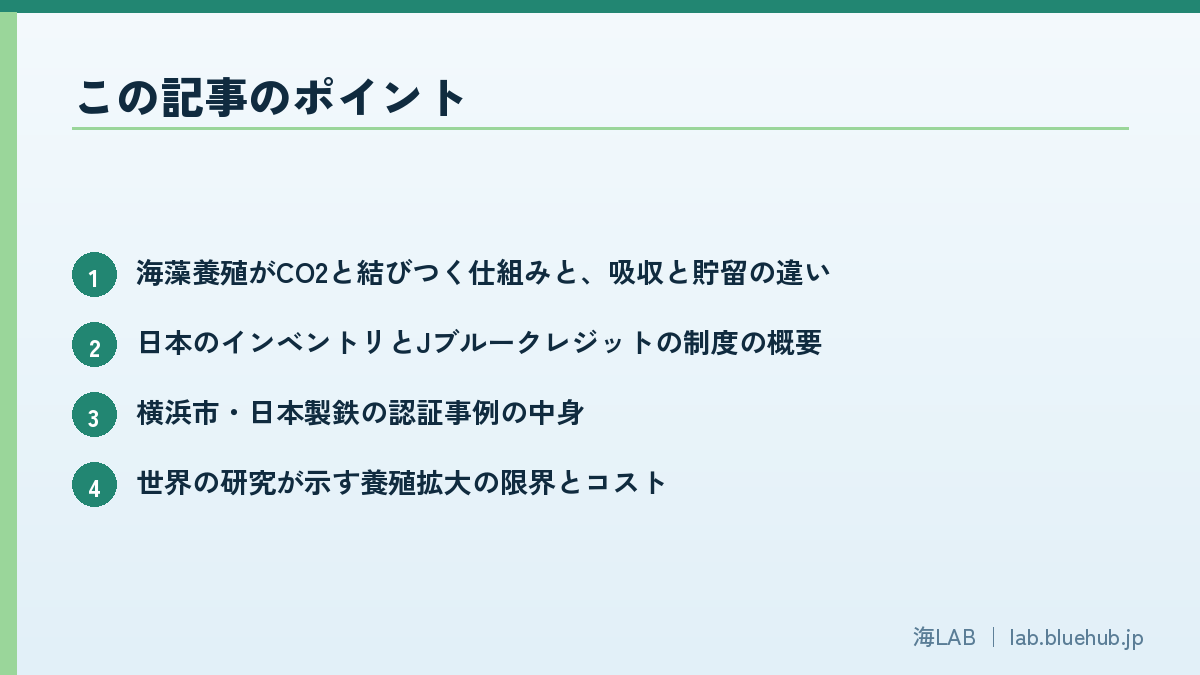
- How seaweed farming relates to CO2, and the difference between uptake and storage
- Japan's greenhouse gas inventory and the J-Blue Credit scheme
- What the Yokohama and Nippon Steel certifications actually cover
- Limits and costs of expanding farming, according to global research
- The difficulty of measurement (MRV, additionality) and what we can do
Why seaweed farming comes up in CO2 discussions
How does farming relate to the carbon absorbed by marine forests?
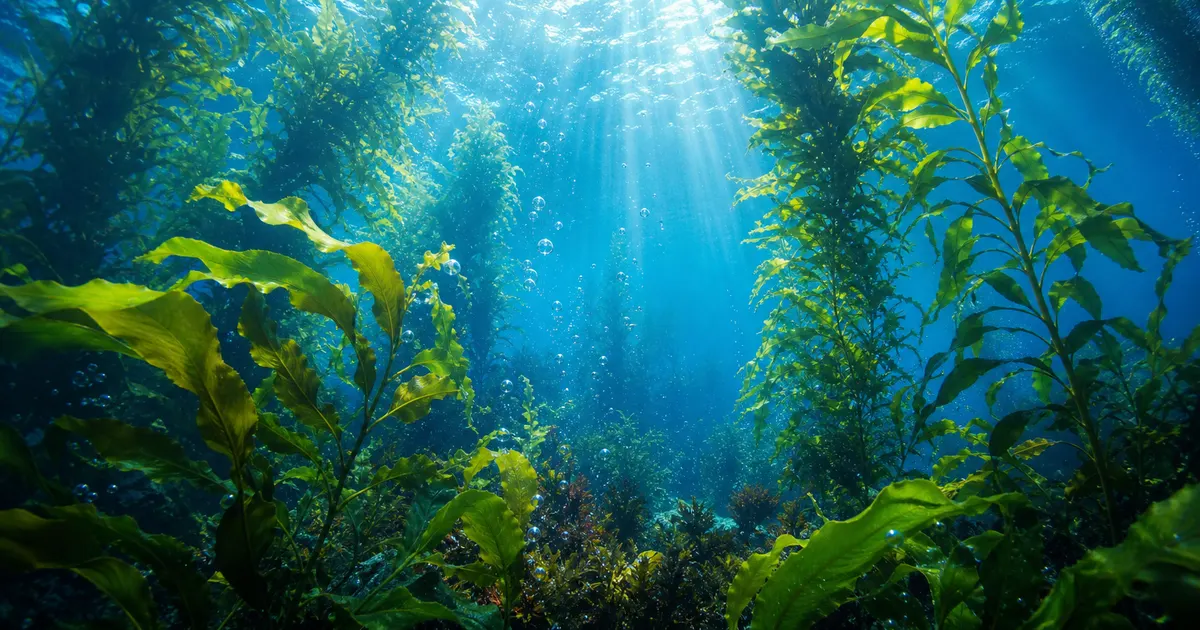
Wakame, kelp, and nori: many of the seaweeds familiar on Japanese tables are actually farmed. Recently, attention has turned to the fact that these seaweeds take up CO2 from seawater as they grow, raising the question of whether seaweed farming helps decarbonization. The carbon absorbed and stored by seagrass and seaweed beds and mangroves is called "blue carbon," and Japan has begun to include it in its national greenhouse gas accounting.
However, once seaweed is grown and harvested, it is used as food or feed, and the carbon it contains eventually returns to the atmosphere. In other words, not all of the seaweed that is farmed counts as CO2 reduction. Unless we determine which part of the carbon stays where, and for how long, it is not as simple as "farming reduces CO2." This article covers the mechanism, Japan's system and cases, and the limits shown by global research.
Natural seaweed beds versus farms
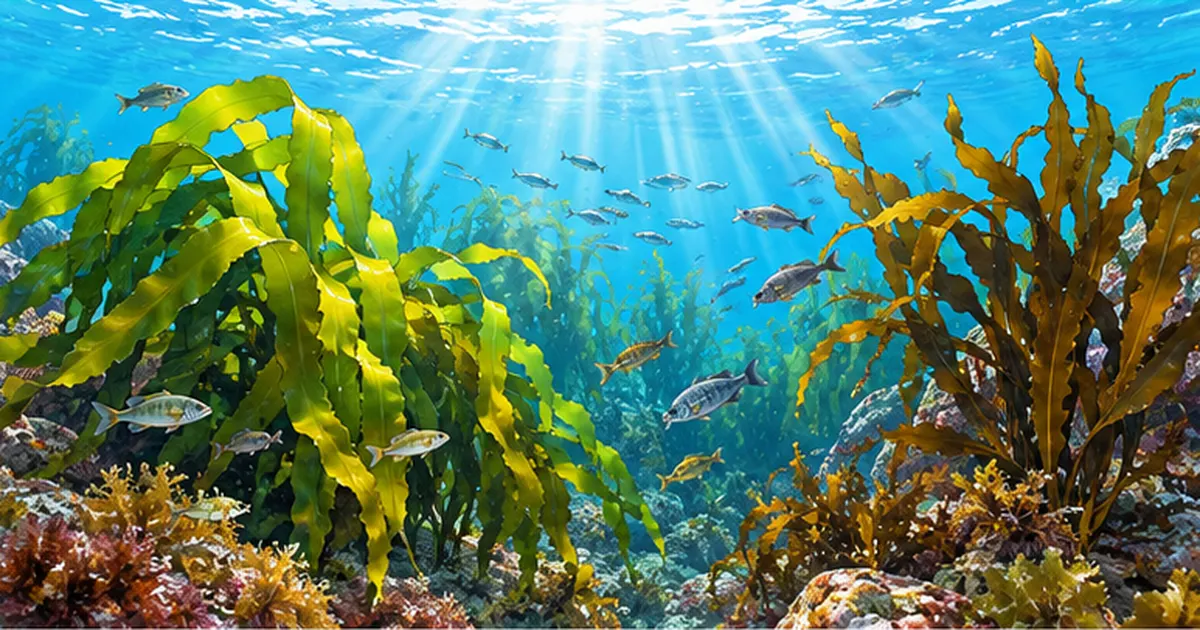
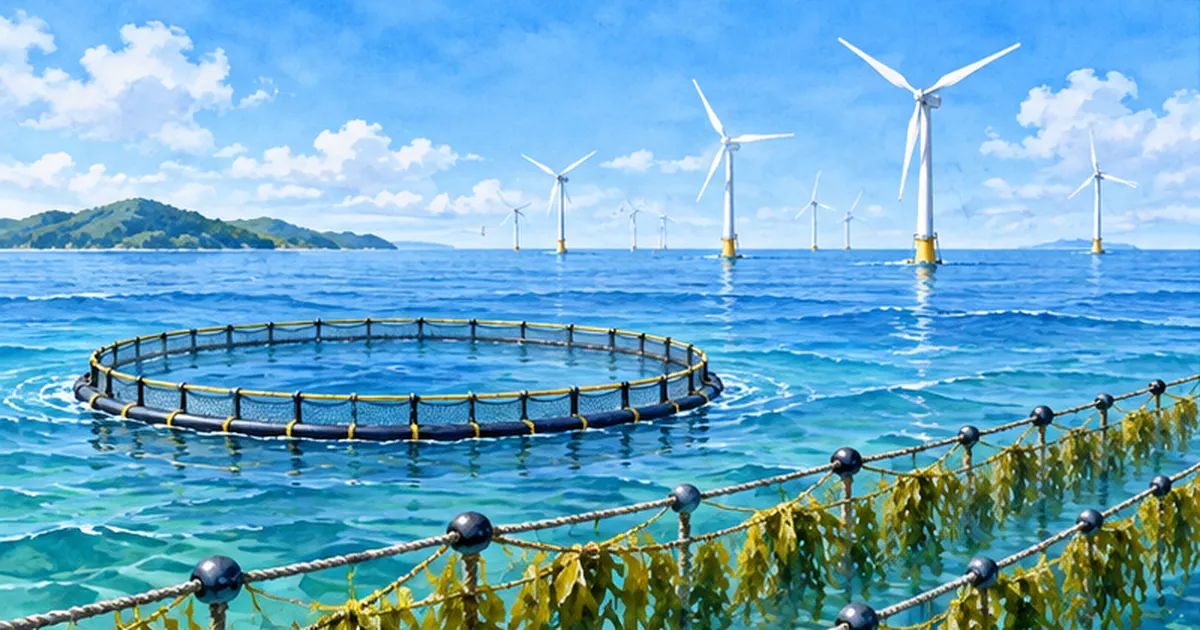
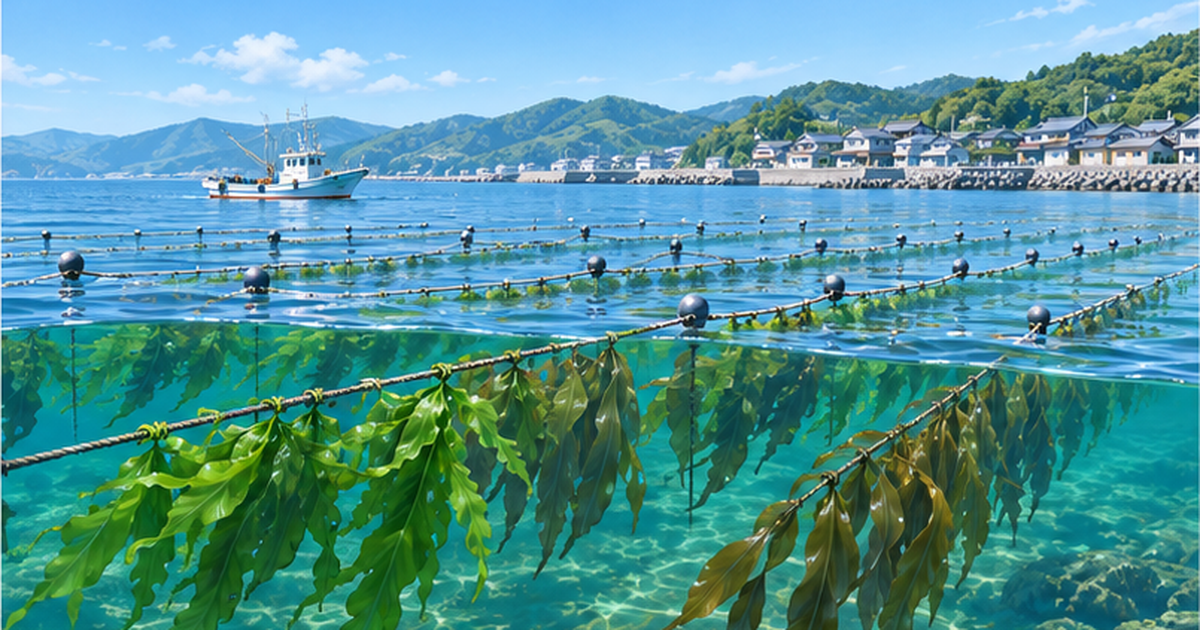
Seaweed beds are natural (or restored) seaweed communities rooted on rocky reefs and similar ground, and they exist year-round. Seaweed farming, in contrast, attaches seedlings to ropes or nets, usually starting in autumn and harvesting in spring, a seasonal practice closer to agriculture. This difference greatly affects how carbon is calculated and evaluated.
| Item | Natural / restored seaweed beds | Seaweed farming |
|---|---|---|
| Location | Attached to rocky seabed | Farming structures such as ropes and nets |
| Period | Year-round, multi-year | Often a few months of farming |
| Human involvement | Conservation and restoration | Seeding, management, harvesting |
| Main fate of carbon | Dies or drifts away to the seabed or deep sea | Harvest is used; some dropped parts remain in the sea |
The current state of seaweed farming in Japan
Japan is a country that has eaten seaweed since ancient times, and farming accounts for a large share of nori, wakame, and kelp production. According to the Fisheries Agency's statistical tables (FY2019, fresh weight), nori is about 250,000 t, wakame about 45,000 t, and kelp about 33,000 t. Nori is grown on nets in winter, wakame mainly in areas such as Sanriku and Naruto, and kelp is farmed or harvested wild mainly in Hokkaido. This long-established industry is now being re-examined from a new angle: marine carbon.
In climate policy, carbon absorbed by land forests is called "green carbon," while carbon absorbed by ocean ecosystems is called "blue carbon." Japan, surrounded by sea with a long coastline, has high hopes for blue carbon. The basics are explained in What is blue carbon?.
How to read this article
- "Uptake," "storage," and "offsetting" are similar but different. As you read, distinguish between the amount seaweed takes up, the amount that stays for a long time, and the amount recognized as credits.
Three common misunderstandings
- Misunderstanding 1: The more seaweed you grow, the more CO2 falls. Once harvested and eaten, the carbon returns, so the amount grown is not the amount reduced.
- Misunderstanding 2: Seaweed beds and farms are treated the same. Seaweed beds are year-round ecosystems, while farming is a seasonal activity managed by people, so accounting differs.
- Misunderstanding 3: Having credits means you may emit. Reduction comes first; credits are a supplementary means of compensating for remaining emissions.
Keeping these in mind makes news and corporate announcements easier to read. For example, when you see a figure like "absorbs X tons of CO2 a year," it helps to check whether it is the uptake during growth or the amount that stays long-term, and what scope was counted.
How seaweed keeps carbon in the sea
Taken up by photosynthesis and released into the water
Seaweed takes up dissolved CO2 from seawater through photosynthesis and builds its body. During growth, carbon leaves the body as leaf and stem tips break off or as mucus-like organic matter released into the water. Seaweed fragments from beds are carried by currents, with some sinking to the seabed and some carried into the deep sea, where they are thought to be sequestered for a long time.
As a global estimate, a 2016 study by Krause-Jensen of Denmark and Duarte of Spain put the carbon sequestered by macroalgae (seaweed) at about 173 teragrams (about 170 million tons) of carbon per year (range 61 to 268). Note that this figure estimates natural seaweed communities as a whole, not farming alone.
Pathways by which carbon can remain from farmed seaweed
- Shedding and outflow: fragments broken off during farming and dissolved organic matter remain in the water or on the seabed
- Harvest residue: where unused parts from harvesting are disposed of on the seabed, for example (done only to a limited extent)
- Use of harvested seaweed: when used for food, feed, fertilizer, or biomaterials, what happens to the carbon after use becomes the focus
Key point: uptake and storage are different
- "Uptake," when seaweed takes in CO2 as it grows, is distinguished from "storage (sequestration)," when that carbon is cut off from the atmosphere for a long period. In climate policy, the latter is mainly what is valued.
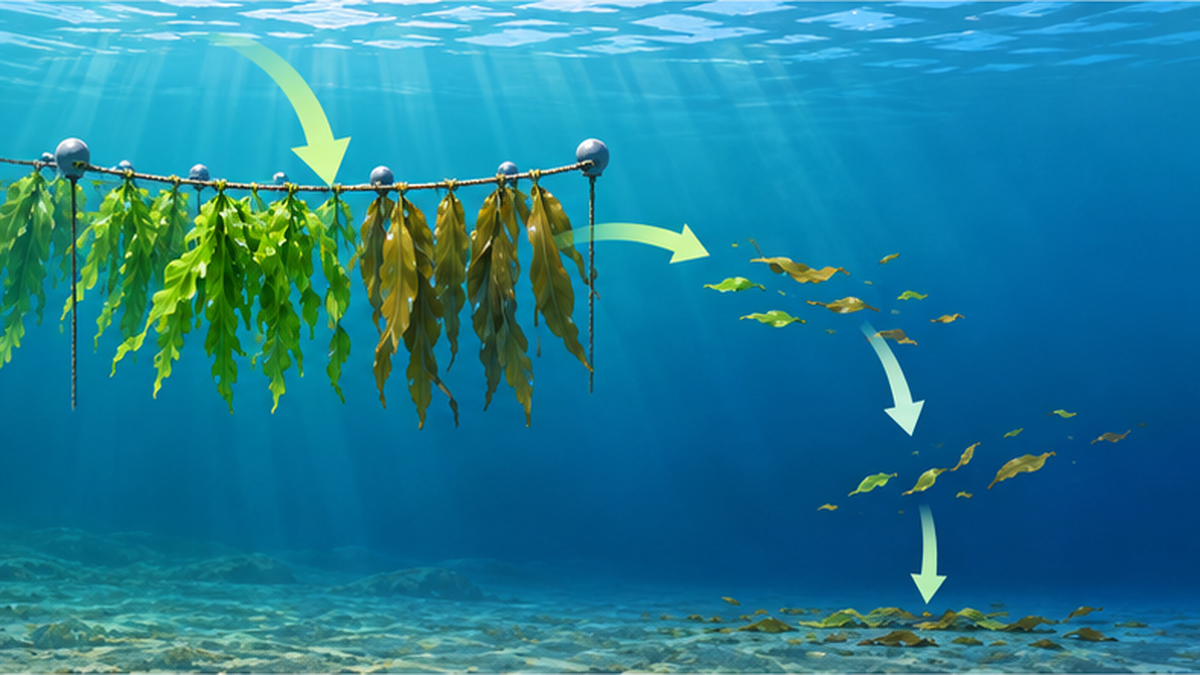
The idea that seaweed bed carbon is carried to the deep sea
Seaweed beds are near the shore, but their carbon is thought not to stay only near the shore. Broken fragments are carried offshore by currents and waves, and some sink into the deep sea. Because the deep sea has little contact with the atmosphere, carbon carried there may stay away from the atmosphere for hundreds to thousands of years. The 2016 study by Krause-Jensen and Duarte drew attention because it included the pathway of transport to the deep sea, not only the amount buried in sediments.
However, measuring this transport process is difficult, and the estimates have wide ranges. The researchers themselves do not treat the figures as absolute, citing regional differences and limited observations. In the case of farming, the facilities are placed in limited coastal locations, so it is necessary to investigate site by site in which direction and how far the fragments drift.
Dissolved organic matter: carbon that is hard to see
Seaweed releases mucus-like organic matter (dissolved organic carbon) into the water. This may include components that are hard to decompose, drawing interest as carbon that can remain for a long time. However, the ratio of easily and hardly decomposed components varies with species and environment, and measurement methods are still being established. In evaluating the effect of farmed seaweed on carbon storage, the question is how far to count such hard-to-see pathways.
Differences by species: wakame, kelp, and nori
Even among seaweeds, growth speed, body tissue, and ease of decomposition differ by species. Brown algae such as kelp and wakame are large, fast-growing, and tend to shed long fragments into the water. Nori, on the other hand, is farmed for a few winter months, has a thin body, and most of the harvest is used as food. For this reason, brown algae tend to draw attention as credit targets, and coefficients are prepared separately for each species.
Growth speed depends on water temperature, nutrients, and sunlight. The colder and more nutrient-rich the sea, the larger the seaweed grows from winter to spring. When water temperatures rise, the growing period shortens, affecting both farming and carbon. It is important to choose species and farming seasons to match local sea conditions.
Japan's accounting and systems: the inventory and J-Blue Credits
First inclusion of seaweed beds in the report to the United Nations
In April 2024, in its greenhouse gas inventory submitted to the UNFCCC (United Nations Framework Convention on Climate Change) secretariat, Japan calculated and reported the uptake of seagrass beds and seaweed beds together for the first time. According to Ministry of Land, Infrastructure, Transport and Tourism materials, the FY2022 figure is about 350,000 tons of CO2. The Ministry explains that the IPCC guidelines have no method for seaweed beds and no other country calculates them, so Japan produced the figure using its own method developed by the Port and Airport Research Institute.
At the same time, the Ministry's materials note that blue carbon CO2 uptake involves uncertainty, that strict opinions have been voiced, and that reasonable explanations are needed for the figures included. The calculation mainly targets natural and restored seaweed beds, and an explanation by the Japan Fisheries Research and Education Agency also presents an approach that groups seaweed beds into 17 types and adds 4 types of seaweed farming, for 21 types in total.
The J-Blue Credit scheme
Supporting private-sector efforts is the J-Blue Credit, operated by the Japan Blue Economy Association (JBE), a technology research association approved by the Ministry of Land, Infrastructure, Transport and Tourism. It certifies CO2 uptake from activities such as seaweed bed restoration and conservation through third-party review and issues it as credits. Companies and others can buy credits to offset part of their own emissions. The calculation formulas and procedures are set out in the "Certification Application Guide" published by JBE, which has been revised repeatedly.
- Targets: activities such as restoring and conserving seaweed beds and seaweed farming
- Certifier: JBE (certified after third-party review)
- Use: corporate carbon offsetting and similar purposes
Why accounting is difficult
Calculating seaweed bed uptake requires many factors, such as the area of the beds, uptake per unit area, and the rate of decomposition and outflow. Japan's calculation uses an estimation method developed by the Port and Airport Research Institute, estimating uptake for each seaweed bed type (17 types), with a calculation guidebook in place. Because the IPCC guidelines give no method for seaweed beds, Japan is in the position of reporting with its own method (Tier 3).
Transparency and verifiability of calculations are important for international recognition. Not only does the national government present figures, but guides and coefficients are being published so that local governments and researchers can calculate by the same procedure. Efforts to derive regional coefficients are also emerging, as in Osaka Prefecture's materials.
What is an inventory?
- A list in which a country compiles its greenhouse gas emissions and removals each year and reports it to the United Nations. Once included, it becomes part of the figures used to gauge progress toward the country's reduction targets.
The reality of declining seaweed beds
In Japan, the decline of seaweed beds known as "isoyake" (barren ground) has been reported in many places. Rising water temperatures, grazing by sea urchins and fish, and changes in nutrients have combined, and in some waters once-rich marine forests have been lost. To protect seaweed bed uptake, activities that maintain existing beds are essential in addition to creating new ones. Because farming grows seaweed with human labor and technique, it is also considered a means of making up for the loss of seaweed beds.
Conservation of seaweed beds and farming are not in opposition. Collaborations are being tried in various places, such as using farming seedlings and techniques for seaweed bed restoration, and observing the environment around farms to detect changes in seaweed beds early.
The real scale seen in domestic certification cases
Yokohama: Japan's first credit for kelp and wakame farming
In 2019, the City of Yokohama announced an initiative to certify, as credits, the CO2 absorbed and fixed by kelp and wakame farmed in Yokohama's waters. According to the city's materials, the carbon in portions that are harvested and processed into food returns to the atmosphere and is therefore excluded; only the parts that dropped off during growth and remain undecomposed over the long term are treated as blue carbon. This shows a strict view that subtracts the harvest.
Nippon Steel: three projects in Hokkaido and Chiba
Nippon Steel announced that, for CO2 absorbed and fixed in 2023 in projects such as seaweed bed restoration using steel slag, it received certification totaling 33.3 tons of CO2 at three sites: Mashike Town and Tomari Village in Hokkaido, and Kimitsu City in Chiba Prefecture. The breakdown is 12.2 tons for kelp in Mashike, 8.5 tons for kelp in Tomari, and 12.6 tons for wakame in Kimitsu.
| Area | Target | Certified volume (t-CO2) |
|---|---|---|
| Mashike Town, Hokkaido | Kelp | 12.2 |
| Tomari Village, Hokkaido | Kelp | 8.5 |
| Kimitsu City, Chiba | Wakame | 12.6 |
| Total | 33.3 |
Compared with the national total of about 350,000 tons a year, each project is in the range of a few to a dozen or so tons. Rather than judging value by the size of the number alone, it is important to see this as a first step in which local fishers and companies work together to put value on the marine environment.
For related topics, the link between seaweed farming and recovery is covered in Recovery of seaweed farming, and total seaweed bed uptake in CO2 uptake by seaweed beds and J-Blue Credits.
Common points seen in the cases
What the two cases share is an attitude of not counting the harvested and used portion, or estimating it conservatively. Edible seaweed is eaten or used as feed by people, and its carbon is thought to return to the atmosphere within months to years. What can be evaluated as credits is limited to the portion that can be reasonably explained as remaining in the sea without returning.
Another feature is that the projects are carried out jointly by fisheries cooperatives and companies. According to Nippon Steel's announcement, this was the first case in Japan in which a fisheries cooperative and a private company jointly obtained certification and issued credits. Using credit revenue to maintain seaweed beds and farms can become a mechanism that supports local fisheries.
The buyer's perspective
For companies, buying J-Blue Credits is an option for contributing to marine conservation alongside their own emission reductions. However, skipping reduction efforts and relying on credits alone is undesirable for both environmental and credibility reasons. When buying, confirm the certifier, target waters, calculation method, and seaweed species, and describe the scope of the initiative accurately in communications.
Potential and limits shown by global research
What happens if farming is scaled up?
Seaweed farming worldwide has expanded rapidly, centered on Asia. A study by DeAngelo and colleagues at Stanford University, published in 2022 in the journal Nature Plants, estimated its climate effect. The study examined the role seaweed farming could play in climate change mitigation, and its economic and biophysical constraints, using an integrated model.
There are two key results. First, to obtain a gigaton (one billion tons)-scale climate effect, more than 90,000 square kilometers of farmed area would be needed, at least 30 times the current area. Second, removing carbon by sinking seaweed in the sea is far more costly than avoiding emissions by using seaweed in place of land crops. Uncertainty in yields and competition for nutrients with phytoplankton are also cited as factors that affect the outcome.
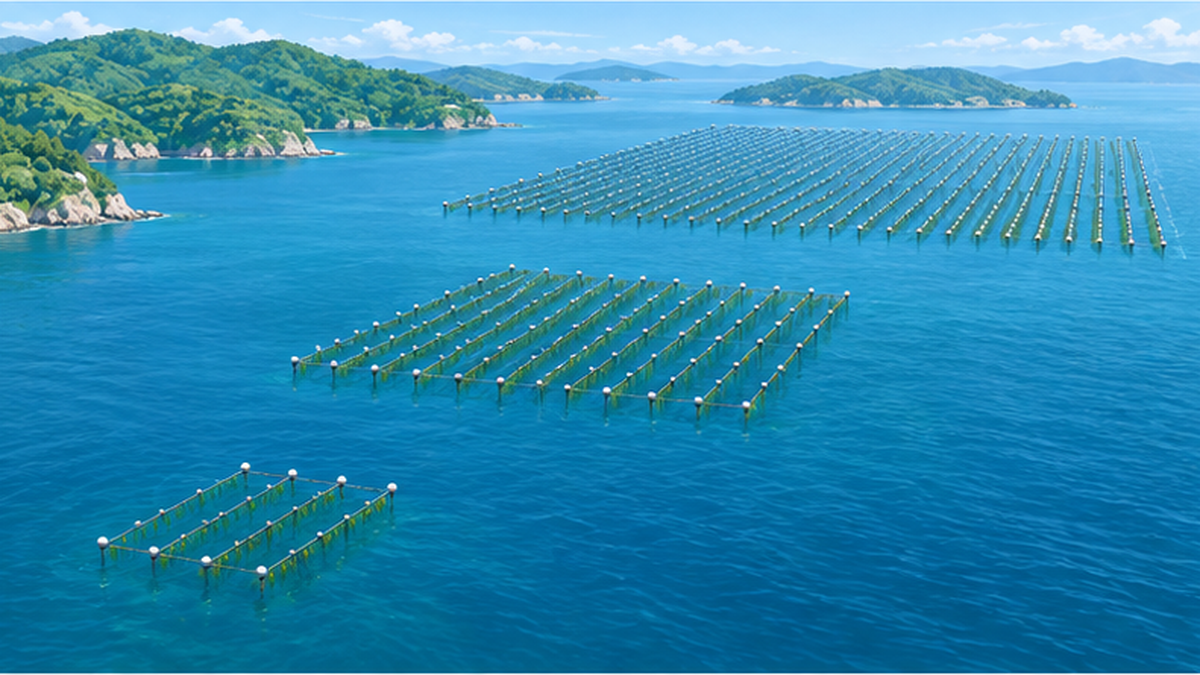
A cautious finding from observations at a UK farm
Some studies have examined whether carbon actually increases in sediments at real farms. A 2026 study of a farm in the UK found no large differences in sediment condition before and after the farm's establishment, or with distance from the farm, suggesting that the effect of additional carbon storage may be limited at small farms. Results vary with farm scale and sea area, so no conclusion about the whole can be drawn from a single case.
Caution: do not take the numbers at face value
- Large estimates such as "seaweed farming can offset the world's CO2" rest on assumptions such as wide areas, high yields, and long-term storage. It is important to check the premises before interpreting them.
What the research teaches us
The study by DeAngelo and colleagues does not reject seaweed farming; its significance lies in showing that the value changes greatly depending on what the seaweed is used for. The framing is to emphasize substitution effects in uses such as food, feed, and materials, and to proceed carefully on carbon sequestration while accumulating verification. Not reacting to the size of numbers, but reading conditions and premises, is the basis of dealing with scientific information.
Where does the carbon in harvested seaweed go?
Eat, use, sink: the fate of carbon by use
Most farmed seaweed is harvested and used in people's daily lives. In Japan, the Fisheries Agency's statistical tables (FY2019, fresh weight) report about 250,000 t of nori, about 45,000 t of wakame, and about 33,000 t of kelp. When these are consumed as food, the carbon they contain returns to the atmosphere in a short time after digestion and decomposition. For this reason, it is natural to see farming for food not as "storing carbon" but as producing food grown in the sea.
| Use | Fate of carbon | Climate view |
|---|---|---|
| Food | Decomposes and returns to CO2 in a short time | Not regarded as storage |
| Livestock feed and fertilizer | Decomposes after use | Emission reduction through substitution is the focus |
| Biofuel and materials | Fuel returns to CO2 when burned | Evaluated as a substitute for fossil fuels |
| Sequestration in the sea or on the seabed | May remain for a long time | Verification and environmental impact assessment are needed |
The possibility of using seaweed as fuel is covered in The potential of seaweed and algae biofuels, and emission reductions at farm sites in Decarbonizing aquaculture.
Separating "substitution" from "sequestration"
As the study by DeAngelo and colleagues showed, the substitution effect of avoiding emissions by using seaweed in place of land crops or feed is analyzed as economically more promising than the sequestration effect of sinking it to remove carbon. It is realistic to evaluate the value of seaweed farming separately by use, from both the production of food and resources and decarbonization.
The potential of substitution using seaweed
Seaweed is being researched as a feed additive to reduce methane emissions from livestock such as cattle, and has also been tried as a raw material for fertilizer and bioplastics. These are not ways of leaving carbon in the sea but ways of reducing emissions in other industries. If the value of farmed seaweed is measured only by the carbon left in the sea, such substitution effects are overlooked.
The effect of each use must be evaluated over the whole life cycle, including manufacturing, transport, and use of the product. Emissions from fuel needed for farming and energy used in processing and drying must also be subtracted.
The difficulty of measuring: uncertainty and MRV
How to measure, report, and verify
Carbon credits require MRV, which means measuring (Measurement), reporting (Reporting), and verifying (Verification) emission reductions and uptake. In seaweed farming, it is necessary to track in the field (1) the amount of seaweed growth, (2) the amount that flows out and remains in the sea, (3) the time until decomposition, and (4) behavior in seawater and sediments, making it a field harder to observe than land forests.
- Currents in the sea are fast, making it hard to track where fragments go
- The speed of decomposition varies greatly with seaweed species, water temperature, and sea area
- It must be shown that the carbon is distinct from carbon that would have existed naturally without farming (additionality)
- The uptake by seaweed may reduce uptake by surrounding phytoplankton
The Ministry's materials touching on strict opinions about uncertainty reflect these circumstances. For this reason, Japanese credits are designed to estimate conservatively, such as excluding the harvest as in Yokohama's case.
What is additionality?
- The idea of counting only the uptake that would not have occurred without the initiative. If carbon that existed in the sea before farming began is counted, the credibility of the credits is undermined.
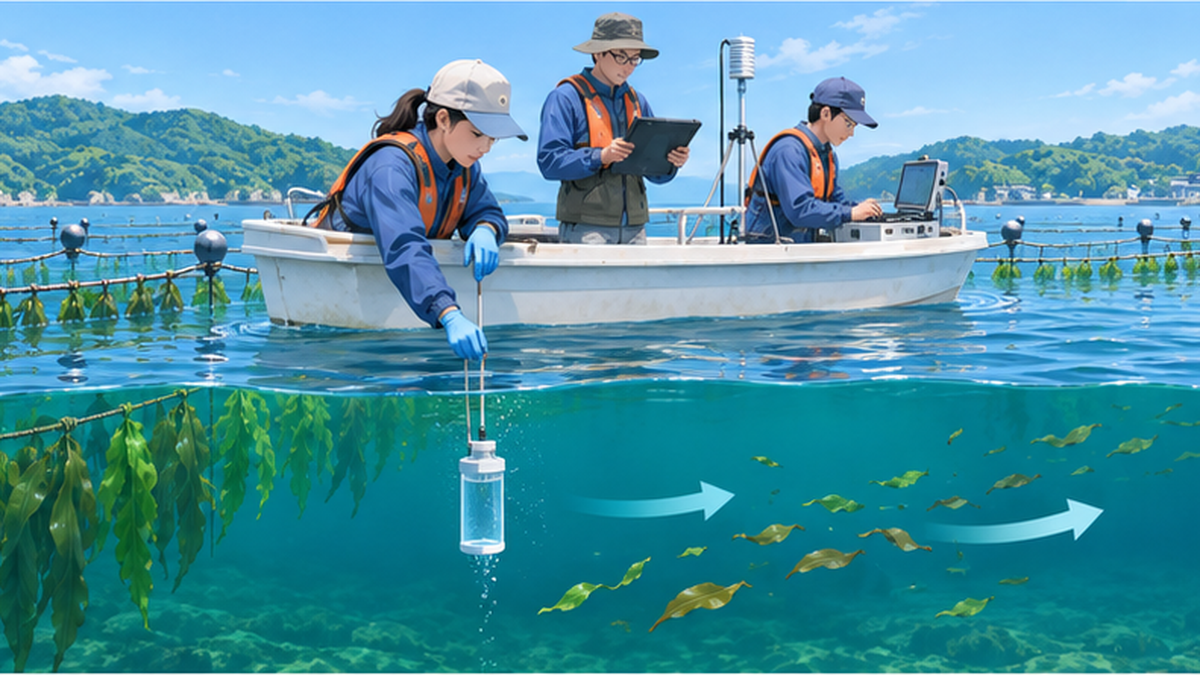
Progress in measurement technology
In recent years, technologies such as underwater drones and satellite images to grasp seaweed bed area, environmental DNA to examine the state of organisms in a sea area, and sensors to continuously measure dissolved carbon dioxide in water have begun to be used. If measurement costs fall, continuous monitoring becomes easier even for small farms, and the credibility of credits also rises.
Even with technology, however, it remains difficult to fully trace the movement of carbon in the sea. For this reason, operational measures such as acknowledging uncertainty, using conservative coefficients, reviewing regularly, and third-party verification support trust in the system.
Other values and risks that farming brings
Benefits for the marine environment
Even setting carbon aside, seaweed farming is expected to improve water quality by taking up nitrogen and phosphorus from seawater as it grows, and farming structures are expected to serve as habitat for small fish and crustaceans. Some studies also suggest that seaweed has a local effect of easing the acidity of surrounding water through photosynthesis, and in some areas attempts are under way to combine it with shellfish farming.
Risks to watch for
- Nutrient competition: large-scale farming uses up nutrients and may affect surrounding ecosystems
- Disease and invasive species: spread of pathogens and invasive species via seedlings and structures
- Changes in light and flow: structures change the light reaching the seabed and the flow of water
- Rising water temperature: high temperatures shorten the growing period and make yields unstable
In Japan, problems such as shifted farming seasons and falling yields due to rising water temperatures have been reported in many places. This shows that decarbonization efforts cannot be separated from the sustainability of sites affected by climate change. The problem of disappearing seaweed beds is explained in detail in Isoyake and urchin barrens.
Local livelihoods and successors
Seaweed farming, including in Sanriku, faces the problems of aging operators and a lack of successors. Some areas rebuilt their farming in the recovery after the Great East Japan Earthquake, and if blue carbon efforts become a new source of income, they may also prompt younger people to choose work at sea. The path of seaweed farming recovery is also introduced in Recovery of seaweed farming.
A perspective for protecting local seas
The impact of expanding farming on local seas differs by place. In inner bays with excess nutrients, seaweed taking up surplus nutrients can improve water quality, whereas in nutrient-poor waters it may compete with other organisms for nutrients. A prerequisite for sustainable efforts is that local fishers, researchers, and local governments talk together and decide how to farm while watching the condition of the sea.
The future of seaweed farming and what we can do
Outlook
To raise the contribution of seaweed farming to decarbonization, the keys will be (1) standardizing methods that can be measured on site, (2) clarifying additionality, and (3) business models that combine the values of food, resources, and the environment. If frameworks like J-Blue Credits in which fishers, companies, and local governments cooperate spread, farmers' income sources increase, and this is also expected to make it easier to continue working at sea.
At the same time, as global research shows, farming alone cannot solve climate change. With efforts to reduce emissions themselves as the foundation, it is realistic to position blue carbon as a complementary measure.
What we can do
- Choose domestic seaweed and support local farming
- Take an interest in corporate efforts, including the purchase of J-Blue Credits
- When you see claims like "absorbs large amounts of CO2," check the premises of the calculation and the source
- Spread ways to eat and use seaweed at home and in the community
Summary
- Seaweed farming contributes to food production and marine conservation, and in part can contribute to climate action. However, because the carbon in harvested seaweed returns to the atmosphere, the amount that can be counted as storage is limited, and measurement is difficult. Understanding the background of the numbers while watching over it as a way of supporting local seas is what matters.
Points to watch in research and systems
There are three points to watch. First, how farming-derived carbon will be treated in the national inventory. Second, the relationship between international carbon credit standards and J-Blue Credits. Third, the accumulation of long-term observation data. If these are put in place, farming efforts can be compared domestically and internationally, and more regions will find it easier to take part.
The ocean plays a major role as a sink for atmospheric CO2, but its absorption capacity is also limited. The flow of carbon across the whole ocean can be checked in What percentage of human CO2 does the ocean absorb?.
References and sources
- Ministry of Land, Infrastructure, Transport and Tourism, Ports and Harbours Bureau: blue carbon materials – Calculation of seagrass and seaweed bed uptake (FY2022, about 350,000 t-CO2)
- Port and Airport Research Institute press release (April 2024) – Estimation method for the blue carbon inventory
- Sasakawa Peace Foundation Ocean Newsletter – Blue carbon accounting and seaweed bed types
- City of Yokohama press release (December 2019) – Credit certification of CO2 uptake by kelp and wakame farming
- Nippon Steel: J-Blue Credit certification obtained (3 projects) – Certified volumes for Mashike, Tomari and Kimitsu
- DeAngelo et al. (2023) Nature Plants – Economic and biophysical limits to seaweed farming for climate change mitigation
- Krause-Jensen & Duarte (2016) Nature Geoscience – Substantial role of macroalgae in marine carbon sequestration
- Osaka Prefecture: blue carbon materials – CO2 uptake coefficients for wakame and others, and the JBE guide
* Listed in order of reliability: government agencies and academic institutions > peer-reviewed papers > specialized organizations > reliable media