⚡ In short
The bottle for "Suntory Tennensui" uses PET containing 30% plant-derived material, while the company's 100% recycled PET bottles have surpassed 20 billion units cumulatively. This guide uses primary sources to untangle the two easily confused materials, the environmental design of each size (375ml, 550ml, 2L), why label-free products are sold by the case, and how sorting your bottles reduces ocean plastic.
When you pick up a bottle of "Suntory Tennensui" from a convenience store shelf, few people stop to think about what that bottle is made of. Yet this transparent container packs in plant-derived raw material made from molasses, one of the lightest wall thicknesses produced in Japan, and a design philosophy centred on "folding down small once you have finished drinking."
At the same time, one thing is frequently confused: the difference from "100% recycled PET bottles." Suntory's 100% recycled PET bottles surpassed 20 billion units cumulatively as of the end of August 2025, but the flagship products using them are "Suntory Oolong Tea" and "GREEN DA・KA・RA Yasashii Mugicha." What the company publishes as the main bottle for "Suntory Tennensui" is a PET bottle using 30% plant-derived material. Both are "environmentally considerate bottles," yet the origin of the material is completely different.
Relying only on primary sources such as official releases and industry statistics, this article sets out, without exaggeration, what the Tennensui bottle really is, how each size is designed, how label-free products work, and how the everyday act of sorting waste connects to marine plastic pollution. The goal is to leave you able to judge, as a buyer and drinker, what to choose and how to dispose of it.
この記事で学べること
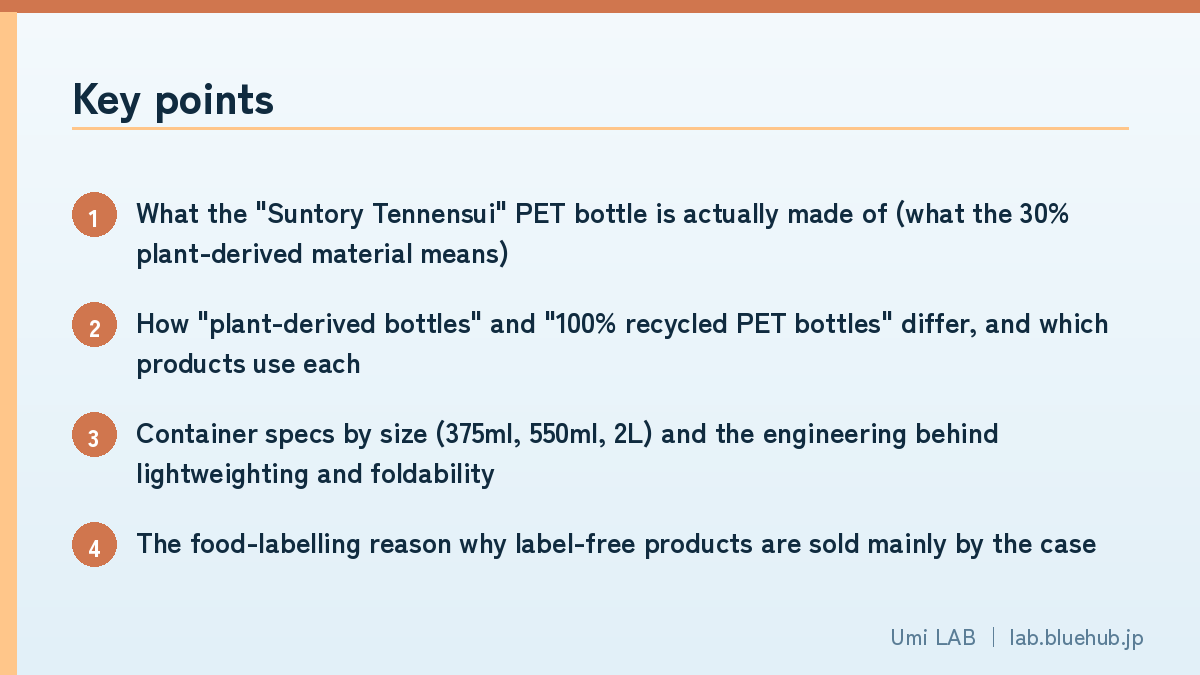
- What the "Suntory Tennensui" PET bottle is actually made of (what the 30% plant-derived material means)
- How "plant-derived bottles" and "100% recycled PET bottles" differ, and which products use each
- Container specs by size (375ml, 550ml, 2L) and the engineering behind lightweighting and foldability
- The food-labelling reason why label-free products are sold mainly by the case
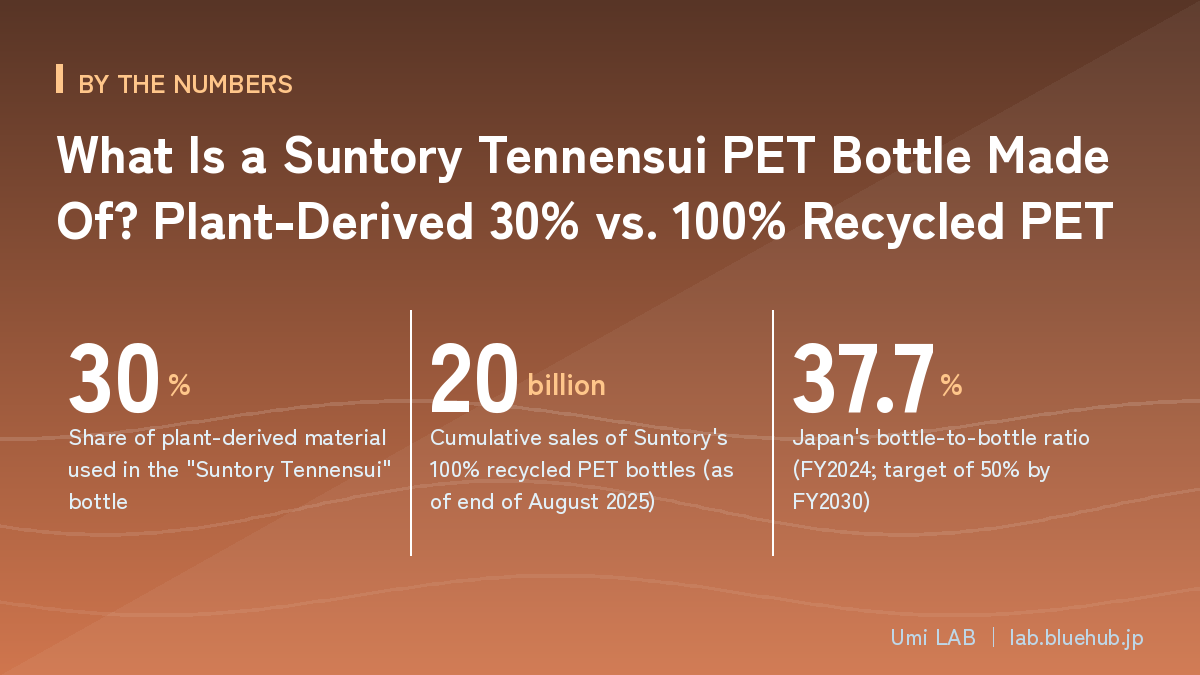
- Japan's latest figures for PET bottle collection rate, recycling rate and bottle-to-bottle ratio (FY2024)
- How the small effort of sorting reduces the plastic that flows from rivers into the sea
What Is the "Suntory Tennensui" Bottle Made Of?
First, it helps to understand how a PET bottle itself is put together. Once you grasp this, it becomes immediately clear why the figure "30% plant-derived" is 30%.
PET Resin Is Made of "30% + 70%"
PET resin, the raw material of a PET bottle, is made from two main chemicals. One is monoethylene glycol (MEG), accounting for roughly 30% by weight. The other is terephthalic acid, accounting for the remaining 70% or so. The precursor of terephthalic acid, one step back in the production chain, is paraxylene.
In other words, to stop making PET bottles from petroleum, both of these must be replaced with non-petroleum feedstocks one by one. The one that was technically replaced first was monoethylene glycol, the smaller share of the two.
Why did monoethylene glycol come first? The reason is simple: it was easier to obtain from plants. Monoethylene glycol can be synthesised from the sugars in sugarcane or corn by way of ethanol, an extension of fermentation, a technology humankind has used for thousands of years. Paraxylene, by contrast, is an aromatic compound with a ring structure, and efficiently building that skeleton from plant-derived feedstock was long considered a difficult problem. The sequence of "30% first, 70% later" is a direct reflection of chemical difficulty.
| Component | Approximate share by weight | Status of replacement with non-petroleum feedstock |
|---|---|---|
| Monoethylene glycol (MEG) | About 30% | Already replaced with plant-derived material from molasses (since 2013; introduced in Suntory Tennensui) |
| Terephthalic acid (from paraxylene) | About 70% | Bio-paraxylene from used cooking oil introduced into products in November 2024 (a world first) |
The "30% Plant-Derived Material" Bottle Used for Tennensui
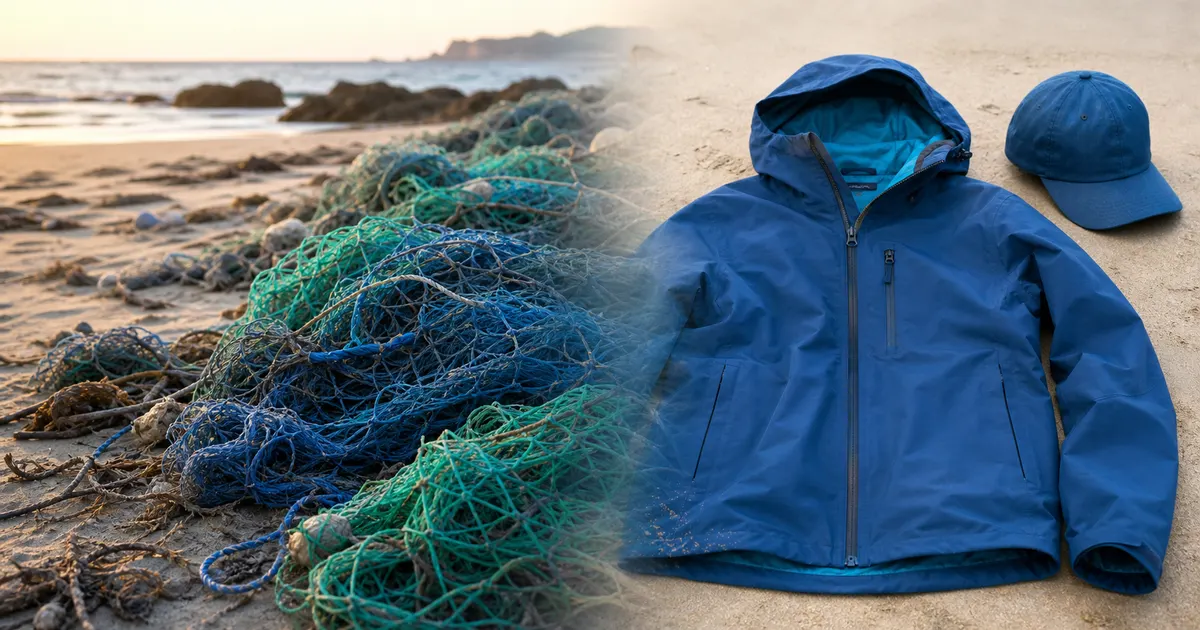
In 2013, Suntory adopted monoethylene glycol made from molasses, a by-product generated when sugar is produced from sugarcane, for the 550ml PET bottle of "Suntory Tennensui". This is the "PET bottle using 30% plant-derived material." The idea is to bring in an agricultural by-product that already exists instead of feedstock newly extracted from petroleum.
The choice of molasses as the feedstock is meaningful here. If edible sugarcane or grain were used directly as container feedstock, food and materials would compete for the same resource. Molasses is the syrup left after sugar has been extracted, a by-product long used for animal feed and fermentation. Rather than turning crops grown for eating into containers, this gives a new use to a by-product that is already being produced, sidestepping one of the standard criticisms of plant-derived materials: competition with food.
This plant-derived bottle later spread to larger sizes. Phased introduction into the 2L PET bottle began in April 2023, and full introduction across all units was completed from production in September of that year. It took ten years to go from 550ml to 2L.
The 550ml bottle also involves work on weight, not just material. The bottle weighs 11.9g, the lightest class among Japanese-made 500-600ml PET bottles (company research as of the end of April 2020, excluding products for vending machines). By combining plant-derived material with lightweighting, the company states that petroleum-derived feedstock use has been cut by roughly 40% per bottle compared with the previous product.
"100% Recycled PET Bottles" Are Something Entirely Different
This is the most misunderstood point. "Plant-derived bottles" and "100% recycled PET bottles" come from different material origins. The former uses agricultural by-products, a "newly created resource"; the latter uses spent PET bottles, a "resource already circulating in society."
As far as Suntory's published materials show, the "Suntory Tennensui" PET bottle is presented as a bottle using 30% plant-derived material. The examples named for 100% recycled PET bottles, meanwhile, are products such as "Suntory Oolong Tea" 2L, the industry's first adoption in 2012, and "GREEN DA・KA・RA Yasashii Mugicha" 600ml and 680ml, which use it across all units. Lumping everything together as "Suntory's eco bottles are all recycled PET" is simply not accurate.
Nor is this a question of which is better. Plant-derived material works against "extracting new petroleum," while recycled material works against "throwing away resources we already have." Bottle-to-bottle is capped by how much is collected; you can only make as much as comes back. Plant-derived material depends on crop planting and by-product volumes. Without combining the two, it is impossible to cover every bottle. That is why Suntory is running both routes at once.
Three terms not to confuse
- Plant-derived bottle: a bottle using plant-derived feedstock such as molasses. Tennensui uses 30%.
- 100% recycled PET bottle: a bottle made by returning spent PET bottles to feedstock (bottle-to-bottle).
- 100% sustainable bottle: the umbrella term covering both of the above, meaning zero newly extracted petroleum feedstock.
Where 100% Recycled PET Bottles Stand Today: The 20 Billion Figure
Even if Tennensui's own material is plant-derived, you cannot evaluate the product without knowing how the manufacturer handles resource circulation as a whole. Let us look at the bottle-to-bottle record in figures.
End of August 2025: Cumulative Total Passes 20 Billion
On 29 September 2025, Suntory Beverage & Food announced that cumulative sales of its 100% recycled PET bottles had surpassed 20 billion units as of the end of August 2025. The previous milestone of 15 billion was announced on 3 June 2024 (figures as of the end of May 2024), which means roughly 5 billion units were added in about a year and three months.
Through this cumulative total, new use of fossil-derived feedstock is said to have been cut by more than 400,000 tonnes (more than 300,000 tonnes at the 15 billion mark). A single PET bottle weighs from a dozen to a few dozen grams, but at a scale of billions of bottles the reduction reaches city-scale resource volumes.
The starting point goes back to 2012. That year, Suntory introduced a 100% recycled PET bottle for the 2L PET bottle of "Suntory Oolong Tea", the first in Japan's beverage industry. At the time there was almost no track record in Japan for returning spent bottles to beverage containers, and the hygiene and quality hurdles were high. A little over a decade later, the scale has reached 20 billion units.
This figure is not simply a story about how impressive Suntory is. Only because Japan collects PET bottles at a high level by global standards can spent bottles be obtained steadily as feedstock. Without manufacturer technology and household and municipal sorting meshing together, the 20 billion figure would not exist.
In Japan, "More Than One in Two" Is 100% Recycled
Ratios matter as much as unit counts. In its domestic soft drink business, Suntory has since 2023 made more than one in every two PET bottle products a 100% recycled PET bottle. The original medium-term target was "at least 50% of total PET bottle weight from sustainable material by 2025," but the company brought this forward by three years, achieving it during 2022.
The company's long-term goal is clear: by 2030, use recycled material or plant-derived material for all PET bottles used globally, bringing new use of fossil-derived feedstock to zero. Tennensui's plant-derived bottle and other brands' 100% recycled bottles are two roads heading to the same point.
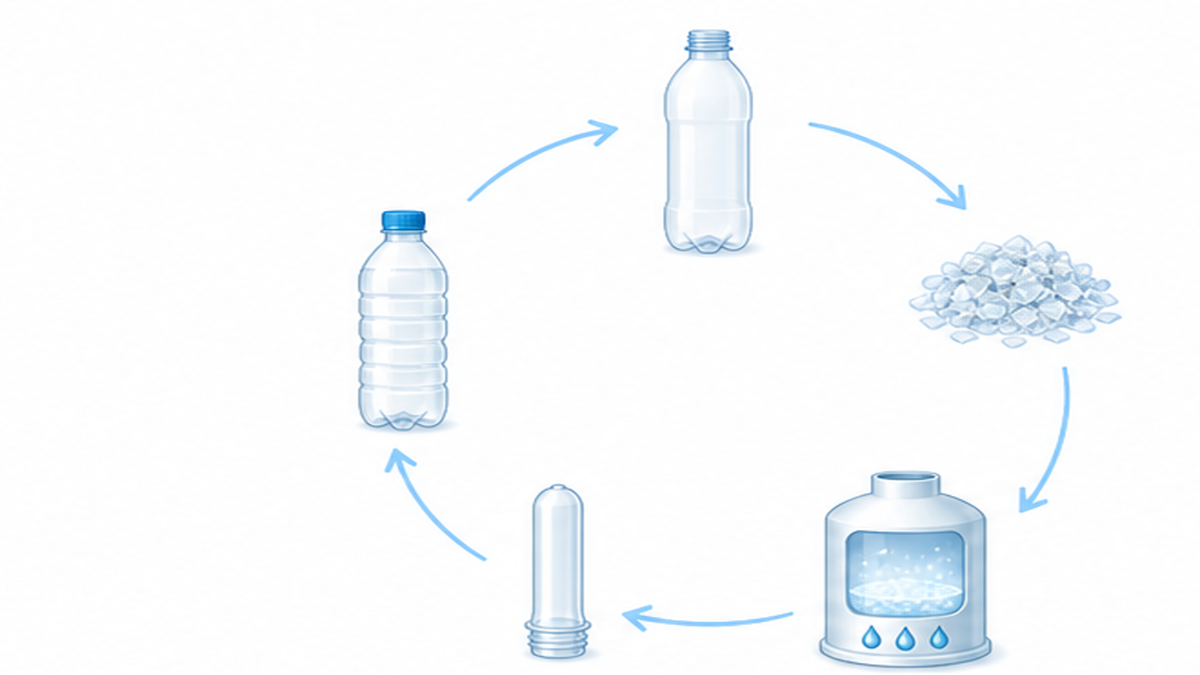
The technology behind this horizontal recycling and Suntory's "Tennensui no Mori" activities to protect the forests around its water sources are covered in detail in a separate article. If you want to dig into the difference between mechanical recycling and F-to-P direct recycling, and the push into chemical recycling, see Suntory Tennensui's Bottle-to-Bottle Horizontal Recycling and the Full Picture of "Tennensui no Mori".
See the official initiativeRecycle: Promoting "Bottle-to-Bottle" Horizontal Recycling | Suntory Group SustainabilityThe official page publishing cumulative sales of 100% recycled PET bottles, mechanical and F-to-P direct recycling technologies, and the 2030 goal of "100% sustainable PET bottles."🔗 suntory.co.jpTennensui Containers by Size: 375ml, 550ml and 2L
From a shopper's point of view, the first question is not material but "which size do I buy?" In fact, the design philosophy of the container differs clearly by size.
375ml: A New Option Sized to Finish in One Go
On 10 March 2026, a 375ml PET bottle of "Suntory Tennensui" went on sale nationwide. Development was prompted by consumer comments such as "I always leave some of a 550ml" and "a PET bottle is too bulky for a small bag." The slim shape is designed to be easy to hold and to fit in a bag: a personal size, in other words.
A finish-in-one-go size also matters environmentally. If you throw a bottle away with liquid still in it, both the water and the container are wasted. Choosing the right amount is itself a form of reduce.
550ml: 11.9g, Among the Lightest Made in Japan
The flagship 550ml weighs, as noted, 11.9g. That is the lightest class among Japanese-made PET bottles in the same capacity range (500-600ml, company research as of the end of April 2020, excluding vending machine products), and together with 30% plant-derived material it cuts petroleum-derived feedstock by roughly 40%. Hold one and you feel the bottle flex slightly the moment you remove the cap. That "flimsiness" is precisely the weight of resin that was removed.
2L: From 29.8g to a Bottle You Can Fold
The 2L bottle, the mainstay for household use, also has a history of lightweighting. In February 2013 the company introduced a 2L PET bottle weighing 29.8g, the lightest made in Japan. Coming in under 30g at 2L means securing strength with correspondingly thin resin.
Lightweighting has effects that simple arithmetic does not reveal. Less resin obviously means less feedstock, but it also lowers the shipping weight per bottle, so the same number of trucks can carry more bottles. It also works on CO2 emissions across manufacture, transport and disposal. This is why cutting "just a few grams" matters at a scale of billions of bottles.
And with the new container rolled out from early April 2023, the design philosophy went a step further. The shape lets you fold the empty container down to about one-sixth of its size after drinking. Unlike lightweighting, this design engages with the burden consumers face when discarding. Folding it small reduces both storage at home and volume at collection points, improving collection efficiency.
Label-Free: Removing the Peeling Step Itself
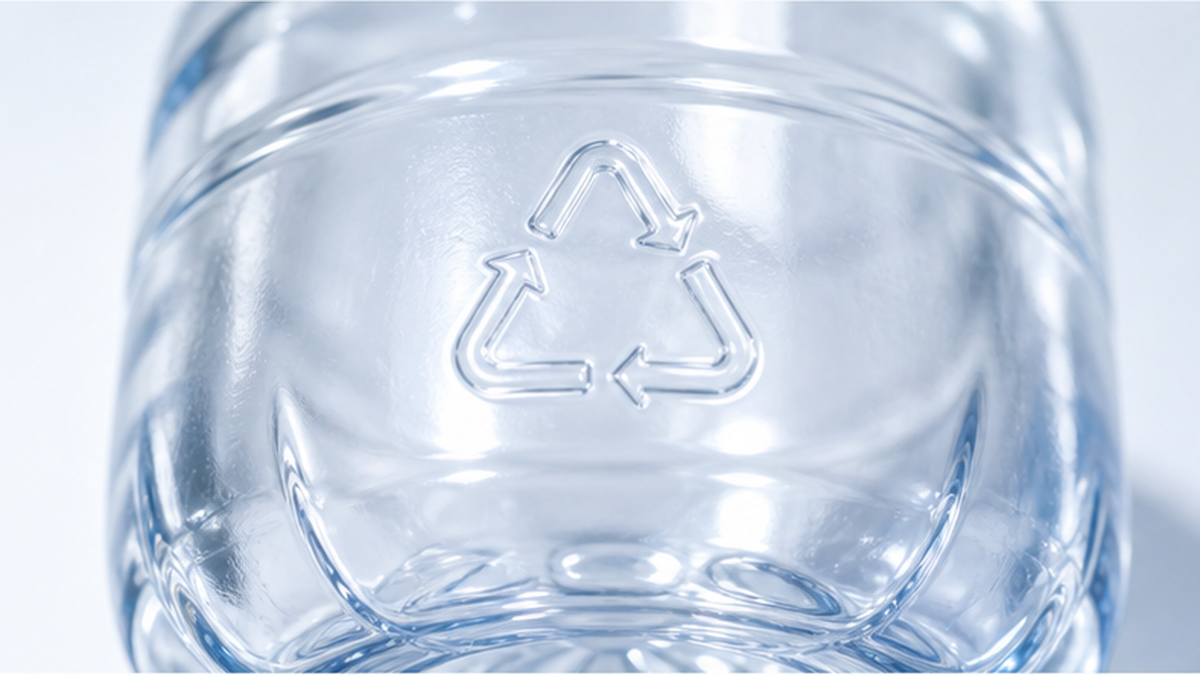
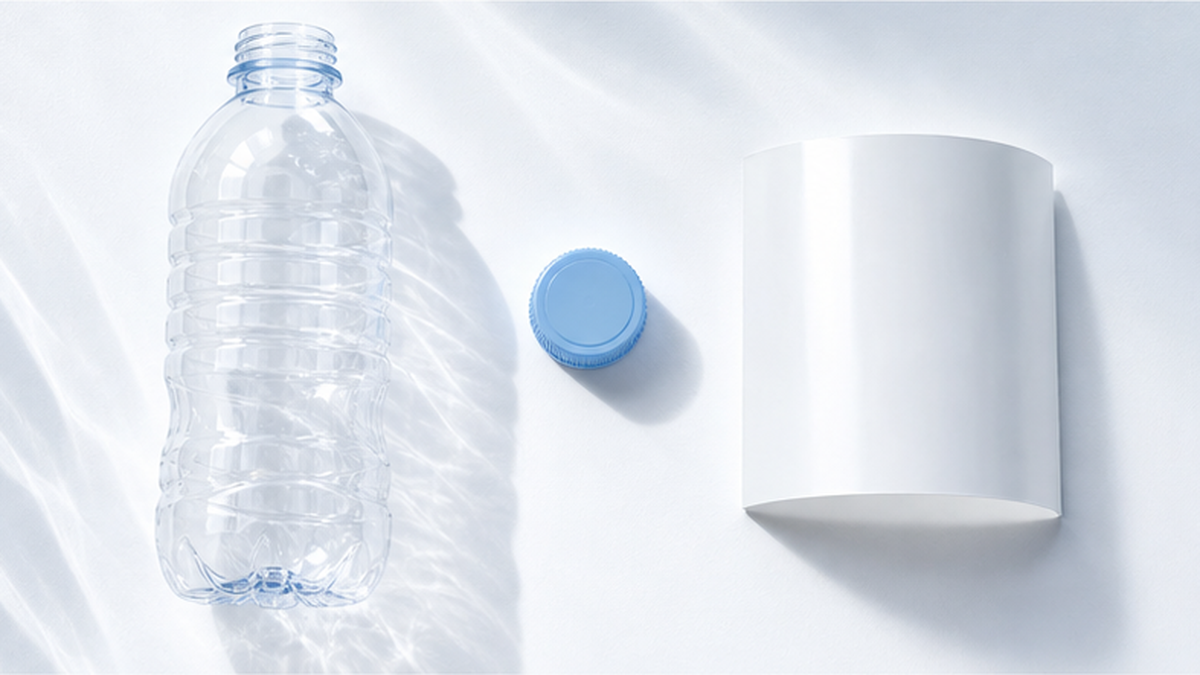
Label-free products such as "Suntory Tennensui 550ml PET Label-Free" and the 2L equivalent are offered mainly through e-commerce channels. Label-free is not about looks; the idea is to design away the labour of sorting. With no peeling to do, the risk of a bottle being discarded with its label still attached also falls.
Labels themselves have been lightened too. In 2014 the company introduced a 12μm (micrometre) roll label, the thinnest made in Japan, so that resin use is limited even when a label is applied. At 12μm it is less than a tenth the thickness of a human hair.
Label-free has another effect that is easily overlooked. Bottles collected with labels still attached require sorting and removal during reprocessing, and any label not fully removed affects the quality of the recycled PET resin. If there is no label to begin with, that step disappears entirely. A design that reduces consumer effort directly reduces the burden on recycling sites.
| Capacity | Main features | Environmental design points |
|---|---|---|
| 375ml | Launched nationwide 10 March 2026. Slim, finish-in-one-go size | Curbs leftovers and waste by letting you choose the right amount |
| 550ml | Flagship size. Bottle weight 11.9g | 30% plant-derived material plus lightweighting cuts petroleum-derived feedstock by about 40% |
| 2L | Household use. New container since April 2023 | Achieved Japan's lightest 29.8g in 2013 / empty bottle folds to about one-sixth |
| Label-free (550ml, 2L) | Mainly e-commerce channels | Removes the label, cutting both sorting effort and resin use |
Why Are Label-Free Bottles Sold Only by the Case?
Many people who go looking for label-free products hit a wall: single label-free bottles are almost never on convenience store or supermarket shelves. This is not manufacturer laziness; the reason lies in food labelling rules.
Each Single Bottle Must Carry Complete Information
Under Japan's Food Labeling Act, beverages must display the product name, ingredients, nutrition facts and more. The essence of the current rules is not "label-free is banned" but that a bottle distributed as a single unit must carry all the required information on that one bottle.
Conversely, with case or box sales, printing the required items on the outer packaging (the cardboard box) allows each bottle inside to be label-free. That structure is why label-free products centre on buying by the case online. The note on the box reading "case-sale-only product: do not open in store" exists to prevent the labelling information from being lost the moment a bottle leaves the box.
The 2020 Rule Change That Allowed Marking Directly on the Bottle
Another rule change helped label-free spread. In 2020, the identification labelling system under the Act on the Promotion of Effective Utilities of Resources, covering marks indicating plastic containers and packaging, was changed to permit processing the mark directly onto the bottle body. That is why label-free bottles carry a faintly embossed mark on the shoulder. The number of companies adopting label-free rose rapidly afterwards.
Points to note when buying label-free
- Case-sale-only products are not intended to be opened in store and sold individually.
- If you use them as gifts or hand them out, understand that a bottle taken out of its outer packaging carries no labelling information.
- When sharing with people who need to check allergens or ingredients, noting down the outer packaging information is the safer approach.
How to Tell at the Shelf: Reading the Signs on the Bottle
Having read this far, many will wonder how to judge at the point of purchase. The short answer is that it is hard to fully identify material origin at the shelf. There are, however, a few clues.
The "Bottles Are Resources!" Logo Mark
In January 2022 Suntory announced a new logo mark conveying that PET bottles can circulate as a resource again and again, and said it would roll it out progressively across all domestic PET bottle products. The message "Bottles are resources! Towards sustainable bottles" is delivered using the packaging itself as the medium. Where you see this on a label or bottle, you know the manufacturer is explicitly signalling resource circulation.
At the same time, the company set out the goal that "in Japan this year, one in two bottles will be a 100% sustainable bottle." The mark is not mere decoration but a declaration that shows consumers how far the goal has come.
Identification Marks and Direct Embossing on Bottles
Another clue is the identification mark required under the Act on the Promotion of Effective Utilities of Resources. It used to be printed on the label, but the 2020 rule change permitted processing it directly onto the bottle body. That is why label-free bottles carry a small mark on the shoulder or body that appears when you change the angle of the light. Even without a label, the container itself shows that the bottle is a PET resource.
The "Ingredients" Panel Tells You Nothing About Material Origin
There is a limitation worth stating plainly. On a beverage, the ingredients list and nutrition facts describe the contents, not the material origin of the container. To know reliably whether a bottle is recycled PET, plant-derived or petroleum-derived, you currently have to check the manufacturer's official website or news releases.
That is precisely why organising information like this has value. Put the other way round: if labelling that lets you identify container material at a glance became widespread, consumer choice would work far better. This remains a task for regulators and the industry.
What you can and cannot check in store
- You can check: whether a logo mark or message about resource circulation is present.
- You can check: whether it is label-free, and whether the bottle is shaped to fold down.
- Hard to check: whether the bottle is recycled PET, plant-derived or petroleum-derived (official information required).
- You cannot check: the ingredients list and nutrition facts describe the contents, not the container's material origin.
Japan's PET Bottle Circulation in Figures (FY2024)
However good the material of a single bottle, the loop is not complete unless it is collected and reprocessed. Let us check Japan's overall performance using official statistics from the Council for PET Bottle Recycling. All figures below are for FY2024.
Collection Rate 91.9%, Recycling Rate 85.1%
Sales of designated PET bottles in FY2024 came to 652,294 tonnes. Against that, municipal collection was 313,337 tonnes and business-sector collection 286,274 tonnes, for a total of 599,611 tonnes collected. The collection rate was 91.9%, a slight decline from 92.6% the previous year.
The recycling rate was 85.1%. Some 445,000 tonnes domestically and 110,000 tonnes overseas, 555,000 tonnes in total, were reprocessed into new products. The Council's voluntary action plan target of "maintaining a recycling rate of 85% or more" was met. Including thermal recovery, the effective utilisation rate was 98.6%.
Bottle-to-Bottle Ratio Rises to 37.7%
The horizontal recycling ratio deserves particular attention. The bottle-to-bottle ratio, returning spent PET bottles to PET bottles again, was 37.7%, up 4.0 points from 33.7% the previous year. The volume of recycled PET resin used for bottle-to-bottle was 246,000 tonnes, an increase of 14.7% year on year.
The target lies further ahead. The Japan Soft Drink Association issued a "2030 bottle-to-bottle 50% declaration," and the Council for PET Bottle Recycling shares the same goal: a bottle-to-bottle ratio of 50% by FY2030. How to close the remaining twelve-odd points is the task of the coming decade.
| Indicator | FY2024 result | Target |
|---|---|---|
| Collection rate | 91.9% (92.6% the previous year) | — |
| Recycling rate | 85.1% | Maintain 85% or more |
| Bottle-to-bottle ratio | 37.7% (up 4.0 points year on year) | 50% by FY2030 |
| Effective utilisation rate | 98.6% | 100% by FY2030 |
| Lightweighting rate (vs FY2004) | 28.1% (reduction effect 254,000 tonnes) | Lightweighting of 25% or more |
International Comparison: How Does Japan's 85% Look Globally?
That 85.1% is outstandingly high by international standards. In a comparison Suntory cites in its published materials, Europe's recycling rate is 42.7% (FY2021) and the United States' is 18.0% (FY2020). Japan's level is thus two to more than four times higher.
Behind this lie household waste sorting established as a daily habit, a nationwide municipal resource collection network, and collection boxes beside vending machines and convenience stores. The act Japanese consumers take for granted, "remove the cap, rinse it, put it out on resource day," is not taken for granted internationally.
That said, a figure showing "90% collected" also means that about 10% falls outside the collection loop. That 10% leads into a later chapter.
How Far Has "Plant-Derived" Come? From Molasses to Bio-Paraxylene
Back to materials. The 30% plant-derived material Tennensui adopted in 2013 replaced the monoethylene glycol portion of PET resin. So what happened to the remaining 70% or so, the terephthalic acid?
November 2024: A World-First Bottle from Used Cooking Oil
On 28 October 2024, Suntory Holdings announced that it would introduce PET bottles using bio-paraxylene derived from used cooking oil into products for the first time in the world. Introduction began in November 2024.
The route runs like this: collected used cooking oil is made into bio-naphtha, from which bio-paraxylene and then bio-terephthalic acid are obtained and turned into PET resin. The 70% side of the feedstock, previously extracted from petroleum, is replaced with oil already used for frying. Mitsui Chemicals, ENEOS and Mitsubishi Corporation are involved in the project.
The Scale Is Still "About 0.5%": An Honest Look at Where We Are
The scale of this technology should not be overstated, however. At the time of the announcement, the volume introduced was about 45 million beverage PET bottles, roughly 765 tonnes by weight. That corresponds to about 0.5% of the company's domestic PET bottle distribution volume. Forty-five million sounds large, but against the whole it is still a pilot stage.
Used cooking oil as a feedstock also has a supply ceiling. The oil from households and restaurants is not unlimited, and it is already contested by uses such as biodiesel and sustainable aviation fuel (SAF). Whether large volumes can be secured as container feedstock depends on how far collection networks expand. "Plant-derived, therefore infinitely scalable" is not the case, and that deserves a level-headed note.
Even so, demonstrating in a commercial product that the technology is possible is no small thing. De-petroleumising PET bottles has proceeded in stages over more than a decade: the 30% MEG share in 2013, the 70% paraxylene share in 2024. The 2030 goal of "zero new use of fossil-derived feedstock" sits on the end of that accumulation.
Suntory's "2R + B" approach
- Reduce: cut the amount of resin used in the first place (lightweighting, thinner walls, label-free).
- Recycle: reprocess spent bottles and use them again (bottle-to-bottle horizontal recycling).
- Bio: use plant-derived resources (MEG from molasses, paraxylene from used cooking oil).
The Small Effort of Sorting Reduces Ocean Plastic
So far this has been a story about containers, but from the sea's point of view what works best is not advanced technology; it is the few dozen seconds of action after you finish drinking.
Where Do Uncollected Bottles Go?
A collection rate of 91.9% means that about 8%, roughly 50,000 tonnes by weight, falls outside the collection loop. Bottles left by the roadside, spilling out of park bins, or blown away by the wind move with every rainfall from gutters to irrigation channels and on into rivers. Worldwide, an estimated two million tonnes of plastic flows into the sea through rivers each year. We covered that flow in detail in Plastic Waste Flowing from Rivers into the Sea.
Once plastic reaches the sea, ultraviolet light and waves break it into microplastics and recovery becomes all but impossible. The battle over PET bottle circulation is decided on land, before it reaches the sea.
What makes a PET bottle troublesome is that it is light, tough, and floats once empty. A finished bottle fills with air and floats, so rainwater carries it anywhere. PET also barely degrades in nature. Bottles discarded decades ago still wash up on beaches with their shape intact, which is far from rare.
Put the other way round, a PET bottle is one of the easiest plastics to recycle, provided it is collected. The material is single-type, most are colourless and transparent, and shapes are standardised. Japan's 85.1% recycling rate is the product of that ease multiplied by sorting habits. "Troublemaker flowing into the sea" and "the resource best suited to circulation" are two sides of the same container.
Without Clean Sorting, Horizontal Recycling Does Not Work
Another important point is that collection alone is not enough. Bottle-to-bottle horizontal recycling demands high feedstock purity. Contamination lowers working efficiency when producing recycled PET resin and affects quality too. The Council for PET Bottle Recycling likewise urges municipalities and consumers to remove caps and labels as far as possible, rinse lightly, and put bottles out sorted.
- Finish the contents (leftover liquid can be treated the same as contamination).
- Remove the cap and label (caps are often made of a different material, not PET resin).
- Rinse lightly with water and drain.
- Crush or fold (follow your municipality's rules; some areas ask you not to fold).
- Put it out for municipal resource collection or in an in-store collection box.
These five steps are nothing special. But whether that small effort happens decides whether the bottle "becomes a bottle again," "becomes fibre and is eventually burned," or "ends up in the sea." For the wider shift to a circular economy, see also What Is the Circular Economy?.
We carried out broad awareness activities for municipalities and consumers via websites and public relations magazines, asking that caps and labels be removed as far as possible and that bottles be rinsed lightly and put out sorted.
― Council for PET Bottle Recycling, "PET Bottle Recycling Annual Report 2025"
Conclusion: A Checklist for Buying and Discarding
The "Suntory Tennensui" PET bottle is not 100% recycled PET but a bottle using 30% plant-derived material. Hold that fact accurately, then add that the company has accumulated 20 billion 100% recycled PET bottles and aims for zero new use of fossil-derived feedstock by 2030, and the product's position comes into three-dimensional view.
At the same time, excessive expectations are unwise. Bottles from used cooking oil are still about 0.5% of domestic distribution, and the bottle-to-bottle ratio is 37.7%: a fair distance from the 2030 target. Rather than thinking "I chose an eco bottle, so it is fine," it is more reliable to hold the higher-order option of using fewer bottles in the first place. Alternate between days you carry a reusable bottle and days you buy PET. That alone reduces the number of containers that have to enter the loop at all.
What matters is not comparing which brand is more virtuous. It is knowing where a single container sits along the long chain of material, lightweighting, foldability, label-free design, sorting and reprocessing, and taking on the part you can carry. However good the material a manufacturer uses, it means nothing if the bottle is not collected. Conversely, however carefully we sort, new extraction will not fall while the material remains petroleum-derived.
Five things you can do today
- When choosing a size, pick one you can finish (375ml is now an option).
- If buying by the case, consider label-free (zero peeling required).
- Remove the cap and label, rinse, then put it out for resource collection.
- When out and about, take it home if the bin is overflowing (wind carries it to rivers, and rivers to the sea).
- Alternate with a reusable bottle: not using one at all is always the lightest choice.
Key points of this article
- The "Suntory Tennensui" PET bottle uses 30% plant-derived material; the 550ml weighs 11.9g and cuts petroleum-derived feedstock by about 40%.
- 100% recycled PET bottles centre on other brands such as Oolong Tea and Yasashii Mugicha, at 20 billion cumulative units (end of August 2025).
- The 2L has folded down to about one-sixth since the new container in April 2023; the 375ml launched nationwide on 10 March 2026.
- Japan's FY2024 results: collection rate 91.9%, recycling rate 85.1%, bottle-to-bottle ratio 37.7% (50% target for FY2030).
- Bottles using bio-paraxylene from used cooking oil were a world first in November 2024, but at about 0.5% of domestic distribution.
参考文献・出典
- Council for PET Bottle Recycling – PET Bottle Recycling Annual Report 2025 (FY2024 results: collection rate 91.9%, recycling rate 85.1%, bottle-to-bottle ratio 37.7%)
- Council for PET Bottle Recycling – Statistics: "Trends in collection rates"
- Suntory Beverage & Food – Cumulative sales of 100% recycled PET bottles surpass 20 billion units (29 September 2025)
- Suntory Holdings – World's first introduction into products of PET bottles using bio-paraxylene derived from used cooking oil (28 October 2024)
- Suntory Beverage & Food – 30% plant-derived material introduced across all "Suntory Tennensui" 2L PET bottles (1 September 2023)
- Suntory Beverage & Food – New container developed for the "Suntory Tennensui" 2L PET bottle: a bottle that folds "small and easily" to about one-sixth its size (5 April 2023)
- Suntory Beverage & Food – Slim and easy to carry, a finish-in-one-go size: the "Suntory Tennensui" 375ml PET bottle goes on sale
- Suntory Group – Sustainability, Recycle: Promoting "bottle-to-bottle" horizontal recycling
- Suntory Tennensui – Environmentally considerate bottles and packaging (550ml 11.9g, 30% plant-derived material, about 40% less petroleum-derived feedstock)
- Mitsui Chemicals – Suntory's challenge towards 100% sustainable PET bottles (PET resin composition and de-petroleumisation)
※ 信頼性の高い順に配列:政府機関・学術機関 > 査読済み論文 > 専門機関 > 信頼できるメディア