The ocean's thermometer keeps rising — quietly, but unmistakably. According to observations by the United Nations and NOAA (the U.S. National Oceanic and Atmospheric Administration), a full 84% of the world's coral reef area was exposed to heat stress severe enough to cause bleaching between 2023 and 2025, making it the largest "fourth global bleaching event" on record. Mass bleaching that once struck only once every few decades is now happening every few years, and across a much wider area. If this continues, much of the vividly colored coral reef we know today could be lost.
In response, researchers around the world are seriously pursuing an idea: find, raise, and multiply coral that can survive in an ocean that keeps getting hotter. The approach involves identifying naturally heat-tolerant coral strains and symbiotic algae, passing that resilience on to the next generation through selective breeding, and drawing on acclimatization and beneficial microbes to build new reefs adapted to a warming climate. Collectively known as "assisted evolution," these efforts aim to give nature's own evolutionary process a small, deliberate push.
Starting from the mechanics of bleaching, this article traces how scientists find and raise heat-tolerant coral, drawing on primary sources from AIMS (the Australian Institute of Marine Science), the University of the Ryukyus, Japan's Fisheries Agency, NOAA, and others. At the same time, it confronts head-on the difficulties and ethical questions these interventions raise — because none of them is a silver bullet. By the end, you should have a more three-dimensional view of both the hope and the reality surrounding coral reefs and climate change.
What you'll learn in this article
- How severe global coral bleaching has become, and why "heat-resistant coral" is now in demand
- CBASS and ED50 — the standardized system for identifying heat-tolerant individuals
- "Selective breeding," which passes resilience from strong parents to strong offspring, and why its effects aren't uniform
- Durusdinium (Clade D) symbionts and "shuffling" as sources of heat tolerance, along with the trade-off with growth
- New approaches such as acclimatization (preconditioning) and probiotics that "train" coral to withstand heat
- Japan's efforts around heat-tolerant coral seed stock on Kumejima, Okinawa, and the risks and limits of assisted evolution
Beyond "Bleaching" — Why Heat-Resistant Coral Matters Now
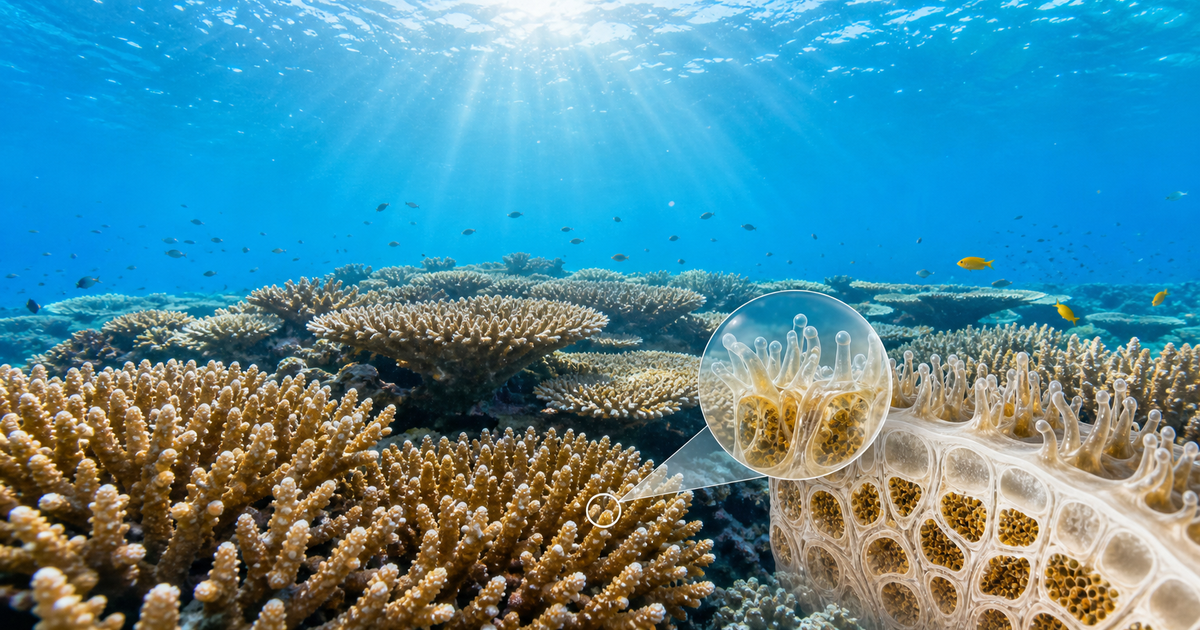
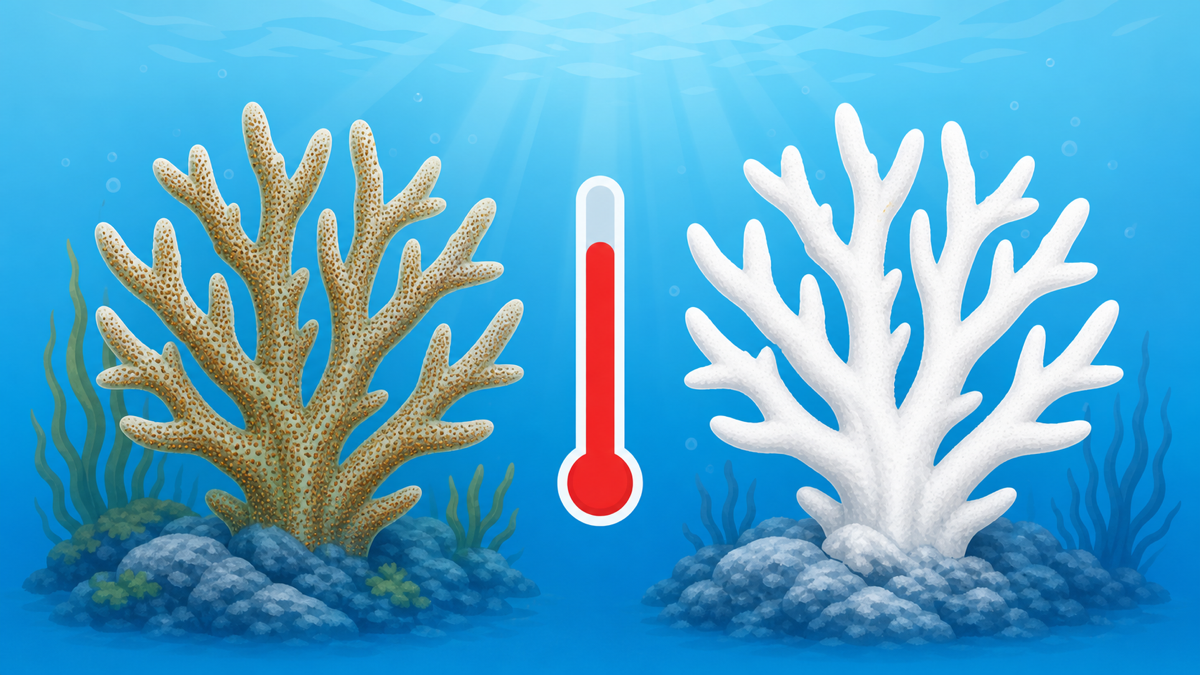
Coral's vulnerability to warming is rooted in the very structure of its body. Reef-building corals host tiny photosynthetic organisms called zooxanthellae inside their tissue, living off the nutrients these algae produce through photosynthesis. Coral's vivid colors, and much of its nutrition, come from these symbiotic algae. But when seawater temperatures stay 1-2°C above the seasonal average for an extended period, this symbiotic relationship breaks down: the coral expels its algae, and its skeleton shows through, turning the coral white. This is "bleaching." The detailed mechanism behind bleaching is explained in our article on the mechanism of coral bleaching.
So why does coral warrant such effort to protect? Coral reefs cover barely 0.1% of the ocean's surface, yet roughly a quarter of all marine species are said to use them as habitat or spawning grounds — making them a cradle of life. They nurture fish and other fisheries resources, buffer the force of waves to protect coastal communities, and serve as a resource for tourism. Their role in sustaining the richness of Japan's seas is also introduced in our article on marine biodiversity in Japan. Losing coral reefs would mean losing all of these benefits at once.
Bleaching Isn't Death — But There Are Limits
Bleaching itself does not mean the coral has died. If water temperatures drop, coral can recover its symbiotic algae and bounce back. But when high temperatures persist, or bleaching recurs repeatedly, coral deprived of nutrients weakens and eventually starves to death. In recent years, the interval between bleaching events has been shrinking, and it is increasingly common for coral to be hit by the next heatwave before it has fully recovered — a growing concern. The toll marine heatwaves take on coral and fisheries is also covered in our article on the impact of marine heatwaves.
The relationship between coral and its symbiotic algae itself is explored further in our article on coral-zooxanthellae symbiosis. This "symbiosis" is precisely the key feature underlying research into heat-resistant coral — because a coral's heat tolerance depends not only on its own genes, but also on which symbiotic algae and which microbes it carries.
The Fourth Global Bleaching Event: A Turning Point
In April 2024, NOAA and the ICRI (International Coral Reef Initiative) officially announced that the world had entered a "fourth global bleaching event." Subsequent analysis confirmed that, from early 2023 through mid-2025, roughly 84% of the world's coral reef area — across the Pacific, Atlantic, and Indian Oceans — was subjected to heat stress severe enough to cause bleaching. That far exceeds the third event of 2014-2017 (about 68.2%), making it the largest bleaching event on record. Bleaching has been documented in at least 83 countries and territories.
Comparing the Scale of Bleaching Events
- First event (1998): The first globally recorded mass bleaching, occurring during a strong El Niño year
- Third event (2014-2017): Then the largest on record, affecting about 68.2% of reef area
- Fourth event (2023-2025): Affected roughly 84% of the world's coral reef area, the largest on record
Facing this reality, researchers have shifted their focus beyond simply "preventing bleaching" toward a bolder goal: increasing the number of coral that can withstand high water temperatures in the first place. If the pace of warming outstrips coral's own natural evolution, can we lend a hand to help it adapt? That is the starting point of "assisted evolution." As discussed later, though, this is not about replacing natural reefs with artificial ones — it is discussed as a supplementary measure to help nature's own resilience along.
Key Points
- Coral's vulnerability to heat is rooted in its symbiotic relationship with algae
- Repeated, more frequent bleaching is robbing coral of the chance to recover
- The fourth event of 2023-2025 affected 84% of reef area — the largest on record
- Interest is growing in going beyond "prevention" to actively increasing heat-resistant coral through assisted evolution
Where Heat-Resistant Coral Lives — Finding and Selecting It
To build heat-resistant coral, researchers first need to find individuals that are naturally heat-tolerant to begin with. Even within the same species, heat tolerance can vary considerably between individual colonies (genotypes). Particular attention goes to "tough" individuals that survive in harsh environments prone to summer heat, intense sunlight, and temperature spikes at low tide. Researchers sometimes call such coral "super coral," a nod to science fiction.
"Tough" Individuals That Survive Harsh Seas
Highly heat-tolerant individuals are known to turn up in seemingly harsh places — shallow tide pools with fluctuating temperatures, warm waters near the equator, or murky waters near river mouths. Individuals "trained" by everyday temperature fluctuations tend to be relatively resistant to sudden spikes in heat. Researchers focus their surveys on such locations to identify tolerant candidates.
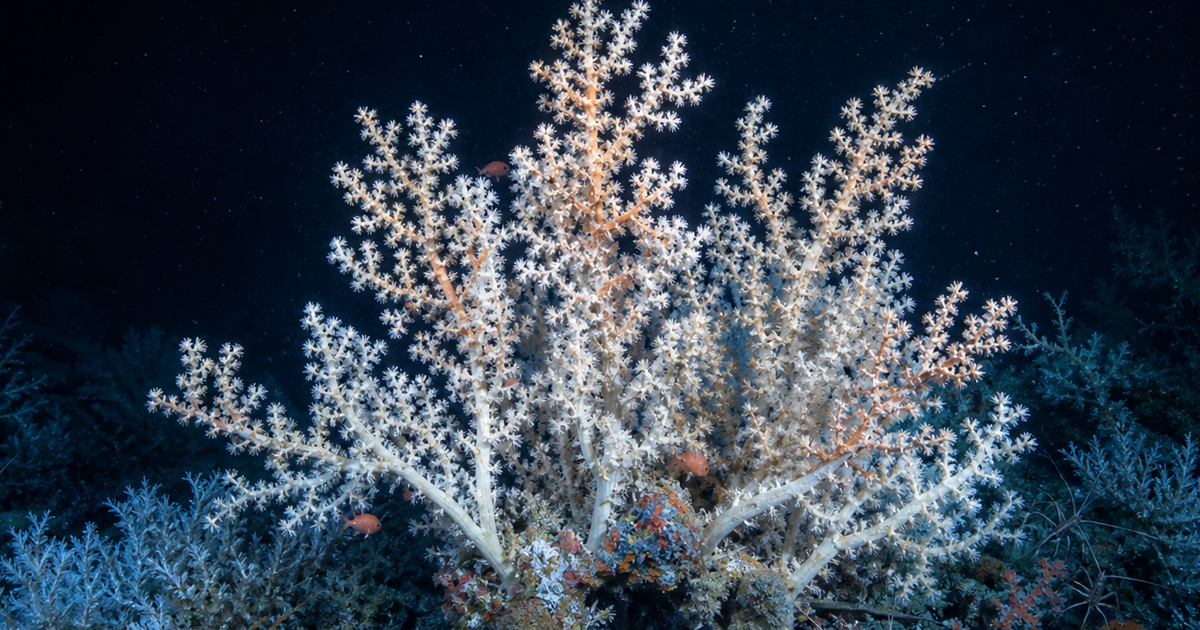
Slightly deeper waters, or turbid seas where light is diffused, can also serve as "refugia" that shelter coral from heat. Weaker sunlight near the surface combined with relatively stable temperatures eases the damage from bleaching. Individuals that persist in these refugia are considered a valuable "seed stock" for future reef restoration, and are a focus of exploration. Our article on deep-sea coral is also a useful reference on coral living in deeper waters.
CBASS — A Standard Tool for Measuring Heat Tolerance
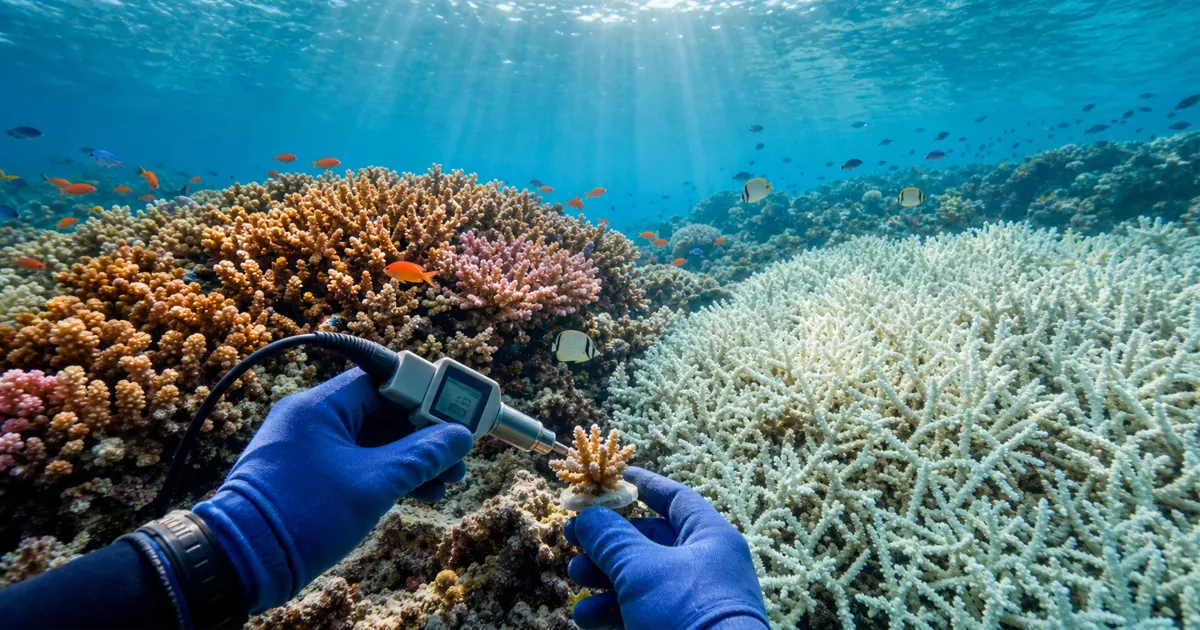
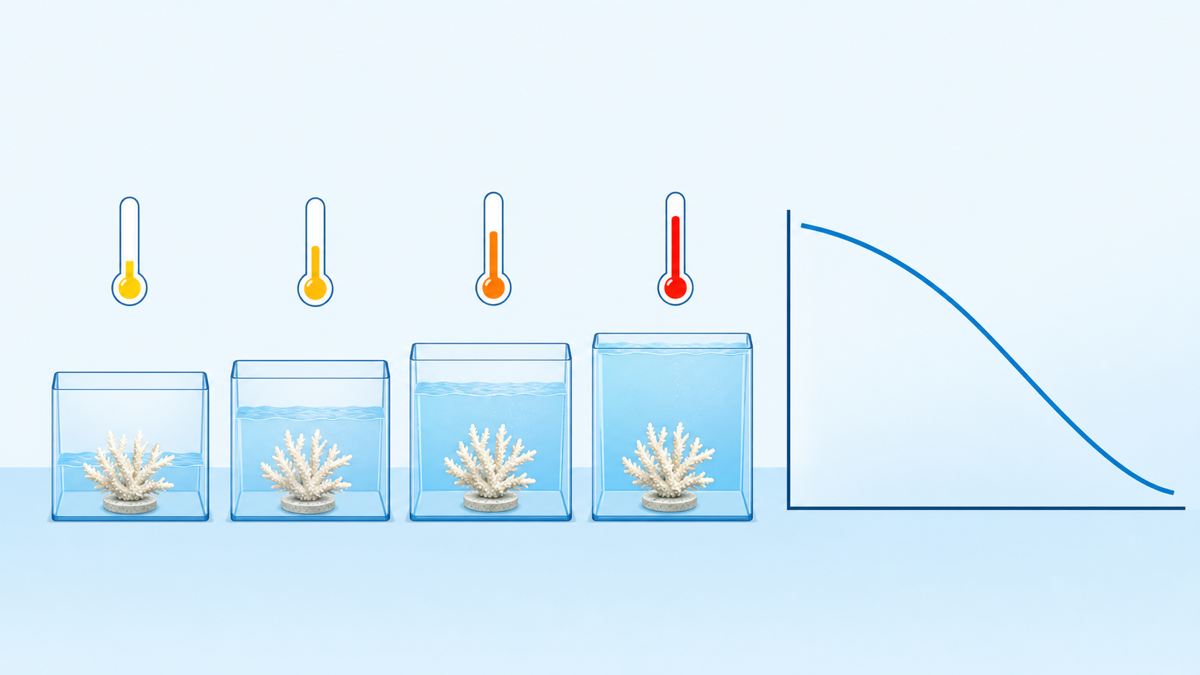
To objectively confirm whether a candidate coral really is heat-tolerant, researchers developed a device called CBASS (Coral Bleaching Automated Stress System). This portable, small-scale tank system exposes coral fragments to briefly, incrementally rising water temperatures and quantifies heat tolerance from the resulting degree of damage. Its strengths are low cost, quick assembly — even on a boat or in the field, within a few hours — and the ability to assess up to about 40 coral fragments per day. Standardized in a 2023 academic paper, it is now used by research teams worldwide as a shared benchmark.
In a typical CBASS trial, water temperature is raised to a target level over three hours, held there for three hours, then returned to the original temperature over one hour, followed by an overnight recovery period. This mimics the daytime temperature swings that actually occur in shallow water, triggering an acute heat stress response in a short time. From the results, researchers calculate "ED50" — the temperature at which a coral's photosynthetic capacity drops by half — allowing comparisons of heat tolerance across individuals, populations, species, and locations. A higher ED50 indicates greater heat resistance.
Mapping the Data and Choosing Strategically
Heat-tolerance data gathered this way is combined with genetic information and environmental data from each site. Support tools such as "Reef Adapt" have emerged in recent years, predicting which lineages from which regions are likely to adapt to future warming and advising on which individuals should be moved where during restoration. Rather than collecting indiscriminately, research has advanced to a stage of "smart selection" grounded in scientific evidence.
| Stage | What Happens | Purpose |
|---|---|---|
| Survey | Field surveys to find individuals surviving in harsh environments | Narrow down tolerance candidates |
| Assessment | Measure ED50 and other metrics with CBASS to quantify heat tolerance | Objectively confirm resilience |
| Analysis | Cross-reference with genetic information and environmental data | Understand factors behind tolerance and suitable sites |
| Selection | Choose resilient individuals as breeding parents or transplant sources | Apply to breeding and restoration |
"Strength" Isn't a Single Trait
Heat tolerance is not one simple property — it encompasses resistance to bleaching, the ability to recover after bleaching, growth rate, and disease resistance, among other traits. CBASS primarily measures tolerance to sudden high temperatures; it doesn't capture a coral's overall resilience on its own. That's why combining multiple metrics is essential for a full evaluation.
Selective Breeding — From Heat-Tolerant Parents to Heat-Tolerant Offspring
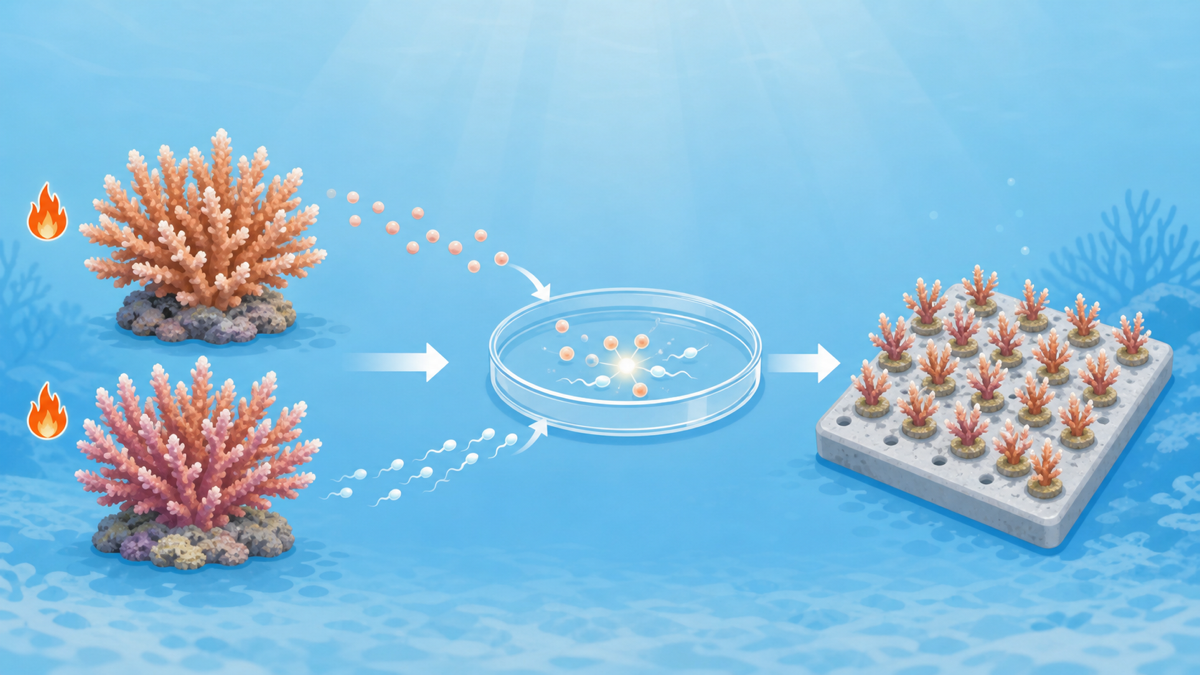
Once heat-tolerant individuals are identified, the next step is passing that resilience on to the next generation. This is where "selective breeding" comes in — the same idea used in livestock and crop improvement, in which parents with desirable traits are crossed to produce stronger offspring. Because coral undergo "mass spawning," releasing eggs and sperm simultaneously once a year, researchers can seize this window to hand-fertilize and cross-breed them. The mystery of mass spawning is introduced in our article on coral mass spawning.
The Basic Process of Selective Breeding
- Select heat-tolerant parent coral (broodstock) through field surveys and CBASS testing
- Rear the parent coral through the spawning season and collect eggs and sperm (gametes)
- Fertilize by crossing gametes from heat-tolerant parents
- Settle the resulting larvae and raise them into juvenile coral on land or in the sea
- Re-evaluate the heat tolerance of the offspring generation to confirm the effect
AIMS (the Australian Institute of Marine Science) has long led this field. Its research team has collected a species of staghorn coral (Acropora spathulata) from the northern and central Great Barrier Reef, ranked their heat tolerance using CBASS and similar methods, and repeatedly crossed the most resilient parents. The goal is not only to produce heat-tolerant offspring, but to uncover the underlying "mechanism of adaptation" itself — which genes determine heat tolerance, and how it is inherited.
The Reality: "One Size Does Not Fit All"
Selective breeding is not a cure-all, however. Recent AIMS research has shown that even when heat-tolerant parents are chosen, how much of that resilience is passed on to offspring varies greatly depending on where the parent coral originated. In some populations, tolerance was reliably inherited; in others, almost no effect was observed at all. Researchers describe this as evidence that "one size does not fit all."
This result suggests that the success of selective breeding depends not only on the coral's own genes, but on a combination of factors including the type of symbiotic algae and the environment in which the offspring grow. In other words, simply choosing "the strongest parent" is not enough — the genetic background and environment specific to each region must be carefully considered. Research is now entering a phase of identifying, against this backdrop of complexity, under what conditions selective breeding actually works.
Selective breeding can, in some cases, increase the heat tolerance of young offspring — but how much resilience parents pass on depends on where those parent coral came from.
— From AIMS (Australian Institute of Marine Science) research on assisted evolution
Cryopreservation — A "Seed Bank" That Transcends Time
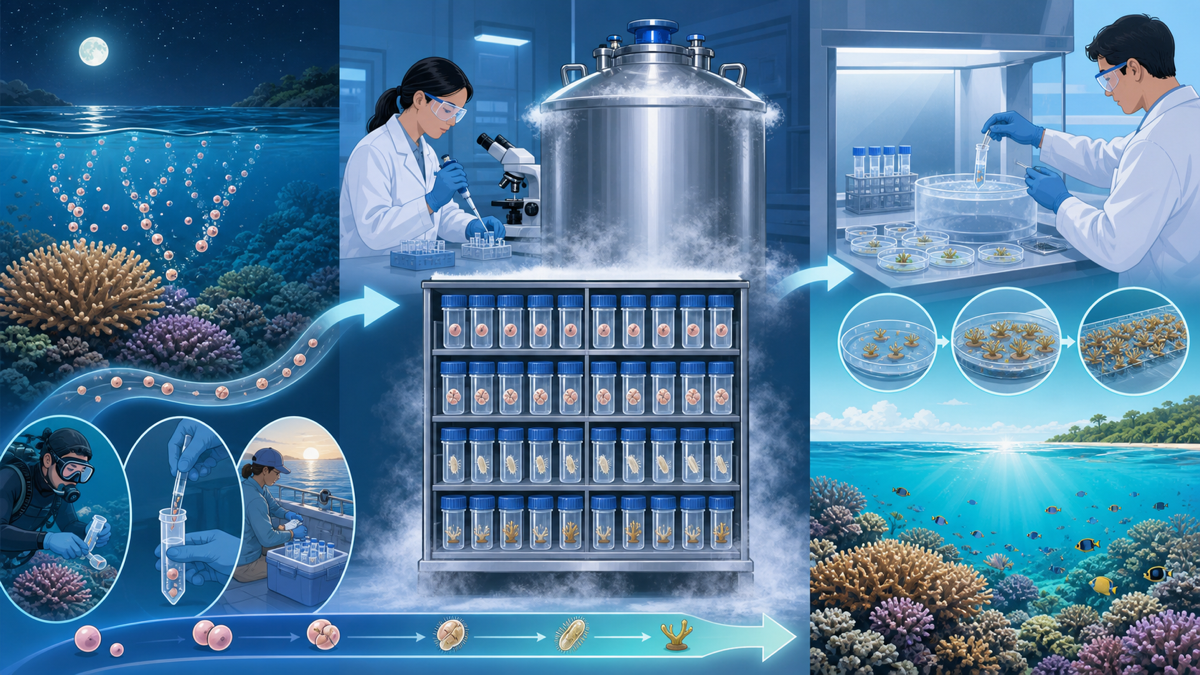
One technology supporting selective breeding that has advanced rapidly in recent years is cryopreservation — freezing coral sperm and larvae at ultra-low temperatures. Because coral spawn only once a year, and timing differs by species, it isn't easy to cross gametes from different populations or timings at once. But by cryopreserving sperm, researchers can cross-breed across gaps in timing and location, preserving the genetic diversity of populations at risk of extinction for the future, much like a "seed bank." Indeed, studies have reported using cryopreserved sperm for assisted gene flow, introducing genes from other populations into endangered coral species.
Not the Same as Conventional Crop or Livestock Breeding
- Coral generational turnover depends on once-a-year spawning, making experimental cycles long
- Inheritance of heat tolerance varies by population and environment, and isn't always passed on
- Focusing solely on resilience risks compromising other important traits like growth and diversity
The Symbiont Trump Card — Clade D and Shuffling
No discussion of coral heat tolerance is complete without its symbiotic algae (zooxanthellae). These algae belong to a large group called Symbiodiniaceae, which includes both heat-sensitive and remarkably heat-tolerant types. Which algae a coral partners with can dramatically change its heat tolerance, even within the same coral species.
Durusdinium trenchii, the Heat-Tolerant Algal Symbiont
The best-known heat-tolerant symbiotic alga is a species called Durusdinium trenchii. Formerly classified under what was called "Clade D," it maintains photosynthesis and survives inside coral tissue even at high temperatures. Numerous studies have confirmed that coral carrying large amounts of this alga are less prone to bleaching. Its resilience is thought to stem from a duplicated genome, mechanisms that protect against intense light, and a distinctive lipid composition suited to withstanding heat.
"Shuffling" to Swap Out Symbionts
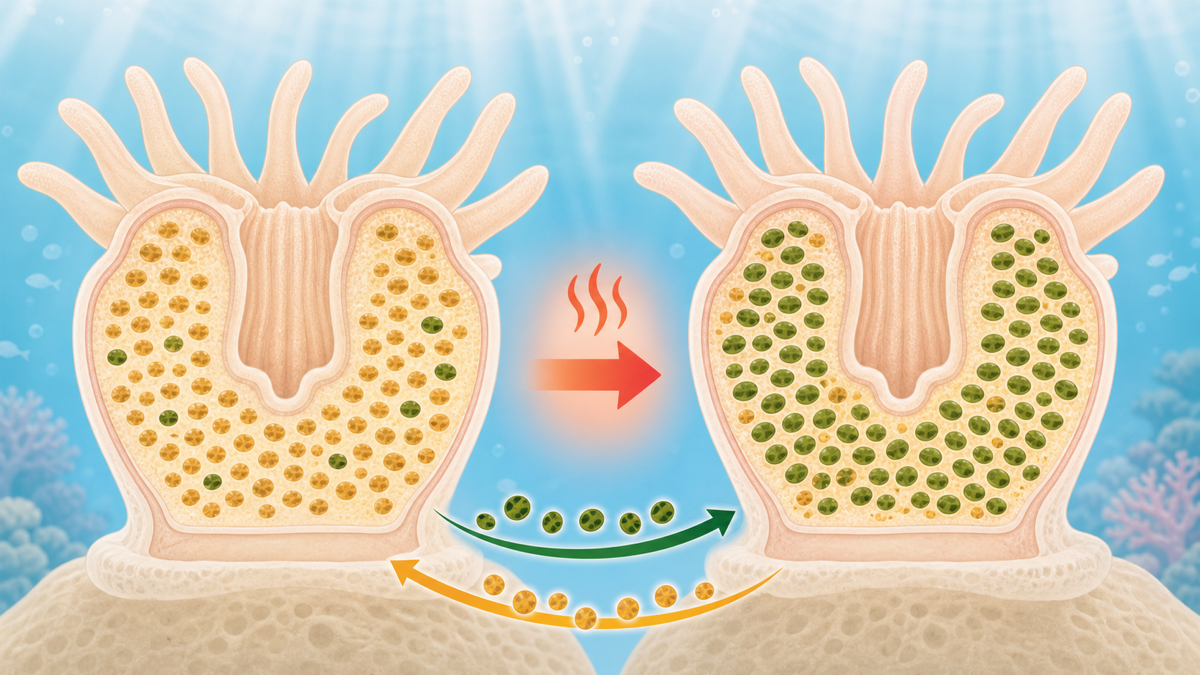
Interestingly, some coral can rearrange the composition of their symbiotic algae when exposed to high temperatures on their own. Heat-sensitive algae decline while the proportion of heat-tolerant algae like Durusdinium increases — a phenomenon known as "symbiont shuffling." This is one of coral's own natural adaptive abilities, and research is underway to encourage it by hand, deliberately introducing heat-tolerant algae into coral in advance. Many juvenile coral take up symbiotic algae from the surrounding seawater shortly after birth. If heat-tolerant algae are made available during this "uptake window," it is thought coral can more readily pair up with a resilient partner.
The Catch — Trade-offs Behind the Benefits
But carrying heat-tolerant symbiotic algae comes at a cost. Coral hosting Durusdinium trenchii become more resistant to bleaching, but studies report a tendency toward slower growth and weaker calcification — the process of building the skeleton. In other words, a trade-off can arise: greater heat resistance in exchange for slower growth. Heat-tolerant algae also sometimes fail to establish at transplant sites, meaning the resilience doesn't always last. When compounded by ocean acidification, which impairs calcification (see our article on ocean acidification and coral reefs), this weakness becomes even more significant.
| Aspect | With Heat-Tolerant Symbiotic Algae | Possible Cost |
|---|---|---|
| Bleaching resistance | Less prone to bleaching even at high temperatures | — |
| Growth / calcification | — | Tendency toward slower growth and weaker skeleton formation |
| Persistence | Introducing the algae raises tolerance in the short term | May fail to establish at the transplant site, so tolerance doesn't always persist |
Key Points
- Coral heat tolerance is heavily influenced by the type of symbiotic algae it partners with
- Durusdinium trenchii (formerly Clade D) is a representative heat-tolerant symbiont
- Coral can undergo "shuffling," increasing the proportion of heat-tolerant algae under high temperature
- Watch for the trade-off of reduced growth and calcification in exchange for heat tolerance
Acclimatization and the Microbiome — "Training" Coral
Beyond selecting genes and symbiotic algae, another approach involves "training" the coral itself to become more heat-tolerant. Somewhat like how exercise or vaccination strengthens the human body, this approach exposes coral in advance to mild stress or beneficial microbes, aiming to boost its resistance to the real heatwave to come.
Acclimatization (Preconditioning) — Training Through Mild Stress
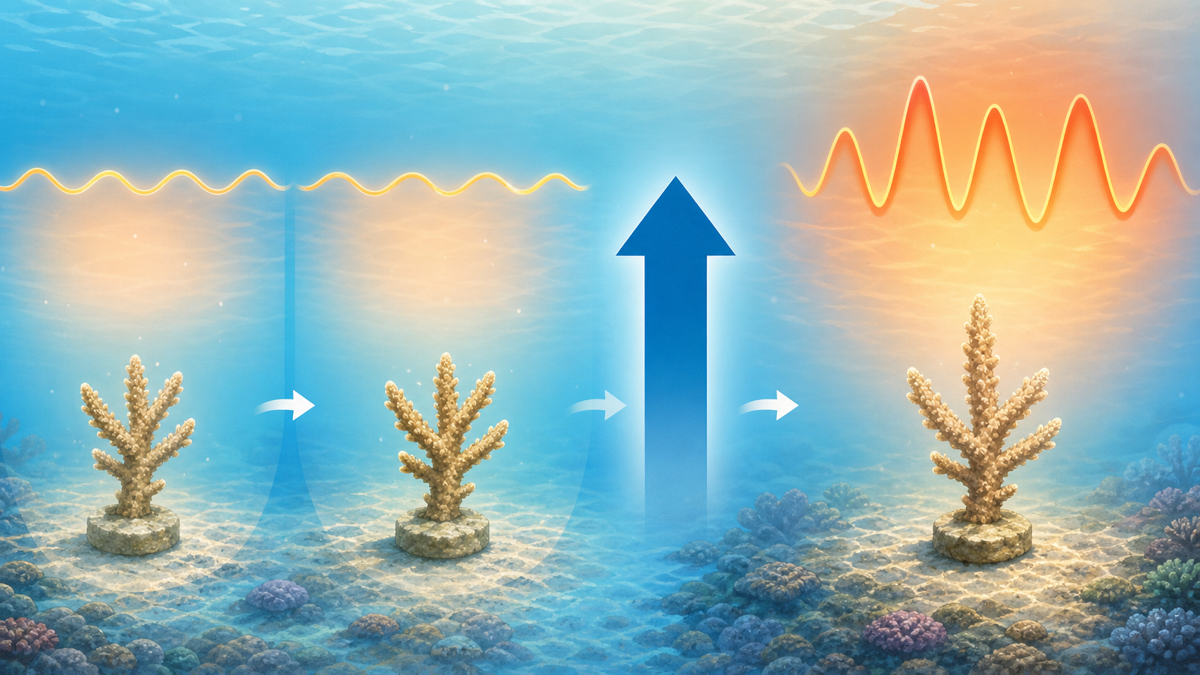
Researchers have found that exposing coral to sub-lethal, fluctuating high temperatures beforehand can increase its heat tolerance. This is called "acclimatization" or "preconditioning." It is thought to be exactly this effect that makes coral raised in environments with everyday temperature fluctuations relatively resilient to sudden heat spikes. Methods are being explored to give juvenile coral this kind of "dress rehearsal" by hand before returning them to the sea, boosting their baseline tolerance. Much like a vaccine uses a fragment of a pathogen to train the immune system, the idea is that mild stress pre-activates coral's own defense mechanisms.
A research group at the University of the Ryukyus found that reef-building coral (a species of Acropora) exposed to high water temperature produced a greater number of smaller eggs, and that larvae from those eggs carried heat tolerance. This is an intriguing finding showing that environmental stress experienced by a parent can carry over into the strength of the next generation — pointing to the potential of acclimatization and adaptation across generations.
Probiotics — "Good Bacteria" for Coral, Too
One area attracting particular attention is probiotics — coral's own version of "good bacteria." Coral hosts countless bacteria in and on its tissue, and this microbial community (microbiome) is deeply connected to its health. Researchers are investigating whether selecting bacteria beneficial to coral (BMC, or Beneficial Microorganisms for Corals) and administering them as a mixture can boost resistance to heat stress.
Overseas studies report that administering such beneficial bacteria shortly before a sudden temperature spike can prevent mortality even in heat-sensitive coral, with effects appearing in as little as two days. In an experiment rearing Red Sea Acropora at 32°C, coral given the bacteria maintained photosynthetic function, and the density of symbiotic algae cells was kept more than ten times higher than in untreated coral. Furthermore, a three-month field trial administering the treatment to cauliflower coral (Pocillopora verrucosa) reportedly shifted the coral's own microbial community in a desirable direction without affecting the bacteria in the surrounding seawater.
Another Microbe That Protects the Symbiont
A research group including the University of the Ryukyus discovered bacteria carrying light-protective pigments living on the surface of symbiotic algae cells, and showed that adjusting the abundance of these bacteria can boost the heat stress tolerance of the symbiotic algae itself. This finding once again highlights that coral's heat tolerance is determined by the combined strength of a "team of three or more" — the coral itself, its symbiotic algae, and countless bacteria — together known as the holobiont.
That said, probiotics remain a technology in development. Many questions remain: how well laboratory results translate to the complex natural ocean, whether administered bacteria persist over the long term, and whether they might have unintended effects on the surrounding ecosystem. Research teams are carefully weighing effectiveness against safety as they gradually build up field trials in real ocean conditions. A stance that avoids both excessive hope and excessive pessimism, verifying results steadily, is called for.
Coral Is Not "a Single Organism"
Coral is a "holobiont" — a community formed by the animal coral itself, the plant-like symbiotic algae, and countless bacteria and viruses acting as one. Building heat-resistant coral means bringing balance to this entire community. That is precisely why researchers are pursuing multiple angles at once: genes, symbiotic algae, and microbes.
In the Field — Heat-Tolerant Coral on Kumejima, Okinawa
This research isn't confined to overseas labs. In Japan too — especially in Okinawa, home to the country's largest coral reef — efforts toward the practical application of heat-tolerant coral have been steadily accumulating. The richness and crisis facing Okinawa's coral reefs are also covered in our article on Okinawa's coral reefs.
Fisheries Agency of Japan Seed Production of Heat-Tolerant Coral
The Fisheries Agency of Japan has pursued the "development of seed production technology for heat-tolerant coral" as part of a technology development project aimed at reef restoration. This work identifies parent coral resistant to high temperatures, confirms whether seed stock produced from them retains that inherited heat tolerance, and sets a goal of producing heat-tolerant coral at a scale of 2,000 colonies and demonstrating their transplantation in actual reef sites — an effort to bridge research-backed resilient coral to on-the-ground restoration.
Long-Term Rearing of Clade D Coral on Kumejima
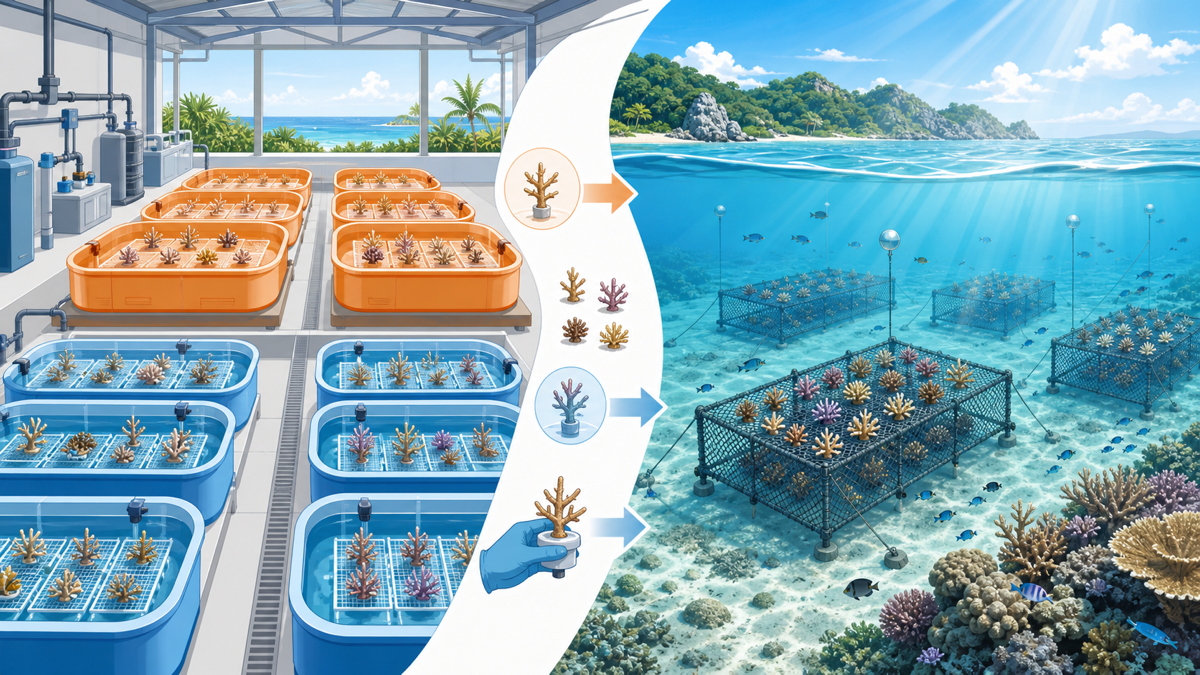
At the Coral Propagation Research Center of the Okinawa Fishery and Ocean Research Center on Kumejima Island, Okinawa Prefecture, coral carrying the heat-tolerant symbiotic alga "Clade D" (Durusdinium) has undergone long-term rearing. Since 2016, coral has been raised across different environments — a tank kept at 30°C, a tank at ambient temperature, and cages submerged in the actual sea — to verify over an extended period how far coral hosting heat-tolerant symbiotic algae can survive and grow under high water temperatures. This can be seen as an effort to apply the symbiont shuffling introduced earlier to real-world seed production.
Okinawa Prefecture's Coral Reef Conservation and Restoration Project
Okinawa Prefecture also carried out a "Coral Reef Conservation and Restoration Project" from fiscal year 2010 through fiscal year 2016. Covering the waters off Onna, Yomitan, and Zamami villages, it integrated genetic analysis of coral, development of mass sexual-reproduction seed production technology, intermediate rearing and transplantation of seed stock, and support for local conservation activities. In Onna Village, the local fisheries cooperative has long led coral farming and transplantation efforts, nurturing a distinctly Japanese restoration model built on cooperation among research institutions, government, fishers, and residents.
Restoration methods for coral reefs themselves are explained in detail in our article on coral reef restoration efforts. The perspective of heat tolerance adds a time dimension — "can it survive as the climate warms?" — to these existing restoration activities, deepening the very concept of restoration itself.
Japan's approach has strengths that differ from large-scale overseas projects. As symbolized by Onna Village's "Coral Village Declaration," a culture has taken root in which fishers and residents themselves take the lead in raising coral over many years, treating the sea and daily life as one. This idea of "satoumi" — people gently tending the sea's bounty — is also a major support for helping heat-resistant coral take root locally. The concept of satoumi is introduced in our article on the concept of satoumi. Sustaining research outcomes on the ground over the long term requires exactly these kinds of local caretakers.
Distinctive Features of Japan's Approach
- The Fisheries Agency of Japan has set goals to produce and demonstrate heat-tolerant coral seed stock at a scale of 2,000 colonies
- On Kumejima, coral carrying Clade D symbiotic algae has been reared long-term and verified since 2016
- Okinawa Prefecture carried out integrated seed production through transplantation in Onna, Yomitan, and Zamami villages
- A community-wide restoration model has grown through cooperation among research institutions, government, fishers, and residents
The Promise and the Challenges of Climate-Adapted Reefs
The technologies covered so far all offer hope for coral reefs that can survive in a warming ocean. But researchers repeatedly stress that none of these are a magic solution. The challenges to overcome are just as large as the possibilities. Here, we look at three issues that are unavoidable in bringing assisted evolution to the wider ocean — genetic risk, the limits of scale, and addressing the root cause — none of which can be resolved with a simple yes-or-no answer; all require careful debate.
Assisted Evolution and the Risk of Gene Flow
Transplanting heat-tolerant coral from another region — known as "assisted gene flow" — carries risks worth noting. One is "outbreeding depression," in which crossing distant populations dilutes traits well adapted to local conditions, potentially lowering the fitness of offspring instead. There are also concerns that region-specific genetic character could be overwritten by introduced genes.
That said, some views suggest this kind of risk isn't as high as initially feared. A review summarizing plant transplantation research found that the probability of maladaptation from outbreeding depression is under 3.3%, and that its effects tend to fade over successive generations. Some also argue that in waters where natural recovery (new coral recruitment) has fallen to nearly zero, introducing individuals that can survive at all matters more than worrying about this kind of risk. How to weigh risk against benefit depends on the condition of the ocean in question.
Restoration Techniques That Pair With Heat-Tolerant Coral
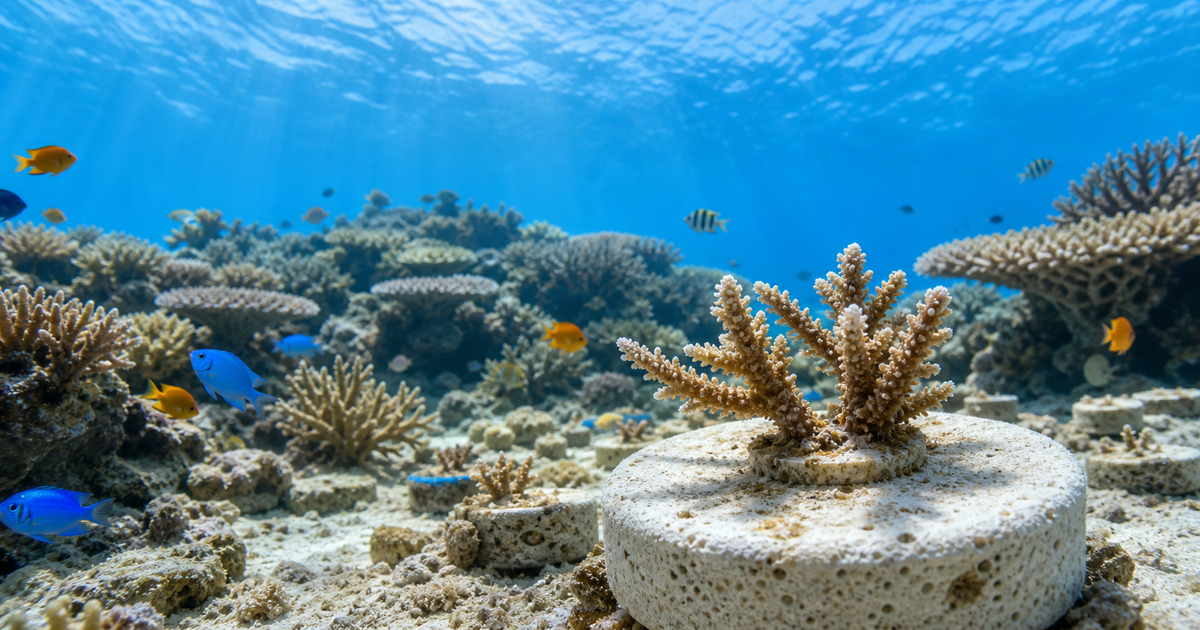
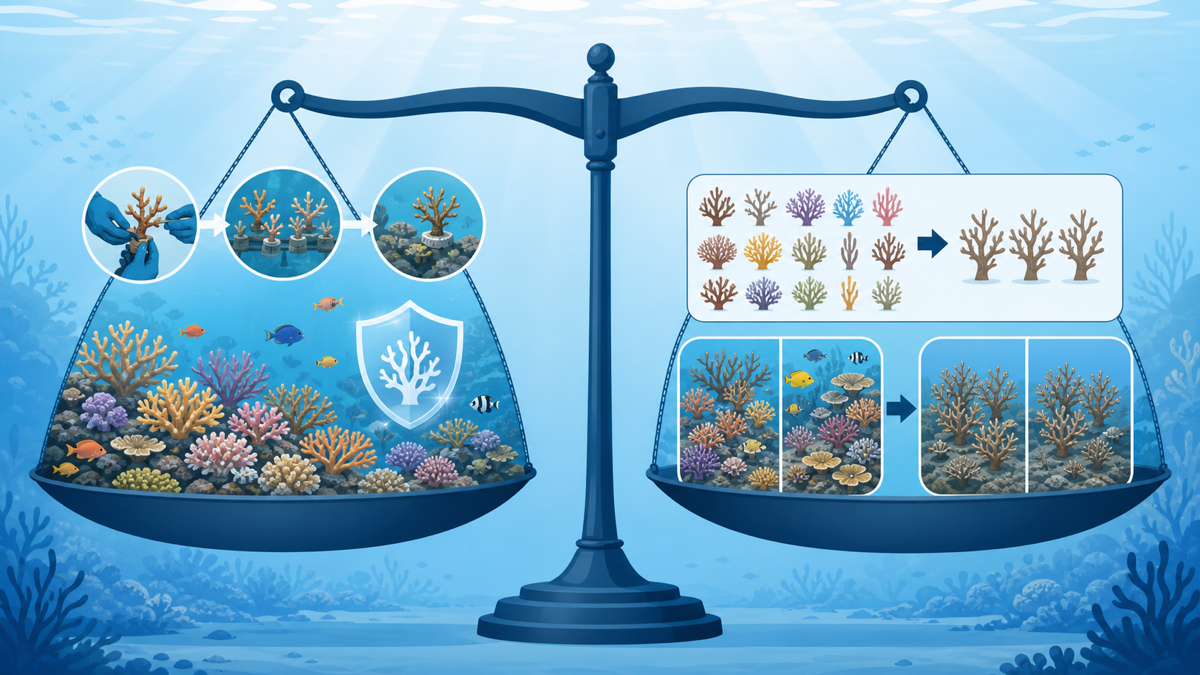
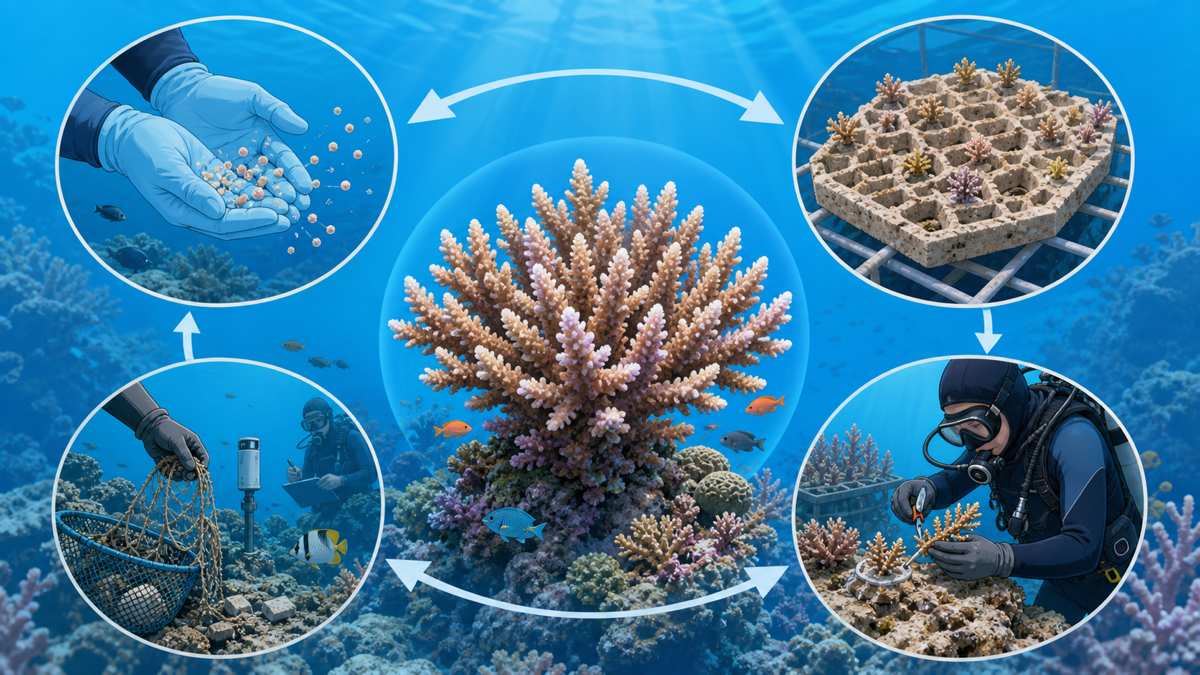
Heat-tolerant coral is rarely used alone — it is paired with a range of restoration techniques. Examples include "larval reseeding" (coral IVF), in which large numbers of eggs from mass spawning are raised in enclosures and the resulting larvae are released onto weakened reefs; installing artificial substrates that coral larvae can settle on; and propagation by fragmenting and replanting coral pieces. Combining these methods with the perspective of "use a heat-tolerant strain" aims to raise, even slightly, the odds that restored coral will survive future heatwaves. These techniques don't compete with one another — they complement each other.
The Great Wall of Scale
Another, and perhaps the most fundamental, challenge is scale. The world's coral reefs span hundreds of thousands of square kilometers — replacing them by hand with resilient coral raised by researchers is, realistically, all but impossible. Both selective breeding and seed production demand enormous labor and cost. Most researchers position these technologies not as a way to "save all coral reefs," but as a supplementary means of locally protecting particularly important reefs and giving nature's own recovery a boost. That's precisely why strategic decisions — which reefs to invest limited resources in, and in what order of priority — are essential.
Addressing the Root Cause Remains Essential
And we must not forget: no matter how heat-resistant the coral we create, if global warming itself does not stop, it will eventually exceed the limits of that tolerance. Ocean warming is shaking fisheries and marine ecosystems as a whole (see our article on ocean warming and fisheries), and at its root lies greenhouse gas emissions. Research into heat-tolerant coral is, at most, a way to "buy time" — it is not a substitute for the main countermeasure of cutting greenhouse gas emissions. Researchers, policymakers, and international bodies alike agree unanimously on this point.
Technology to raise heat-resistant coral is not a substitute for climate action. It is, at best, a supplementary measure to give coral reefs time to survive while we work to cut emissions.
— From international discussions on coral reef restoration (summarized)
Not a "Silver Bullet" — Four Caveats
- Assisted gene flow carries risks of outbreeding depression and loss of regional genetic identity
- The trade-off between heat tolerance and growth/calcification cannot be overlooked
- Replacing the world's coral reefs through artificial rearing is impossible at scale
- These efforts only carry meaning alongside the fundamental countermeasure of cutting greenhouse gas emissions
Conclusion — Between Hope and Reality
Finding, raising, and multiplying coral that can survive in an increasingly hot ocean — this challenge may sound like science fiction, but it is already unfolding in real laboratories and real seas around the world. "Tough" individuals that have survived harsh environments are identified with CBASS; selective breeding passes that resilience on to offspring; and heat-tolerant symbiotic algae like Durusdinium, acclimatization, and probiotics all lend their strength to the search for reefs adapted to a warming climate. In Japan too, this effort has steadily taken shape through long-term rearing on Kumejima, Okinawa, and seed production projects by the Fisheries Agency and Okinawa Prefecture. An idea that would have seemed like a pipe dream just over a decade ago — "building coral that can withstand heat" — is now being seriously discussed as a shared research theme worldwide.
At the same time, we need to be clear-eyed that these technologies are not a "silver bullet." Heat tolerance comes with a trade-off against growth; transplanting coral from elsewhere carries genetic risks; and above all, there is no way to replace the world's coral reefs by hand. Research into resilient coral is a "training wheel" that buys time to stop global warming — it is not a substitute for the main task of cutting emissions. To protect the ocean's carbon cycle, including the carbon that coral absorbs and stores (see our article on blue carbon ecosystems), fundamental countermeasures and on-the-ground efforts must advance together, hand in hand.
Even so, there is genuine hope in this research. We now know that people can give coral's adaptation a small push, and we are beginning to see just how resilient coral's own capacity for recovery truly is — a gift from science that keeps us from sinking into despair alone. The next time you see vividly colored coral at an aquarium or in the news, we hope you'll remember, if only briefly, the people working hard behind the scenes to build coral that won't be beaten by the heat.
Summary of This Article
- The fourth global bleaching event of 2023-2025 exposed roughly 84% of the world's coral reef area to heat stress, the largest on record
- Heat-tolerant individuals are objectively assessed with CBASS and ED50, and research is progressing on passing resilience to offspring through selective breeding (though inheritance isn't uniform)
- Heat-tolerant symbiotic algae such as Durusdinium (Clade D), shuffling, acclimatization, and probiotics are also key to improving tolerance — but watch for trade-offs with growth
- In Japan, long-term rearing on Kumejima, Okinawa, seed production by the Fisheries Agency (targeting 2,000 colonies), and Okinawa Prefecture's restoration projects are underway
- Assisted evolution is a supplementary measure, and must be pursued alongside cutting greenhouse gas emissions as the fundamental countermeasure, while accounting for genetic risk and the limits of scale
References and Sources
- NOAA (U.S. National Oceanic and Atmospheric Administration / NESDIS) – World's Fourth Mass Coral Bleaching Event Likely Ended in 2025 (fourth global bleaching event, 84% of reef area)
- AIMS (Australian Institute of Marine Science) – Breeding temperature tolerant corals for reef restoration and adaptation (selective breeding of heat-tolerant coral)
- University of the Ryukyus – Does coral exposed to high water temperature produce more heat-tolerant offspring? / Discovery of pigmented bacteria on symbiotic algae
- Fisheries Agency of Japan – IV-9. Development of Seed Production Technology for Heat-Tolerant Coral (project report)
- Ministry of the Environment, Japan – Restoration and Rehabilitation of Coral Reefs (concepts and methods of coral reef conservation)
- Sasakawa Peace Foundation, Ocean Policy Research Institute – Ocean Newsletter No. 421: Okinawa Prefecture's Coral Reef Conservation and Restoration Efforts
- Limnology and Oceanography: Methods (Evensen et al. 2023) – The Coral Bleaching Automated Stress System (CBASS): a standardized heat-tolerance assay
- Microbiology Society (Microbe Profile) – Durusdinium trenchii: a thermotolerant coral symbiont
- ISME Communications (Oxford Academic) – Probiotics prevent mortality of thermal-sensitive corals exposed to short-term heat stress
- Communications Biology (Nature) – Reef Adapt: A tool to inform climate-smart marine restoration (decision support for assisted gene flow)
* Sources are ordered by reliability: government / academic institutions > peer-reviewed papers > specialized organizations > reputable media