⚡ In short
The world uses about 50 billion tonnes of sand and gravel a year, and some 6 billion tonnes are dredged from the ocean. Overextraction accelerates coastal erosion and threatens beaches, seabed life and coral reefs. A primary-source guide covering UNEP's warnings, the Mekong Delta, Japan's Seto Inland Sea, and countermeasures such as beach nourishment.
Not smartphones, not oil—do you know what resource humanity uses in the greatest quantity after water? The answer is sand. According to the United Nations Environment Programme (UNEP), the world uses about 50 billion tonnes of sand and gravel every year—enough to build a wall 27 metres wide and 27 metres high around the entire planet, every single year. Concrete, glass, asphalt: the foundations of our cities are all made of sand.
And now, sand extraction is casting a dark shadow over the ocean. Marine Sand Watch, a data platform released by UNEP in 2023, revealed that about 6 billion tonnes of sand and other sediments are dredged from the seabed every year—more than one million dump trucks per day. Every tonne of sand pulled from the seabed pushes the coastal sand budget into deficit: beaches waste away and seabed creatures lose their homes.
This article explains why so much sand is extracted and through what mechanism sand extraction triggers coastal erosion, drawing on primary sources such as UNEP, Japan's Ministry of Land, Infrastructure, Transport and Tourism, the Ministry of the Environment, and peer-reviewed research. From what actually happened in the Mekong Delta and the Seto Inland Sea to Japan's countermeasures such as beach nourishment and sand bypassing, you will come away with the full picture of "sand and the coast".
What you will learn in this article
- Why sand is called "the most used resource after water", and the surprising reason desert sand cannot be used for construction
- The reality that about 6 billion tonnes of sand are dredged from the ocean each year, and how precarious the balance with natural supply has become
- The "coastal sediment budget" mechanism by which overextraction of sand causes coastal erosion
- What actually happened in the Mekong Delta, Singapore and the Seto Inland Sea, and the lessons learned
- Countermeasures to protect sand and beaches—beach nourishment, sand bypassing, alternative materials—and what each of us can do
Sand, "the Most Used Resource After Water"—A Quiet Global Shortage
Before we begin, let us grasp the scale. According to UNEP's report "Sand and Sustainability", the world uses about 50 billion tonnes of sand and gravel a year. That is roughly five times the figure of about 9.6 billion tonnes in 1970, making sand the resource humanity uses most after fresh water. Per person, it works out to about 17 kg every day—we each consume roughly a quarter of our body weight in sand daily.
Where is sand used?
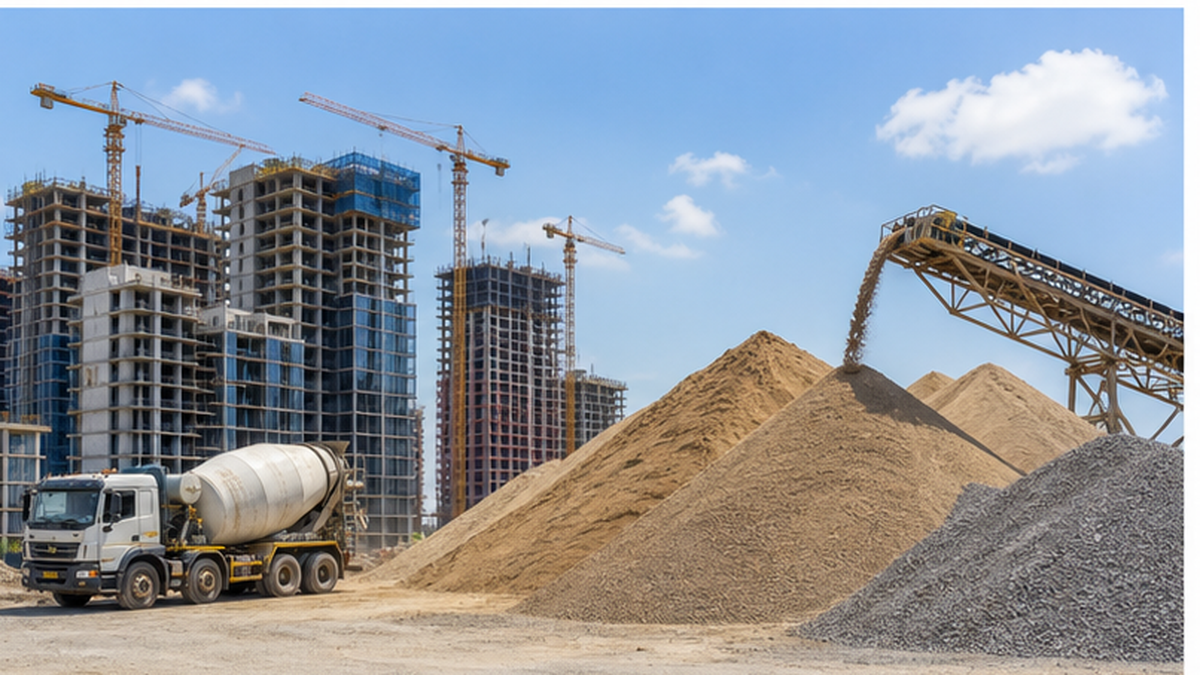
The biggest use is construction. Sand and gravel (aggregate) make up 60–70% of concrete by weight: a mid-sized house needs about 200 tonnes of sand, a large building such as a hospital needs thousands of tonnes, and one kilometre of highway tens of thousands. Silica sand is the raw material for glass, and smartphone semiconductors are made from high-purity silica sand as well. Land reclamation is another massive consumer. As long as urbanisation continues, demand for sand keeps growing—UNEP projects that demand for sand in building will rise by up to another 45% by 2060.
Why can't desert sand be used?
You might think, "Surely the Sahara has endless sand." But desert sand is almost useless for construction. Grains rolled by the wind for millennia are polished round and smooth, so they do not interlock, and concrete mixed with them lacks strength. Construction needs angular grains carried by water—sand from rivers, lakes, coasts and the seabed. This is why oil-producing Middle Eastern countries, seemingly rich in sand, import it.
Being "too cheap" is what caused the crisis
Ironically, the biggest factor behind the sand crisis is its low price. Sand is cheap and heavy, so transporting it far costs more than the sand itself. It is economically rational to extract near where it is needed, which is why rivers, coasts and seabeds near cities were dug up first. Because environmental costs are not reflected in the price, a structure took hold worldwide in which "digging pays, protecting does not". UNEP's call to rethink the pricing and governance of sand aims to change exactly this structure.
Life in Japan is no exception. According to statistics from the Ministry of Economy, Trade and Industry, Japan has produced and consumed aggregate (gravel, crushed stone and the like) on the order of 300 million tonnes a year. River gravel and marine sand once played the leading role, but as extraction rules tightened in response to degraded river environments, crushed stone and crushed sand made from mountain rock became the mainstay. In other words, Japan is a country that "switched to alternatives before digging up all its natural sand"—and behind that shift lies the lesson of the Seto Inland Sea, which we will see later.
- Global sand and gravel use is about 50 billion tonnes a year, roughly five times the 1970 level (about 9.6 billion tonnes)
- Concrete, glass, semiconductors, land reclamation—almost all foundations of modern society depend on sand
- Desert sand grains are too round for construction; only "angular sand" from rivers, coasts and the seabed can be used
- Demand for construction sand is projected to grow by up to another 45% by 2060 (UNEP)
Sand is a slowly renewing, effectively finite resource
- It takes centuries to tens of thousands of years for rock to weather and erode into sand
- Humanity extracts sand far faster than it travels from mountains to rivers and from rivers to the coast
- UNEP designates sand a "strategic resource" and urges governments to strengthen its management
Taking Sand from the Sea—The Reality of 6 Billion Tonnes of Dredging a Year
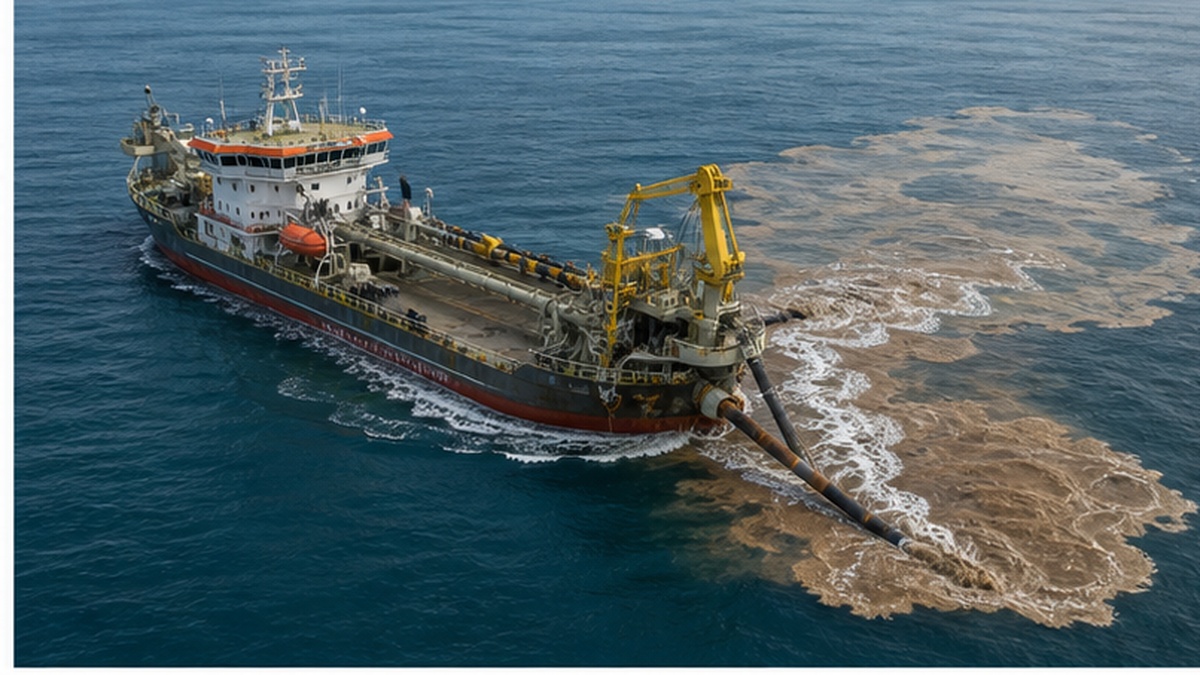
When land sand ran short, humanity reached into the sea: "marine sand mining", in which seabed sand is sucked up with large pumps. The full picture long remained opaque, but Marine Sand Watch, a platform released in September 2023 by UNEP's analytics centre GRID-Geneva, made it visible on a global scale for the first time. It uses AI to analyse vessel position data (AIS) and track the movements of dredging ships.
The numbers revealed by Marine Sand Watch
The results were startling. An estimated 4 to 8 billion tonnes—about 6 billion tonnes on average—of sand, silt, gravel and other sediments are dredged from the world's oceans every year, equivalent to more than one million dump trucks a day. Extraction is trending upward and approaching the natural replenishment rate of sediments delivered to the sea by rivers, estimated at 10 to 16 billion tonnes a year. In some sea areas, extraction already exceeds what nature can replace.
How is dredging carried out?
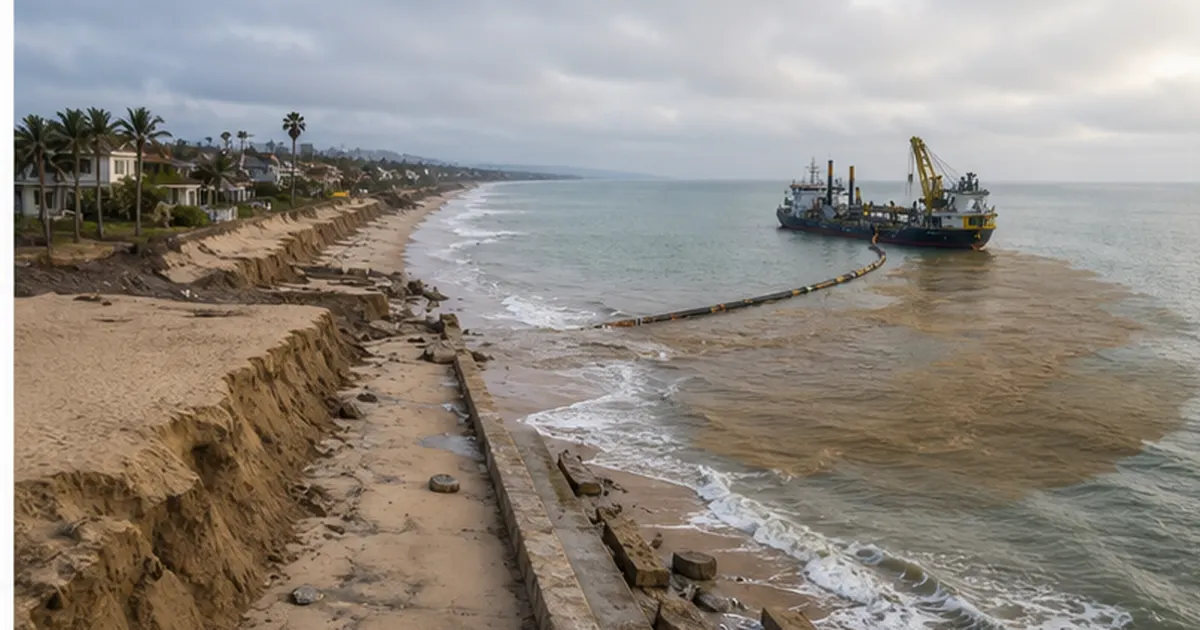
The signature vessel of marine sand extraction is the trailing suction hopper dredger. It lowers a suction pipe—like a vacuum cleaner hose—from the hull to the seabed and, while sailing, sucks up surface sand together with water into its hold. Large vessels can load tens of thousands of cubic metres at a time; in shallow coastal waters, cutter or grab dredgers that stay in one spot and dig deep are also used. What UNEP flags in particular is an operating pattern in which some vessels repeatedly "scrape" the seabed as they sail, stripping away the surface sediments together with all the life in them.
Where is sand being extracted?
The hotspots named are the North Sea (off the Netherlands and Belgium, among others), Southeast Asia, and the East Coast of the United States. Uses go beyond construction aggregate to land reclamation and artificial islands, beach nourishment against erosion (discussed later), and maintenance of port channels. In Asia especially, with its fast-growing coastal cities, demand for reclamation sand is spurring extraction. Rules differ greatly between countries and regions, and extraction easily concentrates in waters with loose regulation—another reason international monitoring is needed.
The scale of marine sand extraction and its environmental impacts have been overlooked for far too long. We have treated sand as if it were infinite, and coastal ecosystems and communities are beginning to pay the price.
― Summary of UNEP's statements at the launch of Marine Sand Watch
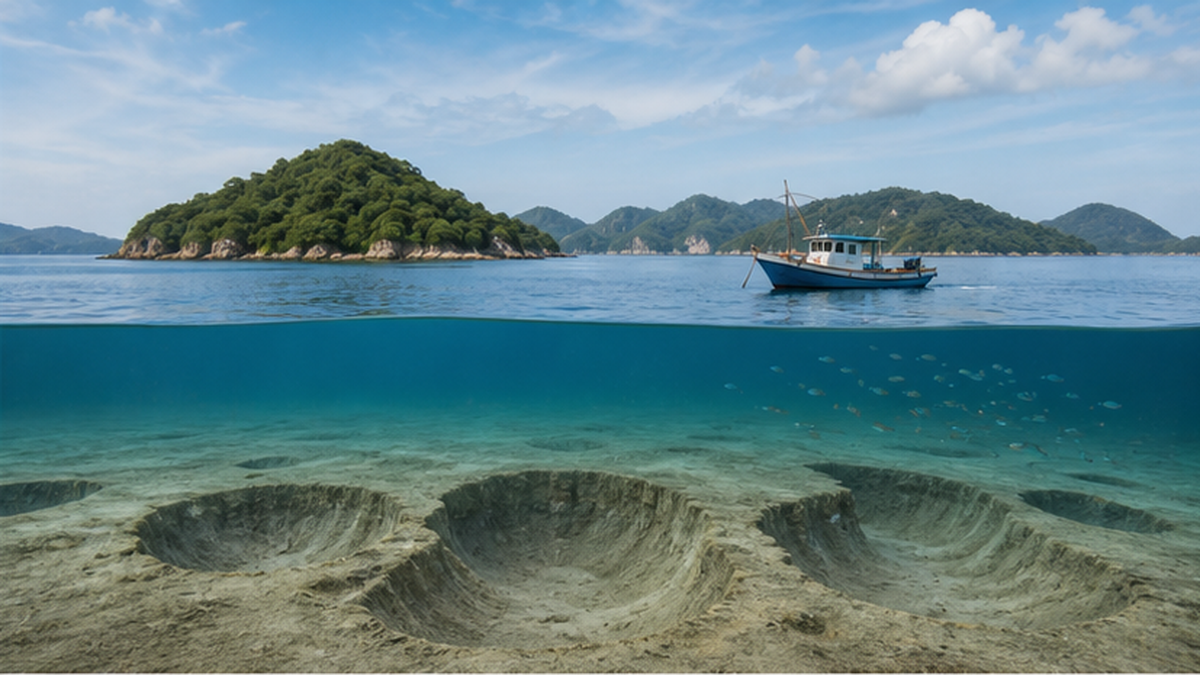
Depth of extraction matters too. Whether a thin surface layer is skimmed from a shallow seabed or the same spot is dug deep makes a large difference to ecosystems and to the movement of surrounding sand. Deep dredge pits alter tidal currents and draw in nearby sand, and at the bottom of these pits water exchange stagnates, creating oxygen-poor environments to which life may never return. The extraction scars of the Seto Inland Sea, which we will see later, are wounds left by precisely this kind of deep digging.
| Item | Estimate | Source |
|---|---|---|
| Global annual use of sand and gravel | About 50 billion tonnes | UNEP report |
| Annual dredging from the ocean | About 4–8 billion tonnes (average about 6 billion tonnes) | UNEP Marine Sand Watch |
| Natural sediment supply from rivers to the sea | About 10–16 billion tonnes a year | UNEP Marine Sand Watch |
| Dredged volume per day | More than 1 million dump trucks | UNEP announcement |
UNEP's chief concerns
- The pace of extraction is approaching, and in places exceeding, the natural replenishment rate (the sediment budget)
- Dredging in shallow coastal waters strips out entire seabed communities, and recovery can take decades
- There are no unified international rules, so extraction risks concentrating in loosely regulated waters
Why Do Coasts Waste Away When Sand Is Extracted?—The Sediment Budget Mechanism
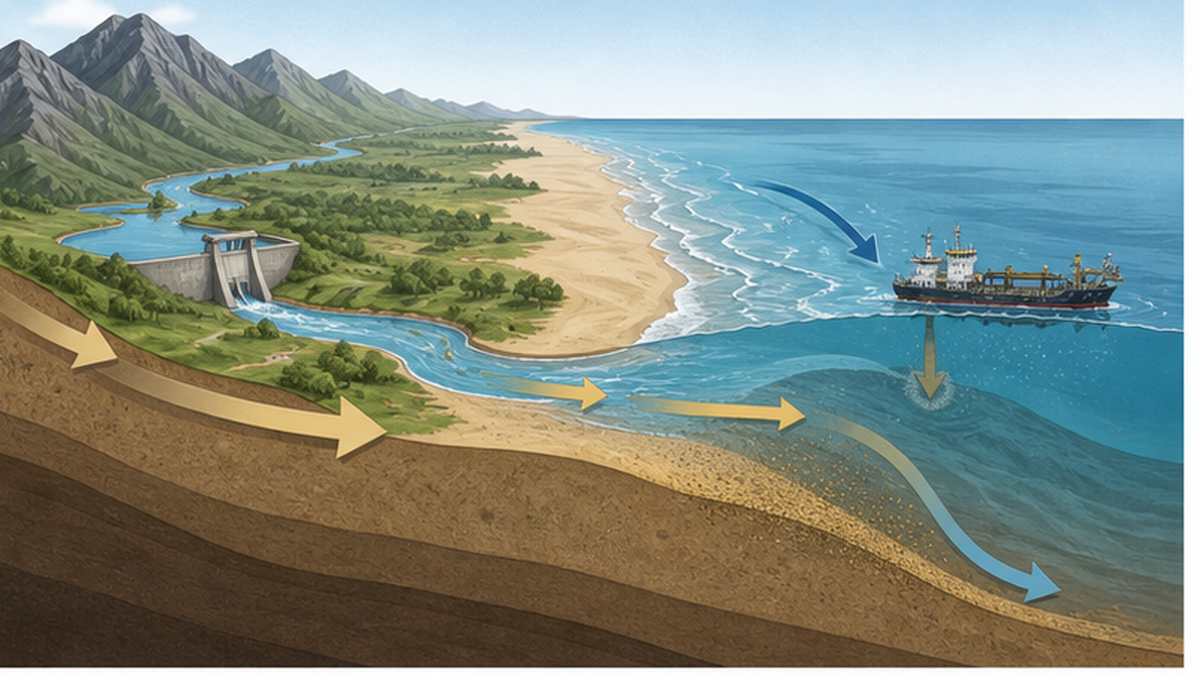
A beach is not simply "a place where sand happens to sit". It is a dynamic system with sand constantly coming and going—supplied by rivers, carried by longshore currents, pulled offshore by waves—and it only keeps its shape while income and expenditure (the sediment budget) balance. Like a household budget, if income falls or spending rises, the savings—the beach—dwindle.
Sand travels along the coast as "littoral drift"
When waves strike the shore at an angle, sand is carried zigzag along the waterline, migrating little by little down the coast. This is called "littoral drift". A continuous stretch of coast functions as a single system (a littoral cell) encompassing the river sources, the transport pathway, and the final resting place of the sand. Remove sand at any one point in the cell and the impact propagates along the whole downdrift coast. This is why beaches many kilometres away can begin to waste away years or decades later, not just the area in front of the extraction site.
A "hole" in the seabed makes waves stronger
Extracting sand from the coastal seabed has a double impact. First, surrounding sand flows into the newly dug hollow, siphoning beach sand offshore. Second, when the seabed deepens, waves reach the shore without breaking, and the wave energy that scours the coast increases. A shallow, gently sloping seabed is a natural wave-damping device. This is the same principle by which coral reefs attenuate 97% of wave energy and protect coastlines—see our article on how coral reefs work as natural breakwaters for details.
Mining rivers also erodes the coast—"hungry water"
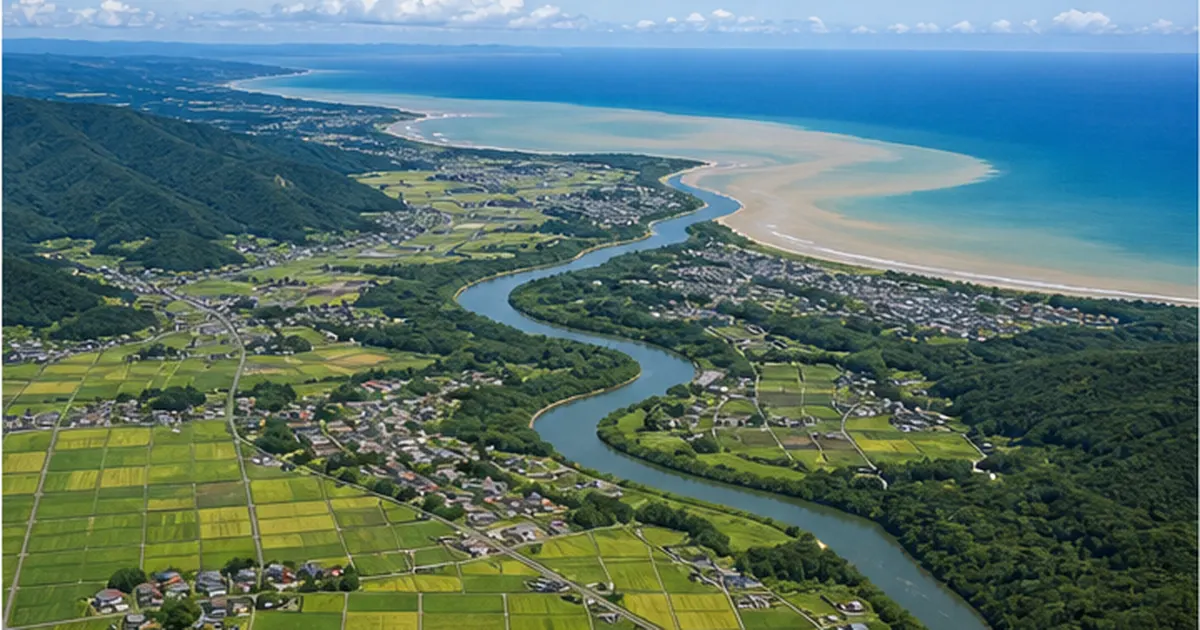
It may seem surprising, but extracting sand from inland rivers also erodes the coast, because much of a beach's sand was originally carried down from the mountains by rivers. When gravel is taken from a riverbed, the water—now stripped of its sediment—becomes "hungry water" and scours the bed and banks downstream to make up the loss. The riverbed drops, less sand reaches the sea, and deltas and beaches at the river mouth waste away. Where dams also block sediment, the impact becomes even more severe.
- Seabed extraction: sand is drawn into the dredge pit while wave energy increases, eroding the coast
- River extraction: the supply of sand from river to sea shrinks, cutting off the "allowance" sent to river mouths and beaches
- Compounding with dams and revetments: sediment flows are blocked twice and three times over, accelerating erosion
Key points
- A beach is a dynamic system with sand constantly coming and going; when the budget breaks down, it starts to waste away
- Seabed dredging erodes the coast with a double punch: "siphoning off sand" and "strengthening waves"
- River gravel mining and dams are also root causes of coastal erosion—the sand problem spans the whole watershed
What Is Happening on the Ground—The Mekong Delta and Singapore
The collapse of sediment budgets is no longer theoretical. On coasts around the world, damage from overextraction of sand has become reality. Here we look at two sites with abundant research data.
The Mekong Delta—a sinking breadbasket
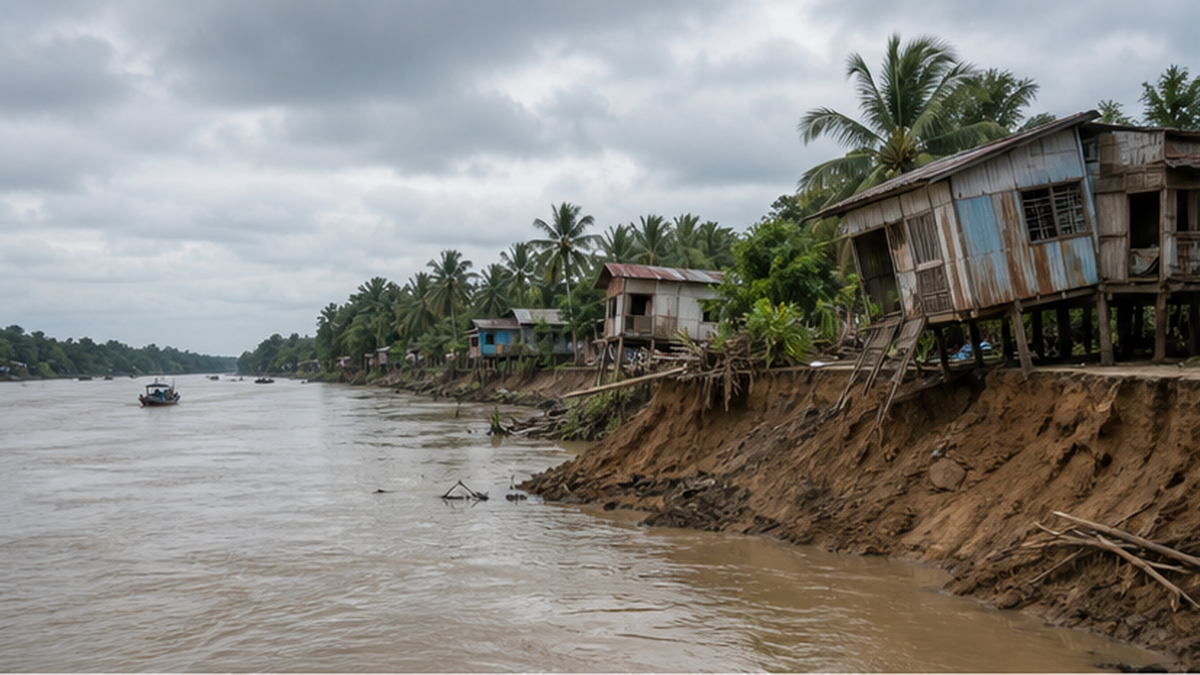
The Mekong Delta in southern Vietnam is one of the world's great rice-growing regions, home to about 20 million people. Against the backdrop of a construction boom, an average of about 48 million cubic metres of sand a year was extracted from its rivers between 2017 and 2021. Research published in Scientific Reports found that the resulting sediment deficit has exceeded 250 million cubic metres cumulatively, causing widespread lowering of the riverbed. As the bed drops, riverbanks become unstable, and houses have repeatedly collapsed into the river. Vietnamese authorities have designated hundreds of kilometres of riverbank as collapse-warning zones, and one assessment found about 181 km of riverbank at risk of collapse. With upstream dams also trapping sediment, the entire delta is in a state of "sand starvation".
The impacts are not limited to riverbanks. Along the delta's coastline, mangrove retreat and erosion are advancing, and in the dry season saltwater intrusion pushes more than 100 km up the rivers, threatening irrigation water. For the Mekong Delta, where sea-level rise and land subsidence compound each other, river-borne sand is literally the material that keeps the delta above water—researchers warn that extracting it directly shortens the delta's lifespan. The livelihoods of tens of millions who depend on this delta for rice and fish rest on the seemingly mundane arithmetic of a sand budget.
Singapore—a nation built on sand
The city-state of Singapore has kept expanding its territory through reclamation. From about 580 km² at independence in 1965, its land area grew to about 733 km² in 2022—an expansion of roughly 25%. That reclamation was supported by vast quantities of sand imported from neighbours such as Malaysia, Indonesia and Cambodia. But environmental destruction at extraction sites became severe in the exporting countries: Indonesia banned marine sand exports in 2007, and Malaysia halted exports in 2019. In Indonesia, more than 20 islands are reported to have disappeared because of sand extraction.
"Sand mafias"—the dark side of illegal extraction
As supply and demand tightened, illegal extraction spread across the world. In India and African countries, groups dubbed "sand mafias" have been reported stealing sand from rivers and beaches at night on an organised scale, and there have even been attacks on police officers and journalists investigating them. UNEP lists illegal and unregulated extraction as a major governance challenge, and monitoring through satellite and vessel data, as with Marine Sand Watch, is expected to serve as a weapon for exposing this "invisible extraction". Sand has become a resource that, like oil or rare metals, can ignite conflict and crime.
| Site | What happened | Background |
|---|---|---|
| Mekong Delta (Vietnam) | Continuing riverbed lowering and bank collapses; about 181 km classified as at risk | About 48 million m³ of sand extracted yearly plus sediment trapped by upstream dams |
| Singapore | Expanded its territory by about 25% through reclamation | Massive sand imports from neighbouring countries |
| Indonesia | More than 20 islands reported lost to sand extraction; banned marine sand exports in 2007 | Extraction for export, notably to Singapore |
| Malaysia | Halted sand exports to Singapore in 2019 | Concerns over environmental impact and resource protection |
Japan's Experience—Marine Sand Extraction in the Seto Inland Sea and Vanishing Beaches
Japan was in fact one of the first countries to experience the impacts of marine sand mining and to move to regulation. Its largest site was the Seto Inland Sea.
The Seto Inland Sea—seabed sand that fueled the concrete era
From the era of rapid economic growth onward, enormous volumes of marine sand were extracted from the Seto Inland Sea as aggregate for concrete. According to Ministry of the Environment materials, extraction spread across the coastal prefectures, leaving deeply gouged scars in the seabed. One of the creatures hit most visibly was the sand lance (ikanago), a small fish that burrows into sand for summer dormancy. Sand lances cannot live without a sandy seabed, and the loss of habitat to sand extraction accelerated the decline of the stock.
Taking the situation seriously, Hiroshima Prefecture banned marine sand extraction entirely in February 1998. Other coastal prefectures tightened their rules, and in the eastern Seto Inland Sea extraction ended by fiscal 2005. Subsequent surveys, however, report that the deeply dug seabed topography has barely recovered and the sand lance habitat has not returned. A three-year seabed survey by Hiroshima Prefecture likewise concluded that "the wounds in the seabed remain to this day". Once destroyed, the seabed does not easily return even after extraction stops—that is the lesson of the Seto Inland Sea.
The seabed did not recover even after extraction stopped
What makes the Seto Inland Sea globally important is the long-term data from "after extraction stopped". Follow-up surveys conducted by Hiroshima Prefecture years after the ban found the deeply gouged hollows largely unfilled and only limited recovery of the animals that favour sandy seabeds. Semi-enclosed seas like the Seto Inland Sea receive little sand from the open ocean, so replacing lost sand naturally takes an immense amount of time. A research group at Hiroshima University points out that the sand lance decline also involves warming waters, which lengthen summer dormancy and raise predation risk—suggesting that the double pressure of habitat loss and climate change is blocking the stock's recovery.
How much of Japan's beaches have been lost?
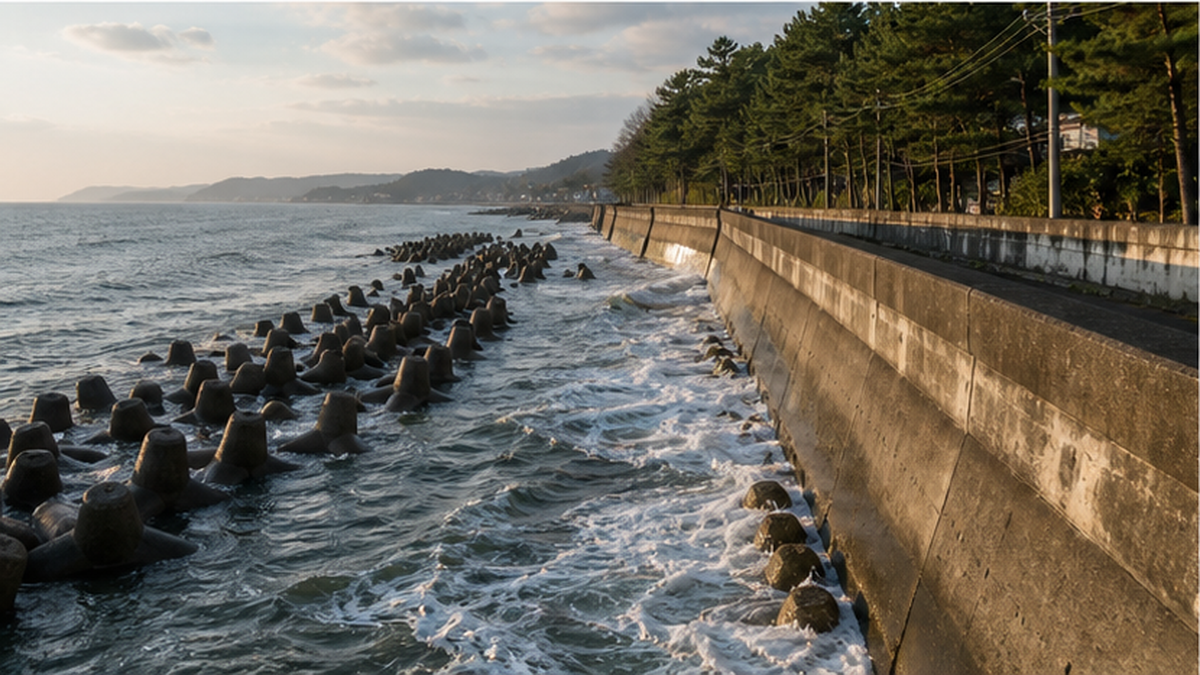
According to materials from the Ministry of Land, Infrastructure, Transport and Tourism, Japan once had about 19,000 ha of sandy beaches nationwide, but over the roughly 15 years from 1978 to 1992 about 2,400 ha—around 13%—were lost to erosion. That averages out to about 160 ha every year, the equivalent of 34 Tokyo Domes of beach disappearing annually. The causes are compound—reduced sediment supply due to dams and river gravel mining, altered longshore currents due to ports and revetments—but at the root lies the "sediment budget deficit" this article has described.
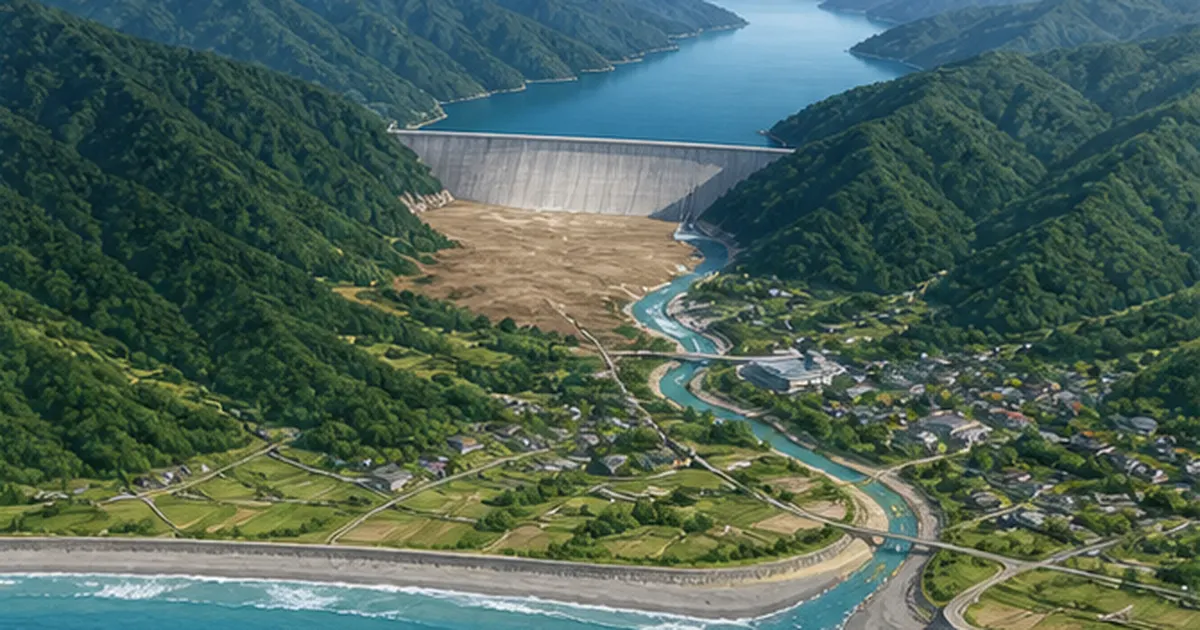
The Tenryu River and the Enshu-nada coast—compound impacts of dams and gravel mining
A textbook example is the Enshu-nada coast in Shizuoka Prefecture. From the 1950s onward many dams were built on the Tenryu River and gravel was mined from its bed, drastically reducing the sediment reaching the coast. Severe erosion followed on the Enshu-nada shore downstream. Today the "Tenryu River Dam Redevelopment Project" is under way, using sediment management at Sakuma Dam to restore the continuity of sediment flow, with curbing coastal erosion among its stated goals. Beaches are not only places we enjoy swimming—they also serve as disaster defences that shield the land from storm surge and tsunami. And if beaches are lost, so are the places where drifting marine litter can be collected. For that other beach crisis, see our article on marine litter washing up on beaches.
Impacts on Marine Ecosystems—Sand Is a Cradle of Life
Seabed sand is not just inert sediment. It is home to countless benthic creatures—polychaete worms, bivalves, crustaceans—where flounders and sand lances hide, and the whole functions as a feeding ground for fish: the foundation of the ecosystem. Dredging sucks up this foundation, life and all.
Loss of benthic life and spawning grounds
UNEP warns that dredging in shallow waters strips out everything from seabed microbes to benthic animals, with impacts that may become irreversible. The blow to fish that depend on sandy seabeds is exactly what the Seto Inland Sea's sand lance demonstrates. In physically disturbing the seabed, the problem shares its structure with bottom trawling, which we cover in detail in our article on how bottom trawling affects the seafloor.
Turbidity weakens corals and seagrass meadows
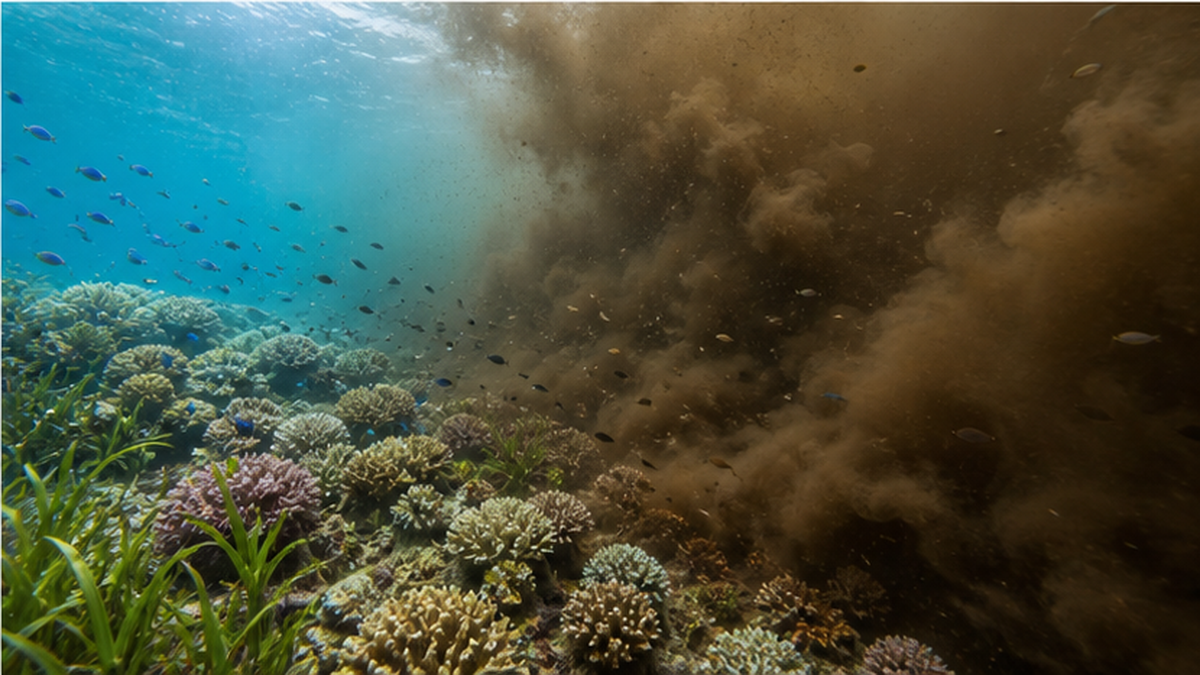
The fine mud stirred up by dredging forms plumes of turbidity that spread over wide areas. Turbidity blocks the light needed for photosynthesis, weakening the zooxanthellae that live in corals and the seagrasses of eelgrass meadows, the nurseries of juvenile fish. If settling mud blankets coral polyps, the corals suffocate. The frightening thing about turbidity is that damage reaches far beyond the extraction site.
Sea turtle nesting grounds are made of sand too
Some creatures live on the beach itself. The prime example is the sea turtle. Loggerhead turtles come ashore to nest on Pacific beaches, but when erosion narrows a beach, eggs can be washed away by waves and the dry sand layer suited to nesting can no longer be secured. Considering that a hatchling's sex is determined by the temperature of the sand, the quantity and quality of beaches are conditions that shape a population's future. Beaches and tidal flats are also indispensable as resting sites for migratory shorebirds such as sandpipers and plovers, and as habitat for ghost crabs and hard clams. The loss of a beach is not a "landscape problem" but the loss of habitat.
Saltwater intrusion into groundwater and loss of coastal protection
UNEP further points out that the loss of coastal sand invites saltwater intrusion into aquifers and weakens protection against storm surge and severe weather, threatening the foundations of local livelihoods—water supply, food production, fisheries and tourism. Beaches and coastal sand banks are invisible "natural infrastructure".
- Dredging directly removes benthic communities and robs sand-dependent fish of habitat and spawning grounds
- Turbidity plumes block light and weaken coral reefs and seagrass meadows far from the site
- Loss of coastal sand leads to saltwater intrusion into groundwater and greater storm surge damage
- The impacts rebound on human society in the form of fisheries, tourism and disaster prevention
Protecting Sand—From UNEP's Recommendations to Nourishment and Alternative Materials
So how should we confront the sand crisis? UNEP's report sets out ten recommendations to governments. The pillars are to formally designate sand a "strategic resource", to increase the transparency of extraction, and to ban direct extraction from active beaches—because shoreline sand is the front line of erosion defence, the place sand should least be taken from.
Use less—alternative materials and circular use
Demand-side measures are advancing too. Crushed sand made from rock is already widely used in Japan as a substitute for natural sand. Construction recycling that turns demolished concrete into recycled aggregate, research into "ore-sand" that converts mining by-products into construction material, and tall timber buildings that reduce reliance on concrete—technologies that cut sand consumption itself are accelerating worldwide.
Put sand back—beach nourishment and sand bypassing
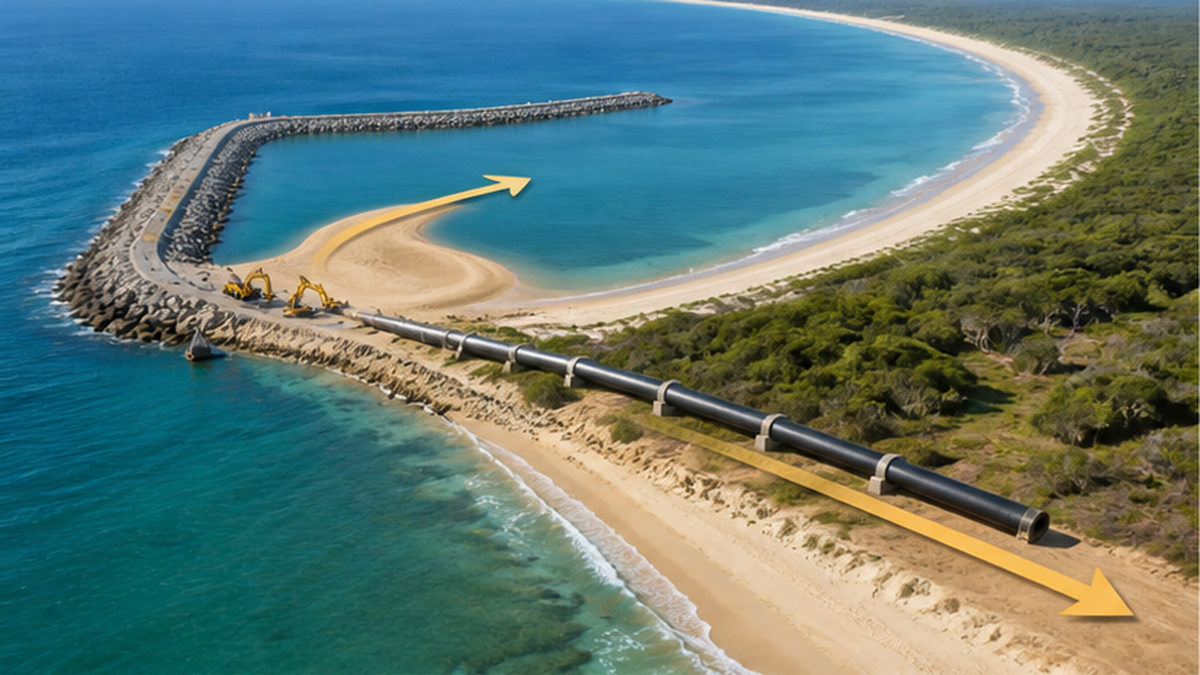
On eroded coasts, "beach nourishment" replenishes sand from outside. A step further is "sand bypassing": pumping sand from places where breakwaters and other structures have dammed up the littoral flow, over to the eroding downdrift coast, artificially reconnecting the flow of sand. At Fukude Fishing Port and the Asaba coast in Shizuoka Prefecture, Japan's first permanent jet-pump sand bypass system was completed in 2014. The return of sediment accumulated at Sakuma Dam on the Tenryu River to the downstream reach is likewise an attempt to restore sediment continuity at the scale of an entire watershed.
Nourishment needs "good sand" too—a dilemma of countermeasures
Here we must touch on a dilemma: the sand used for nourishment also has to come from somewhere. If sand whose grain size or colour does not match the original beach is introduced, it can harm beach life and simply wash away again, so nourishment requires sand close in character to the original. Globally, much nourishment sand is dredged from the offshore seabed—meaning that "extraction to save a beach" can upset the budget somewhere else. That is precisely why methods that circulate sand within the littoral cell—sand bypassing and sand recycling that return sand accumulated in ports and river mouths—are considered the most sustainable options.
Protect by rules—regulation and monitoring
On the supply side, alongside extraction bans and stricter permitting as in the Seto Inland Sea, monitoring with satellite and AIS data such as Marine Sand Watch is expected to deter illegal extraction. Where extraction does take place, a shift is demanded toward "science-based management": choosing sites, depths and seasons with the least ecological impact, and capping volumes within the sediment budget. UNEP is also calling for common international extraction standards and disclosure frameworks—since sand is traded across borders, regulation by any single country leaves loopholes, an understanding that is steadily spreading.
| Direction | Examples | Aim |
|---|---|---|
| Reduce demand | Crushed sand, recycled aggregate, ore-sand, timber construction | Cut consumption of natural sand itself |
| Restore the flow | Beach nourishment, sand bypassing, returning dam sediment downstream | Offset the sediment budget deficit and maintain beaches |
| Manage extraction | No-take zones, permit systems, caps on extraction volume | Protect ecosystems and coastal defence functions |
| Make it visible | Marine Sand Watch, AIS monitoring, resource surveys | Deter illegal extraction and build a basis for scientific management |
Actions we can take
- Learn that sand, like water and forests, is a finite resource—and tell family and friends
- Choose long-lasting buildings and products to stretch out cycles of rebuilding and replacement
- Join beach cleanups and other conservation activities that watch over your local coast
- Take an interest in your municipality's coastal protection plans and nourishment projects, and make your voice heard in public comments
Conclusion—Keeping Beaches for the Future
We also know that climate change will further intensify the pressure on beaches. A study published in Nature Climate Change projected that under a worst-case scenario without countermeasures, sea-level rise and erosion could wipe out about half of the world's sandy beaches (37–51%) by 2100. It also showed that curbing greenhouse gas emissions could reduce the loss by about 40%. Stopping the "deficit at our feet" caused by overextraction is a precondition for keeping beaches in the age of climate change.
The sand problem is a problem of an "invisible resource"
Sand has been so familiar and so cheap that it was never treated as a finite resource the way water and oil are. As UNEP's warnings make clear, that assumption no longer holds. Fortunately, the tools are coming into view: the Seto Inland Sea's regulations, sand bypass technology, the Marine Sand Watch monitoring network. What is needed is a change of mindset—to count sand properly as a resource and use it within the limits of the sediment budget.
Beaches are "borrowed"—returning them to the next generation
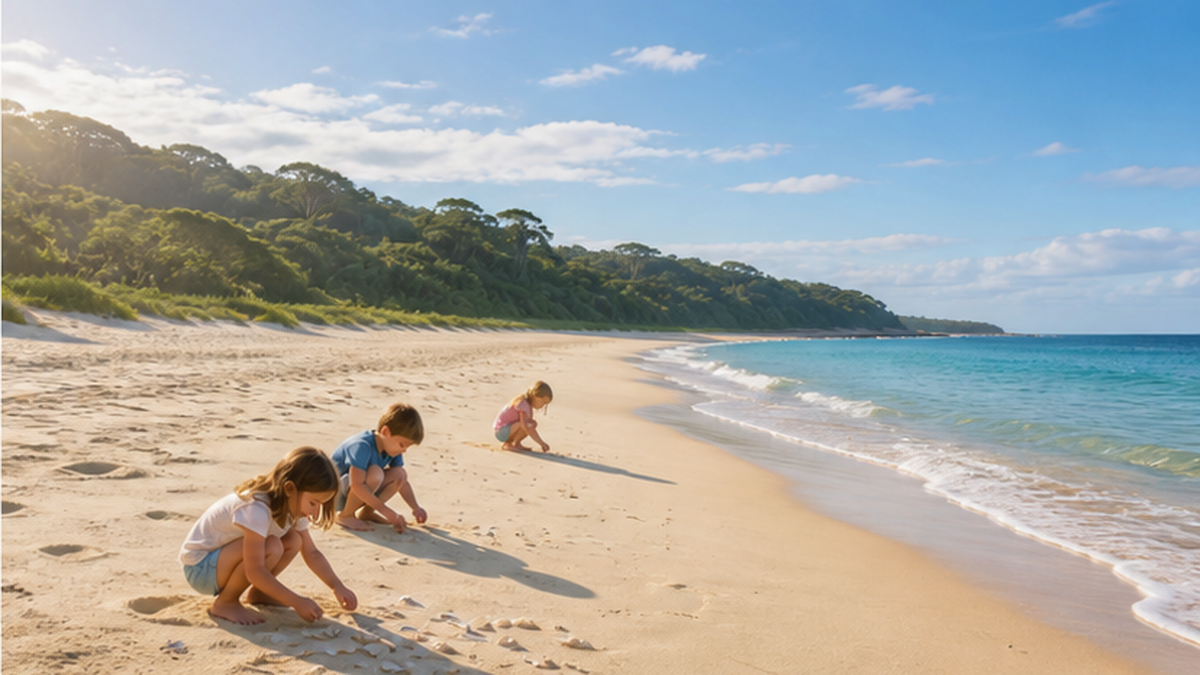
Every grain of beach sand is a piece of mountain rock, broken down over centuries to tens of millennia and carried down rivers to the sea. It is not something we are entitled to use up in a few decades. The extraction scars still visible on the floor of the Seto Inland Sea quietly tell us that the ocean keeps paying the bill for our convenience. The next time you stand on a beach—swimming or picking up litter—take a moment to imagine where the sand beneath your feet came from and where it is trying to go. More people with that perspective is the first step toward keeping beaches for the future.
Summary of this article
- Sand is the most used resource after water; global use is about 50 billion tonnes a year, five times what it was half a century ago
- About 6 billion tonnes a year on average are dredged from the ocean, closing in on the natural supply of 10–16 billion tonnes
- Beaches are dynamic systems maintained by a sediment budget; extraction anywhere—seabed or river—breaks the balance and leads to coastal erosion
- The impacts are real in both the world and Japan: riverbank collapses in the Mekong Delta, sand lance decline in the Seto Inland Sea
- Japan lost about 13% of its beaches (about 2,400 ha) in 15 years; countermeasures such as nourishment, sand bypassing and dam redevelopment are restoring the flow of sediment
- UNEP recommends treating sand as a strategic resource, banning beach extraction and strengthening monitoring; developing alternative materials to reduce use is also key
References and Sources
- UNEP (United Nations Environment Programme) – Marine Sand Watch launch press release: about 6 billion tonnes of sand and other sediments dredged from the world's oceans each year (2023)
- UNEP (United Nations Environment Programme) – Report "Sand and Sustainability: 10 Strategic Recommendations to Avert a Crisis" (2022): about 50 billion tonnes of annual sand use and ten recommendations
- UN News – The UN's warning on the scale and ecosystem impacts of marine sand dredging (September 2023)
- Ministry of Land, Infrastructure, Transport and Tourism, Coastal Division – "Current State and Challenges of Coastal Erosion": of Japan's roughly 19,000 ha of beaches, about 2,400 ha lost in 15 years (about 160 ha a year)
- Ministry of the Environment, Setouchi Net – Reclamation and marine sand extraction in the Seto Inland Sea: history and environmental impacts
- Fisheries Agency, Resource Management Methods Review Committee – Materials on the eastern Seto Inland Sea sand lance stock: habitat loss from sand extraction and lack of recovery after extraction ended (2023)
- Sasakawa Peace Foundation, Ocean Policy Research Institute – Ocean Newsletter, "The Reality and Future Direction of Marine Sand and Gravel Extraction Regulation in the Seto Inland Sea"
- Scientific Reports (Nature Portfolio) – "Sand mining in the Mekong Delta revisited": quantifying extraction volumes and sediment deficits in the Mekong Delta (2019)
- Nature Sustainability – "River bank instability from unsustainable sand mining in the lower Mekong River": assessing bank collapse risk from sand mining
- Nature Climate Change – "Sandy coastlines under threat of erosion": projection that about half the world's sandy beaches could vanish by 2100 (2020)
* Ordered by reliability: government and academic institutions > peer-reviewed papers > specialist institutions > trusted media