⚡ In short
An estimated 90% of the world's seabirds have already eaten plastic, and by 2050 the impact is projected to reach 99% of species. This article explains the "smell trap" that makes seabirds mistake plastic for food, the plight of Laysan albatross chicks on Midway Atoll, the newly named stomach disease "plasticosis," and the buildup of plastic chemicals in seabird bodies, based on the latest research.
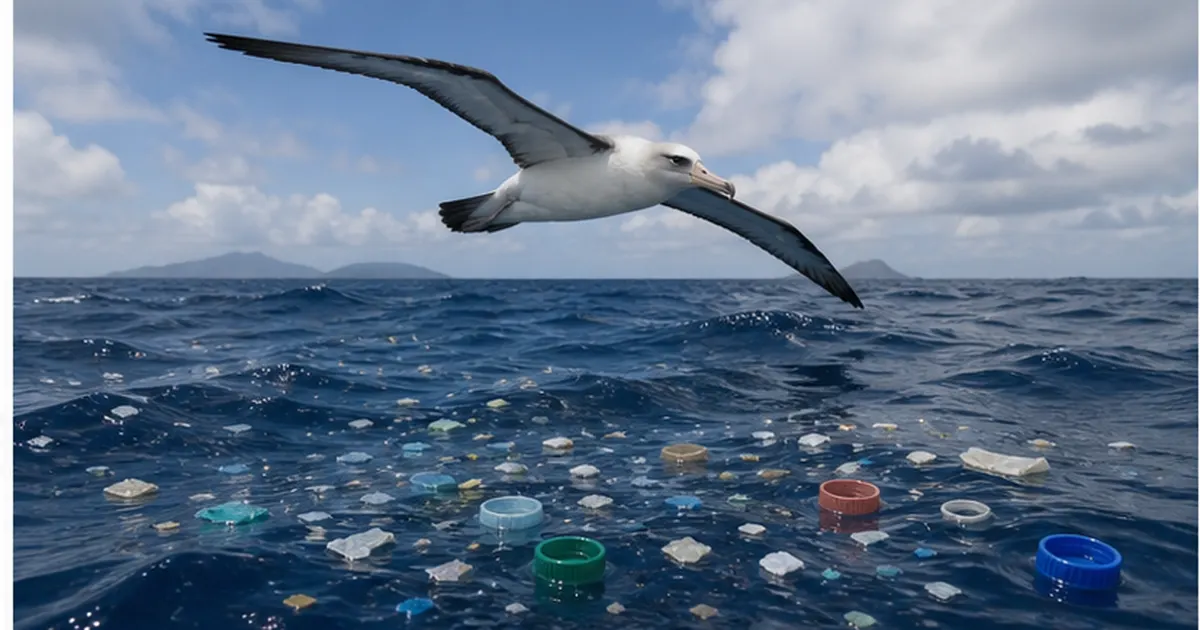
Nine out of ten seabirds flying over the world's oceans have already swallowed plastic—this estimate, published in 2015 in the Proceedings of the National Academy of Sciences (PNAS) by a research team including Australia's Commonwealth Scientific and Industrial Research Organisation (CSIRO), shocked the world. Albatrosses, shearwaters and their relatives mistake floating plastic fragments for prey such as fish eggs, squid and krill, swallowing them and storing them in their stomachs, unable to digest them.
The damage is not limited to adult birds. Parents regurgitate what they have swallowed to feed their chicks—plastic included—so plastic accumulates in the stomachs of chicks that cannot yet bring it back up. Cases of chicks dying from false satiation, malnutrition and injuries to the digestive tract have been reported around the world. In 2023, the condition in which plastic fragments injure and harden the stomach tissue through fibrosis was given a disease name, "plasticosis," showing that plastic pollution has reached the stage of causing a distinct disease in wild animals.
This article systematically explains the science of why seabirds ingest plastic, the damage documented in albatrosses and shearwaters, the invisible contamination caused by plastic-derived chemicals, and what international society and each of us can do—based on primary sources such as government agencies and peer-reviewed papers.
What you will learn in this article
- How widespread plastic ingestion by seabirds is (the basis of the 90% estimate)
- The scientific reason seabirds mistake plastic for food—the "smell trap" of DMS
- What is happening to Laysan albatross chicks on Midway Atoll
- What plasticosis is—the world's first named disease caused by plastic
- How plastic additives transfer to and accumulate in seabirds' bodies
- International policy frameworks and concrete actions we can take today
What Is Plastic Ingestion by Seabirds? A Problem Affecting 90% of Individuals Worldwide
Plastic ingestion by seabirds means that seabirds swallow plastic debris drifting on or below the sea surface after mistaking it for food. The items swallowed vary widely: weathered fragments of broken-down plastic, resin pellets (the raw material of plastic products), lighters and bottle caps, scraps of balloons, and pieces of fishing gear. Because plastic cannot be digested, anything that is not regurgitated stays in the stomach and slowly erodes the bird's health.
The first study to show the global scope of this problem was published in PNAS in 2015 by a research team from CSIRO and Imperial College London. The team compiled the literature on seabird plastic ingestion published between 1962 and 2012, and performed a risk analysis overlaying predicted distributions of marine debris with the ranges of 186 seabird species.
The Spread of Ingestion in Numbers
| Survey item | Result |
|---|---|
| Species with recorded ingestion among the 135 documented in the literature | 80 species (59%) |
| Average share of individuals with plastic found in their stomachs in past studies | About 29% |
| Estimated present-day ingestion rate at the individual level, adjusted for survey year and species bias | About 90% |
| Share of species projected to be affected by ingestion by 2050 | 99% |
What matters is that the "29%" reported in past literature reflects conditions at the time each study was conducted. Because the amount of plastic flowing into the sea keeps increasing year after year, adjusting the data to current pollution levels led to the estimate that about 90% of seabirds alive at this very moment have swallowed plastic. And if pollution continues at this pace, ingestion is projected to occur in nearly every seabird species (99%) by 2050.
Seabirds as a "Barometer of Ocean Health"
Seabirds sit near the top of the food chain and feed near the sea surface while ranging across vast areas, so they have long been regarded as "sentinel species" that mirror the state of pollution across the ocean. Examining the contents of seabird stomachs also provides clues to how much plastic is drifting in a given region. In other words, the spread of plastic ingestion among seabirds tells the story of the spread of pollution in the sea itself.
Reports of seabirds ingesting plastic date back to the 1960s, soon after mass production of plastic began. At first they were treated as curiosities, but reports climbed steadily alongside the explosive growth in production. Global plastic production has expanded from roughly 2 million tons in 1950 to more than 400 million tons per year today, and a portion of improperly managed waste continues to flow into the sea from rivers and coastlines. For seabirds, which spend most of their lives at sea, the "dinner table" has been transformed in a little over 60 years.
Key points of this section
- Plastic ingestion by seabirds has been reported since the 1960s and surged as pollution spread
- An estimated 90% of living seabird individuals have ingested plastic (2015, PNAS)
- By 2050, 99% of species are projected to be affected—the countermeasures are a race against time
Why Do Seabirds Mistake Plastic for Food? The Science of the "Smell Trap"
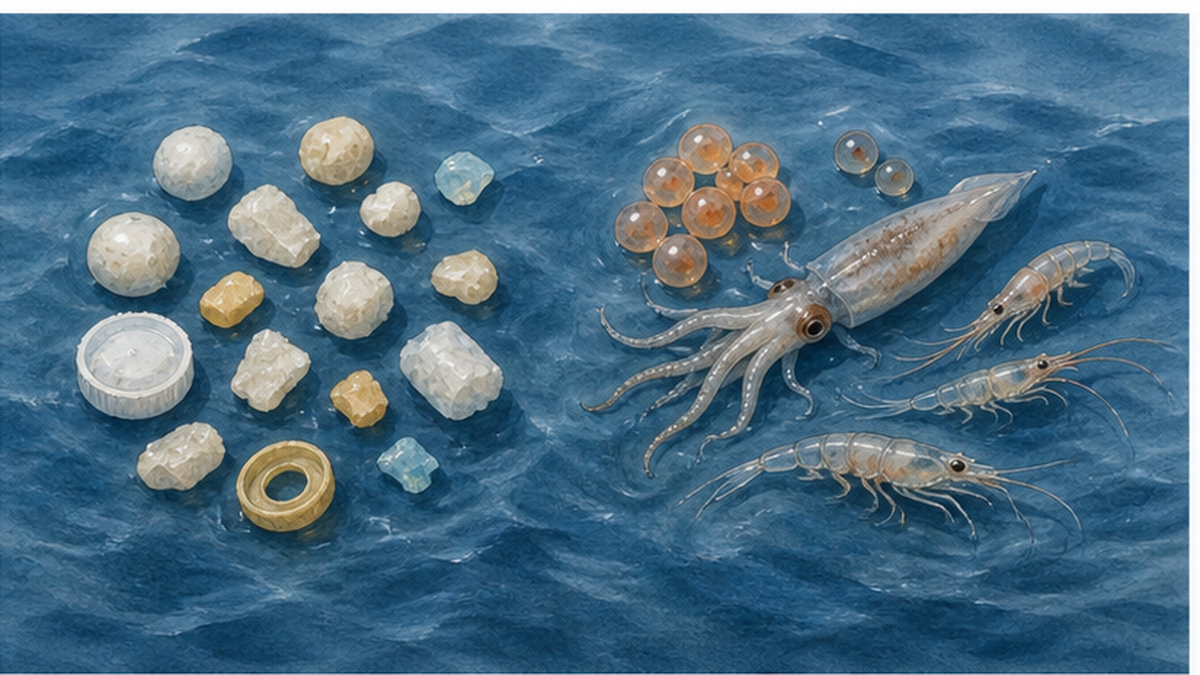
"Why would animals with such keen eyesight confuse plastic with food?"—this was a long-standing question. One answer is visual similarity. Plastic fragments rounded by drifting at sea resemble fish eggs, small fish, scraps of squid and krill in color and size. White, yellow and red fragments in particular are noted as easily confused with prey. But recent research has revealed another powerful factor that vision alone cannot explain: smell.
DMS—The "Smell of a Feast" Released by Plankton
A study published in Science Advances in 2016 by Dr. Matthew Savoca and colleagues, then at the University of California, Davis, focused on a substance called dimethyl sulfide (DMS) as the key to explaining seabird plastic ingestion. DMS is an odor compound produced by marine phytoplankton (algae) and is released into the water when zooplankton such as krill graze on the algae. A place where DMS drifts therefore means "a place where krill are eating algae—a dining hall for seabirds," and procellariiform seabirds, including albatrosses and shearwaters, have evolved olfactory foraging that uses this scent to locate feeding grounds across the vast ocean.
When the research team soaked beads of three common plastics (polyethylene and others) in mesh bags at sea for about three weeks, algae and other microorganisms colonized their surfaces, and the beads began to emit the DMS odor that signals a feeding ground. Moreover, analysis of the literature confirmed that species that respond keenly to the smell of DMS ingest plastic at higher rates. The team called this the "olfactory trap." Seabirds do not eat plastic because they are foolish—their food-finding ability, honed over millions of years, is being turned against them.
This hypothesis also neatly explains differences in ingestion rates among species. Among the shearwaters and their relatives, species that nest in burrows dug into the ground and forage at night by scent tend to ingest plastic more frequently than gulls and other more visually oriented birds. They are fooled not because they "cannot see well," but precisely because their scent sensors are excellent—an evolutionary product, olfactory foraging, has been turned into a weakness by a human-made material.
The Risk of Surface Feeding
Albatrosses, shearwaters and fulmars mainly feed by "surface seizing"—picking food from the sea surface with their bills. The surface where buoyant plastic gathers is precisely their dining table, and a life of snatching prey quickly at night or in dim light leaves no room to scrutinize each item. In addition, the stomach of shearwaters narrows between the proventriculus (glandular stomach) and the gizzard, making it hard to bring up solid objects once swallowed, which worsens the damage.
What Gets Eaten—Size, Color and Shape
The plastic found in seabird stomachs follows patterns. Most pieces measure a few millimeters to a few centimeters—close to the size of their usual prey. Granular resin pellets, the raw material of plastic products, look strikingly like fish eggs in both size and shape and have long been regulars in seabird stomachs (how resin pellets escape into the sea is explained in detail in our article on resin pellets). Fragments that have drifted long enough to be rounded by waves and ultraviolet light and coated with an algal film (biofilm) come ever closer to "real food" in both appearance and smell. The longer plastic drifts at sea, the more dangerous it becomes to seabirds.
Three reasons seabirds ingest plastic
- Appearance: weathered fragments resemble prey such as fish eggs, squid and krill
- Smell: plastic colonized by algae emits DMS, the signal of a feeding ground—the "olfactory trap"
- Feeding style: surface seizing at the sea surface, plus a stomach structure that makes swallowed objects hard to bring up
Laysan Albatrosses of Midway Atoll—Chicks "Fed" Plastic
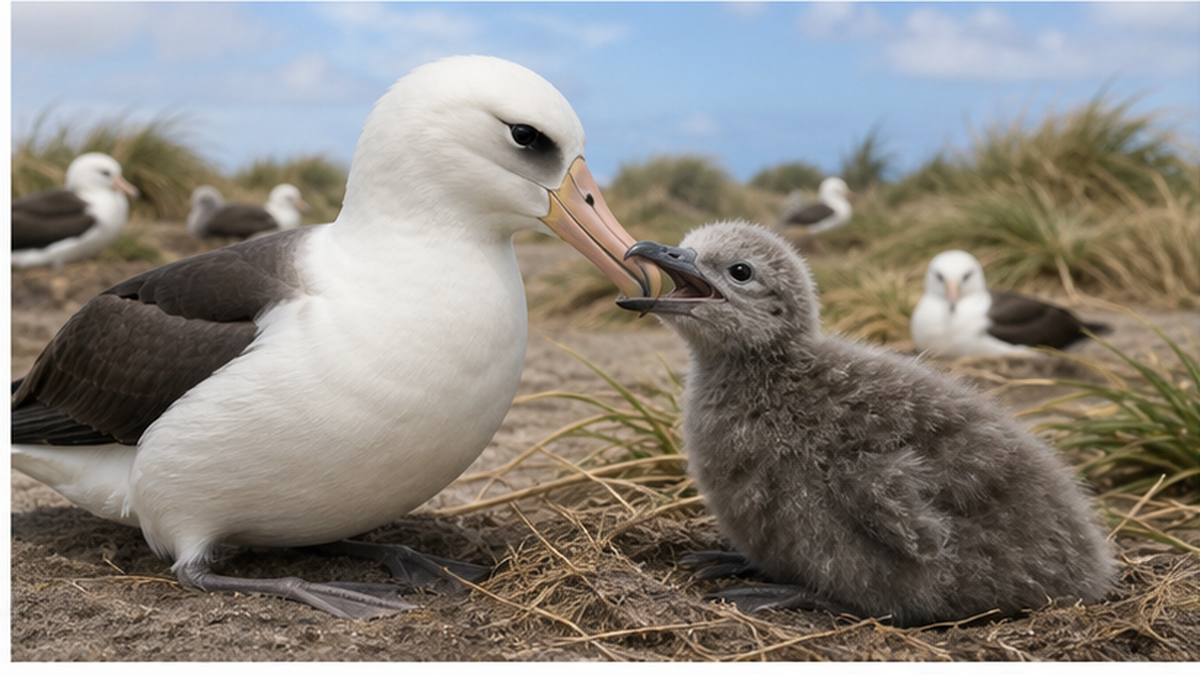
The globally known symbol of seabird plastic ingestion is the Laysan albatross of Midway Atoll in the North Pacific. Midway Atoll is one of the world's largest breeding grounds for Laysan albatrosses, but the surrounding waters lie close to the "Great Pacific Garbage Patch," an accumulation zone of drifting plastic, and the sea surface where parent birds forage is strewn with plastic fragments. Feeding on squid and fish eggs near the surface, Laysan albatrosses swallow lighters, caps and fragmented plastic—together with their prey, or in place of it.
Accumulating in Stomachs of Chicks That Cannot Regurgitate
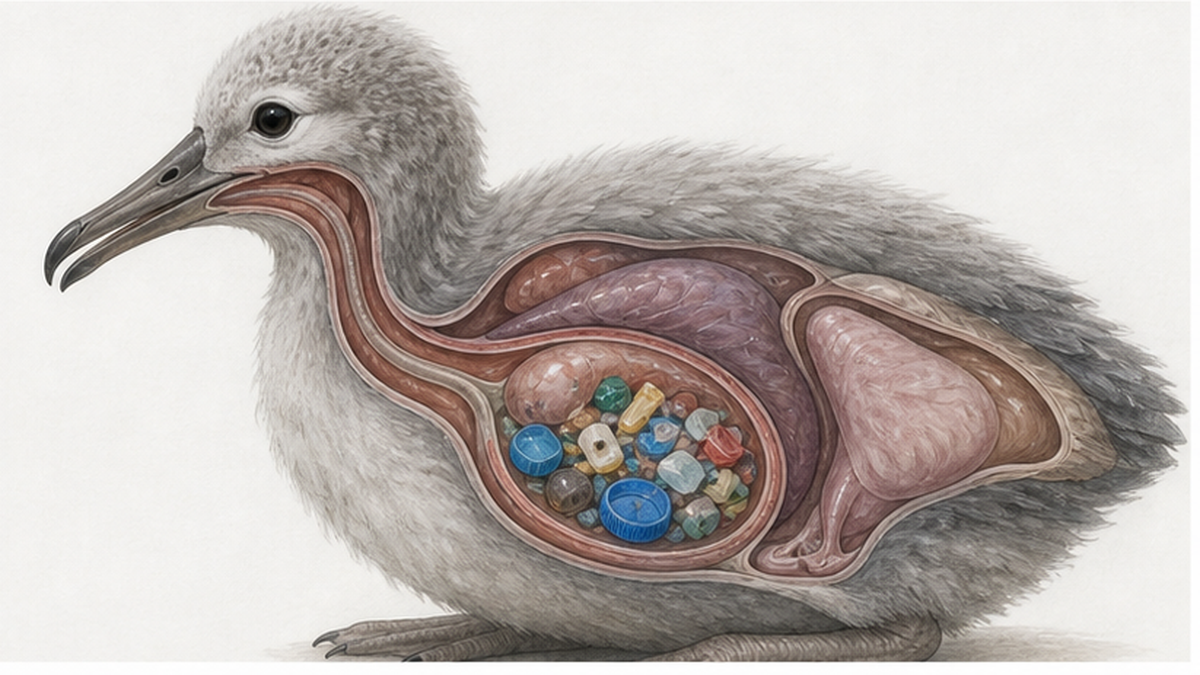
Albatrosses raise their young by storing food in their stomachs at sea, returning to the nest, and regurgitating it for the chicks. Plastic in the parent's stomach is passed to the chick at the same time. According to the Wild Bird Society of Japan and others, chicks become able to regurgitate indigestible items only at around four and a half months of age; until then, the plastic they are fed can only pile up in their small stomachs. On Midway Atoll, an estimated 5 tons of plastic are fed from parents to chicks every year.
A chick whose stomach is filled with plastic feels full despite being undernourished, stops begging for food, and weakens from malnutrition and dehydration. Sharp fragments can also injure the digestive tract. After the carcass of a chick that never fledged decays, a mound of caps and lighters remains where its stomach once was—the series of photographs taken on Midway by American photographer Chris Jordan brought this problem to the world's attention.
The severity of the damage to albatrosses also has to do with how they live. Albatrosses are exceptionally long-lived among wild birds—"Wisdom," a Laysan albatross of Midway Atoll, is known as one of the world's oldest wild birds, still laying eggs past the age of 70. Yet their breeding pace is slow, at most one egg a year, so the loss of a single chick weighs far more heavily than for other birds. A long life also means more years of taking in plastic and chemicals. The slower-living these ocean voyagers are, the more deeply plastic pollution affects them.
The scenes on Midway Atoll are by no means a distant foreign story. Much of the plastic drifting around the Hawaiian Islands has been carried by currents from the coasts of Asia and North America across the Pacific, and waste from Japan's rivers and coasts is part of it. Conversely, debris that has circled the Pacific washes up on East Asian shores. In a Pacific linked by currents, a single cap discarded on some street corner can reach the stomach of a chick on an island thousands of kilometers away years later—seabird plastic ingestion is the most painful proof that the ocean connects the world.
Japan's Albatrosses Are Not Exempt
There are 22 species of albatross in the world, many of them threatened with extinction, and plastic pollution is counted among their threats alongside bycatch and introduced predators. In waters around Japan, too, plastic and plastic-derived chemicals have been detected in black-footed and Laysan albatrosses. How albatrosses manage to fly thousands of kilometers over the sea is explained in detail in our article on the science of albatross soaring—but the extraordinary breadth of their range also means encountering plastic across every ocean of the world.
What is happening to the chicks
- Plastic passes to chicks through the parents' regurgitation feeding
- Chicks cannot regurgitate foreign objects until around four and a half months old, so plastic keeps accumulating
- A vicious cycle: false satiation → no begging for food → malnutrition, dehydration and weakening
- On Midway Atoll, an estimated 5 tons of plastic are fed to chicks each year
"Plasticosis," the World's First Named Plastic Disease—A Stomach That Hardens
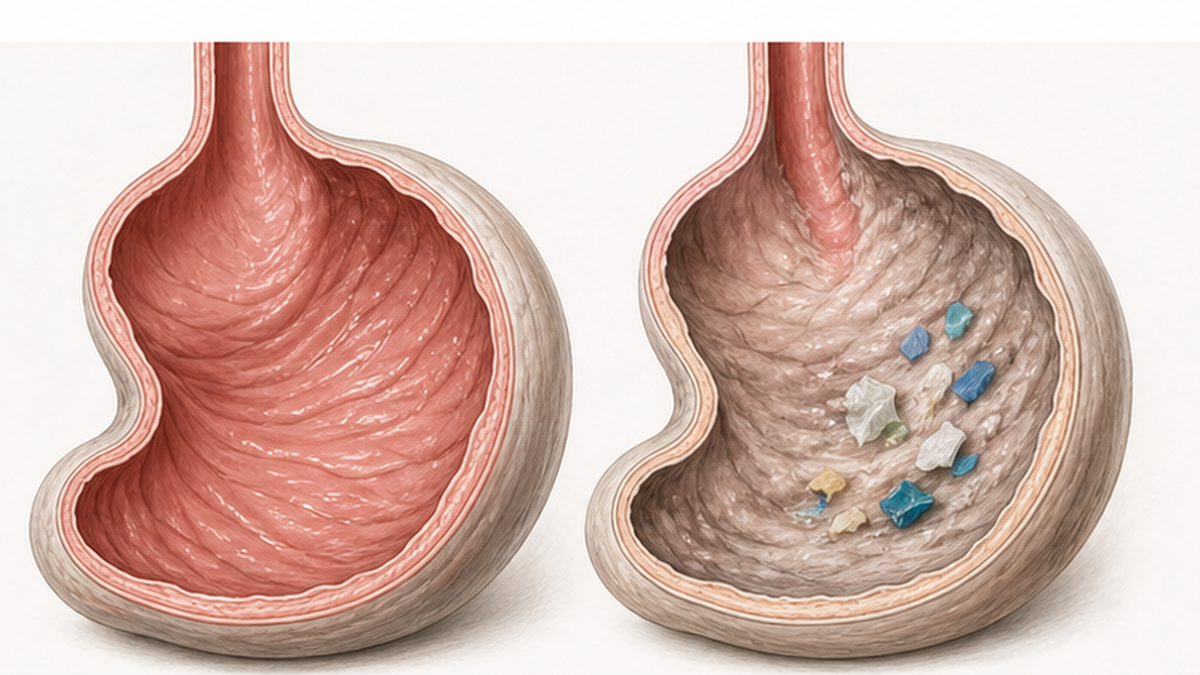
In March 2023, a research team from the Natural History Museum in London and Adrift Lab (including Dr. Jennifer Lavers) published a paper in the Journal of Hazardous Materials giving the condition caused by plastic ingestion a disease name: "plasticosis." It was the first time in the world that a disease of wild animals caused by plastic received a name bearing its causative agent, in the manner of silicosis or asbestosis.
The setting of the study was Lord Howe Island, east of Australia. The flesh-footed shearwaters that breed there are known as among the most severely plastic-contaminated seabirds in the world. When the team stained and examined proventriculus (glandular stomach) tissue from 30 fledglings, they found that the more plastic an individual had ingested, the more widespread the scar tissue—fibrosis—that had formed, with major changes to the structure of the mucosa and, in severe cases, outright loss of tissue structure.
Pumice Does Not Cause It—Damage Unique to Plastic
Remarkably, individuals that had swallowed pumice—an equally indigestible natural material—showed no similar scarring. The fibrosis is therefore not something "any hard foreign object" causes, but a response specific to plastic. A stomach that has hardened and lost its elasticity digests and absorbs nutrients poorly, which is thought to lead to stunted growth and vulnerability to infection. Even a bird that looks healthy from the outside may have a disease quietly progressing in its stomach—the discovery of plasticosis drove home that ingestion damage is not just a problem of "the birds that died."
- Reduced digestive function—glandular tissue that secretes stomach acid and digestive enzymes is replaced by scar tissue, weakening digestion
- Poorer nutrient absorption and slower growth—birds grow less on the same amount of food and fledge at lower weights
- Vulnerability to infection—damaged mucosa becomes an entry point for bacteria and parasites
- Tiny fragments matter too—not only visible fragments but also microplastics were reported to contribute to tissue inflammation and fibrosis
Possibly the "Tip of the Iceberg"
The research team points out that although plasticosis has so far been confirmed only in the flesh-footed shearwater, given how widespread plastic ingestion is, similar conditions are highly likely to be occurring in other seabirds and marine animals. The way plastic breaks into ever smaller pieces in the sea without truly degrading is explained in detail in our article on why ocean plastic never disappears.
Beyond Physical Harm—The "Invisible Chemical Contamination" from Additives
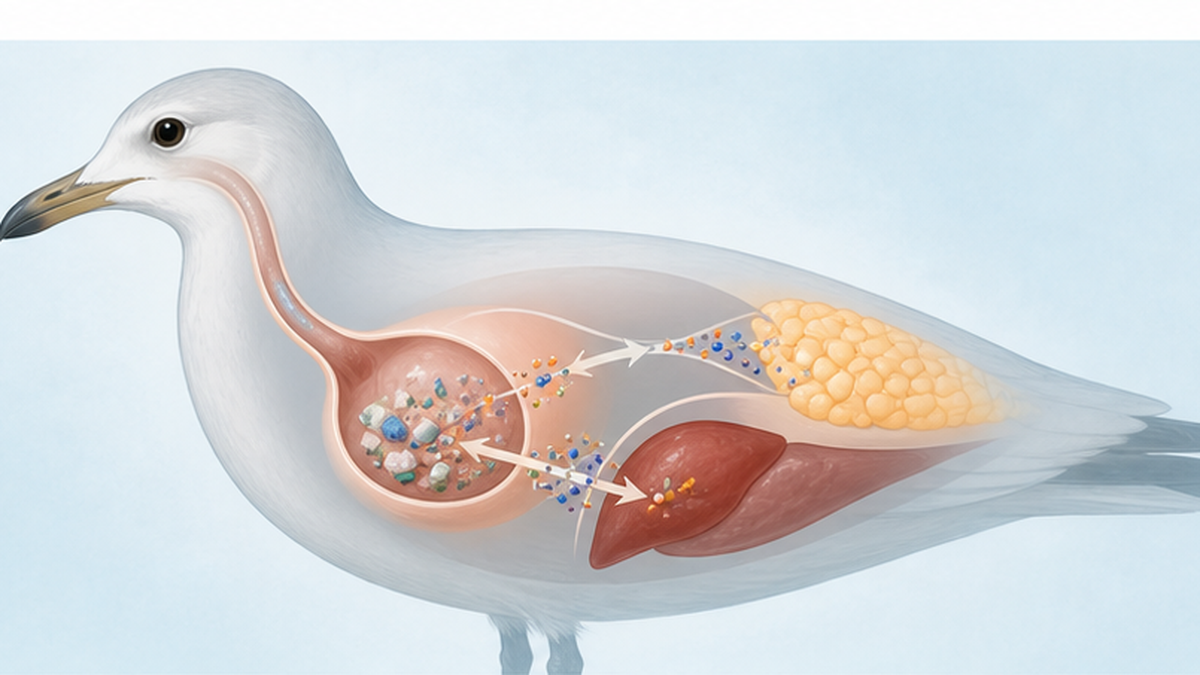
The damage from plastic ingestion is not limited to physical harm such as blocked or injured stomachs. Plastic products contain a range of added chemicals: brominated flame retardants to resist burning, plasticizers for softness, ultraviolet stabilizers to slow degradation. Drifting in seawater, plastic also adsorbs and concentrates persistent organic pollutants (POPs) from its surroundings onto its surface. When swallowed plastic lingers in a seabird's stomach, these chemicals leach out and transfer to and accumulate in tissues such as fat and the liver.
Additive Contamination Found in Half the World's Seabirds
The global scale of this "invisible contamination" was revealed by international collaborative research led by Professor Hideshige Takada of Tokyo University of Agriculture and Technology. In a survey published in 2021, analysis of 145 seabirds of 32 species from 16 regions worldwide detected plastic additives—flame retardants, plasticizers and UV stabilizers—in about half (52%) of the individuals. Particularly high concentrations were confirmed in shearwaters from Hawaii and Western Australia. In an earlier 2018 study analyzing 150 birds of 37 species from 15 regions, additive accumulation was confirmed in about 40% of individuals, and statistical models estimated that a bird ingesting 15 pieces of plastic has a 73% probability of accumulating some additive in its tissues, rising to 90% at 30 pieces.
Proof from Japan—What Streaked Shearwaters Demonstrated
It was also a Japanese research team that settled the question, "Are the chemicals detected in wild seabirds really from plastic, and not from their food?" A team from Tokyo University of Agriculture and Technology, Hokkaido University and others conducted a field experiment in which chicks of the streaked shearwater, a species widely distributed in waters around Japan, were given plastic pellets containing additives and then tracked. In a paper published in 2020 they demonstrated in the field that plastic-derived additives transfer to and accumulate in the liver and fatty tissue. Going back further, in 2013 brominated flame retardants (PBDEs) thought to derive from ingested plastic were detected in the fatty tissue of short-tailed shearwaters in the North Pacific.
These additives and POPs include substances suspected of endocrine (hormone) disruption and effects on liver function. The long-term consequences for reproduction and growth are still being studied, but the proven pathway—"swallowing plastic means exposure to chemicals"—is profoundly significant.
Professor Takada and colleagues also lead "International Pellet Watch," an international monitoring program in which citizen volunteers around the world collect resin pellets from beaches for analysis, building a world map of pollutants on foundations laid since the 1980s. By comparing concentrations of PCBs and other substances adsorbed onto stranded pellets across regions, the program has made visible, on a global scale, how plastic acts as a "carrier" of harmful substances. A small pellet picked up on a beach becomes a data point in mapping the planet's pollution—a fine example of citizens participating in science.
Key data on chemical contamination
- Plastic additives detected in 52% of 145 birds of 32 species from 16 regions worldwide (Tokyo University of Agriculture and Technology et al., 2021)
- Estimated 73% probability of additive accumulation after ingesting 15 pieces of plastic, 90% at 30 pieces
- Field experiment on streaked shearwaters proved additives transfer to the liver and fat (2020)
Monitoring in the World and Japan—Seabirds Reveal How Polluted the Sea Is
The plastic in seabird stomachs has been built into international monitoring systems as a "yardstick" of marine pollution. A prime example is the northern fulmar indicator under the OSPAR Convention, which protects the marine environment of the North-East Atlantic. Fulmars washed up on North Sea coasts are dissected, and the Ecological Quality Objective (EcoQO) is to keep the share of individuals with more than 0.1 g of plastic in the stomach below 10%. In reality, however, the share of birds exceeding the threshold has remained above 30%, far from the target.
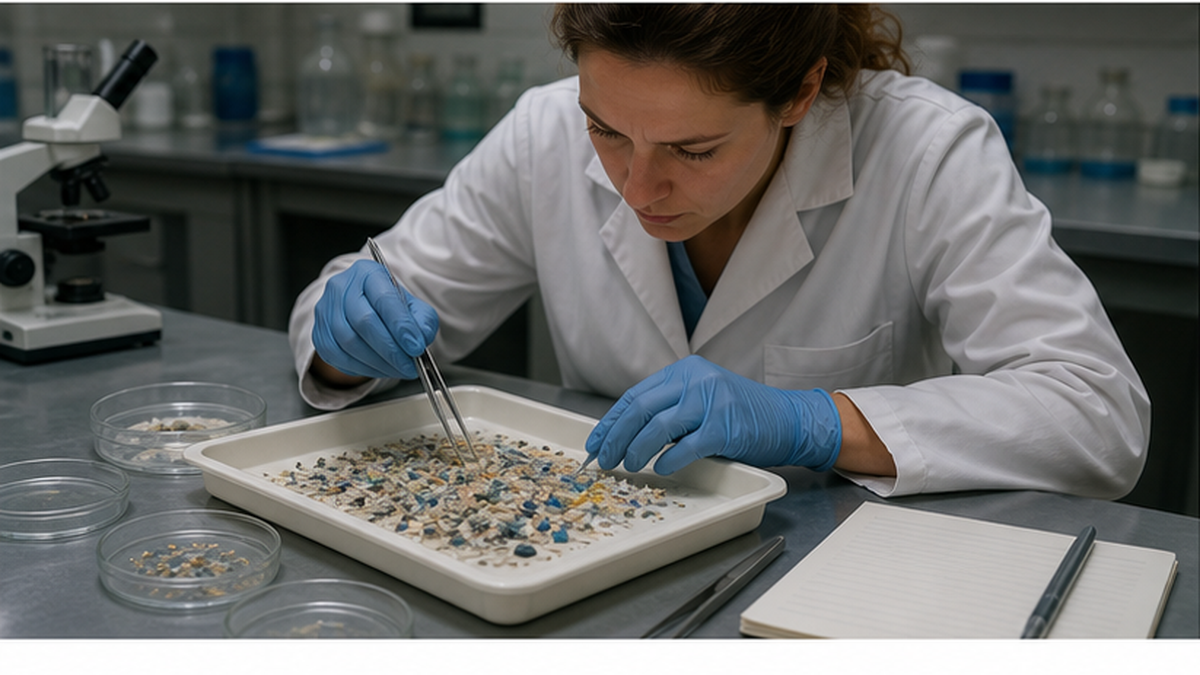
There are good reasons the fulmar was chosen as the indicator. It spends nearly its whole life on the open ocean feeding only at the surface, so its stomach contents directly reflect how much plastic is drifting on the sea surface of the region; and it is abundant across wide areas of the North Atlantic and North Pacific, so beached individuals can be collected continuously. Surveying by the same method over many years makes it possible to track—through the bodies of real animals—whether plastic pollution in the sea is rising or falling.
Research and Surveys Accumulated in Japan
In Japan as well, analysis of seabird specimens collected over many years by the Yamashina Institute for Ornithology continues alongside surveys and research by Hokkaido University, Tokyo University of Agriculture and Technology and others. Joint research by the Yamashina Institute and Tokyo University of Agriculture and Technology detected additives in the very plastic fragments the birds had eaten, clarifying the reality of accumulation in their bodies. The waters around Japan, where the Kuroshio and Oyashio currents meet, are among the world's richest seabird habitats—and also waters where plastic waste from East Asia tends to gather. Ingestion by familiar seabirds such as the streaked shearwater has been reported.
This patient monitoring is also essential for measuring whether countermeasures work. When plastic bag regulations and single-use plastic reduction take hold, how will the contents of seabird stomachs change? That is the report card of policy itself.
Surveys Citizens Can Join
Seabird monitoring is not only for researchers. Programs in Japan and abroad let citizens become data contributors: beached-bird surveys that report stranded seabirds to research institutions, beach-litter composition surveys that record the types and numbers of items collected during cleanups, and sending pellets to the aforementioned International Pellet Watch. A single bird recorded on a beach walk can become a precious observation point for detecting change in the sea.
The Full Picture of Threats to Seabirds—Plastic Is One of Many
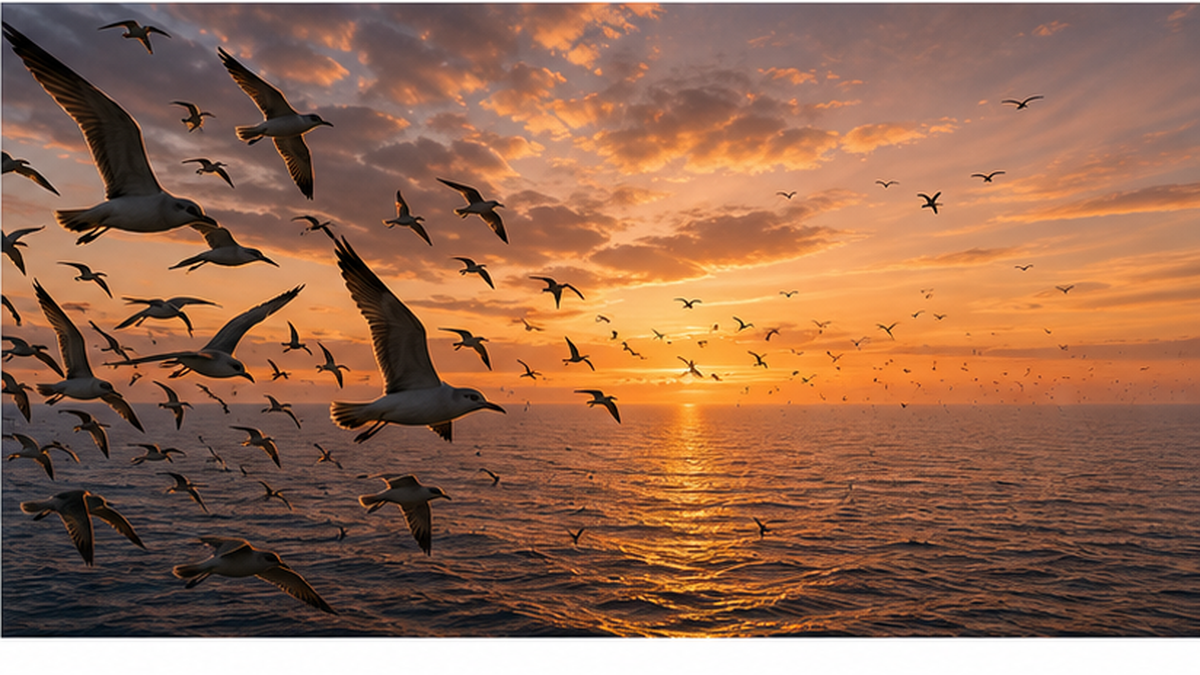
To grasp the seriousness of plastic ingestion, one must know the harsh situation seabirds already face. According to an analysis published in PLOS ONE in 2015 by a research team at the University of British Columbia in Canada, the world's continuously monitored seabird populations (more than 500 populations, representing about 19% of the world's seabirds) declined by 69.6% between 1950 and 2010. That amounts to a loss of roughly 230 million birds.
Compounding Threats
- Fisheries bycatch—drowning after being caught on longlines or in gillnets; one of the greatest threats to albatrosses
- Declining prey—overfishing and shifting distributions of forage fish such as sardines
- Introduced predators—rats and cats brought to breeding islands preying on eggs and chicks
- Climate change—changing prey conditions as waters warm, and nesting sites lost to sea-level rise
- Pollution—plastic ingestion, oil spills, chemical contamination
Plastic ingestion is a burden stacked on top of these threats. The problem of seabirds and sea turtles dying in nets and on longlines is covered in detail in our article on bycatch—when multiple stresses coincide, a population's resilience is badly eroded. That is precisely why tackling plastic pollution, which we can reliably reduce with our own hands, is such an effective conservation measure for the future of seabirds. Indeed, the CSIRO research team emphasizes that "effective waste management at the source can realistically reduce the threat to seabirds."
Seabirds' way of life itself also makes recovery from damage difficult. Many seabirds live for decades but take 5–10 years to reach maturity, and it is not unusual for a pair to raise only one chick per breeding attempt. The strategy of "living long and producing a few offspring reliably" works in a stable ocean, but in an environment where adults and chicks keep being lost to pollution and bycatch, population recovery lags across generations. The effects of today's countermeasures may take decades to show in population numbers—which is exactly why acting before the damage becomes plainly visible is decisive.
Paths to a Solution—From International Treaties to Today's Shopping
Plastic waste flowing into the sea worldwide is on the order of millions of tons per year (a representative 2015 estimate put it at about 8 million tons). The only fundamental way to reduce seabird ingestion is to reduce the plastic entering the sea itself. International society has finally begun moving in that direction.
Where International Frameworks Stand
At the 2019 G20 Osaka Summit, the "Osaka Blue Ocean Vision," proposed by Japan, was shared. It is an international goal of reducing additional pollution by marine plastic litter to zero by 2050. Furthermore, the 2022 United Nations Environment Assembly resolved to create a legally binding international treaty to end plastic pollution, and intergovernmental negotiations have continued. The talks have been difficult, notably over how to treat production limits, and the session in Geneva in August 2025 also ended without overall agreement—but the momentum toward a treaty has not been broken.
Legal frameworks are also advancing within Japan. In addition to the Act on Promoting the Treatment of Marine Debris, which governs the disposal and prevention of litter washed up on coasts, the Plastic Resource Circulation Act came into force in April 2022, requiring businesses to reduce specified single-use plastic items such as disposable spoons and straws and to design products with recycling in mind. Because recovering plastic that has already broken into fragments in the open ocean is virtually impossible, the main battleground is "rivers and streets"—preventing and collecting waste before it reaches the sea. Cutting off the path a piece of litter takes to a seabird's beak, upstream, is by far the most effective approach.
Five Things We Can Start Today
- Cut single-use plastics—make reusable bottles and bags the default, and decline unneeded straws and cutlery
- Dispose of waste properly—and pick it up—street litter reaches the sea via rivers; picking up even one piece is source control
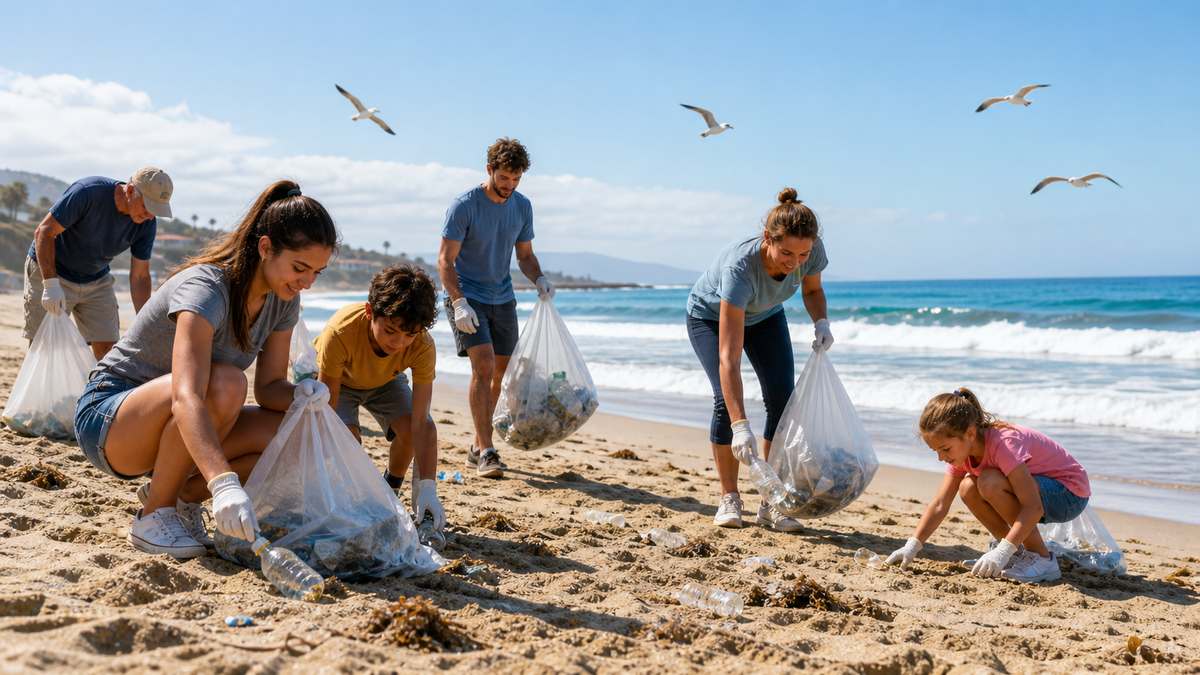
- Join beach and river cleanups—local cleanups are a reliable way to directly reduce the sources of ingestion
- Handle easily ingested products with care, such as balloons and lighters—releasing balloons outdoors causes ingestion and entanglement in seabirds
- Learn and share—talk about the science of plasticosis and the "smell trap" with family and friends to keep society's attention alive
Actions to start today
- Start by declining plastic bags and disposable cutlery at convenience stores
- Search for a local cleanup or beach cleanup event and take part once
- Share just one number from this article—"90%"—with someone close to you
Summary
- An estimated 90% of seabirds have already ingested plastic, with 99% of species projected to be affected by 2050
- Seabirds mistake plastic for food not only by sight but through the DMS "olfactory trap"
- Plastic accumulates in chicks' stomachs via regurgitation feeding—an estimated 5 tons per year on Midway Atoll
- In 2023 the fibrotic stomach disease "plasticosis" was named, and the accumulation of additives in the body has been proven
- Source control can reduce the damage—as treaty negotiations advance, individual reduction efforts matter too
References and Sources
- Wilcox, C. et al. (PNAS, 2015) – Threat of plastic pollution to seabirds is global, pervasive, and increasing—the original paper behind the 90% estimate and the 99%-by-2050 projection
- Charlton-Howard, H.S., Lavers, J.L. et al. (Journal of Hazardous Materials, 2023) – 'Plasticosis': Characterising macro- and microplastic-associated fibrosis in seabird tissues—the paper that named plasticosis
- Natural History Museum, London – 'Plasticosis': a new disease caused by plastic that is affecting seabirds—explainer on the discovery
- Savoca, M.S. et al. (Science Advances, 2016) – Marine plastic debris emits a keystone infochemical for olfactory foraging seabirds—the original DMS "olfactory trap" paper
- Tokyo University of Agriculture and Technology, press release (October 2021) – Analysis of 32 species from 16 regions showing plastic additive contamination has spread to 50% of the world's seabirds
- Yamashina Institute for Ornithology – Additives detected in plastic fragments eaten by seabirds—clarifying accumulation in the body (joint research with Tokyo University of Agriculture and Technology)
- National Institute for Environmental Studies, Kankyo Tenbodai – Tokyo University of Agriculture and Technology and others prove marine plastic directly causes chemical contamination of seabirds (streaked shearwater field experiment)
- Paleczny, M. et al. (PLOS ONE, 2015) – Population Trend of the World's Monitored Seabirds, 1950-2010—the analysis behind the 69.6% decline
- Wild Bird Society of Japan – The impact of plastic pollution on seabirds and what we can do
- JEAN (Japan Environmental Action Network) – Problems of marine litter—environmental impacts (including plastic fed to Laysan albatross chicks)
※ Ordered by reliability: government and academic institutions > peer-reviewed papers > specialist organizations > trusted media